World Cup 2026: Sepp Blatter questions FIFA integrity over ‘political influence’ in Folarin Balogun red card saga
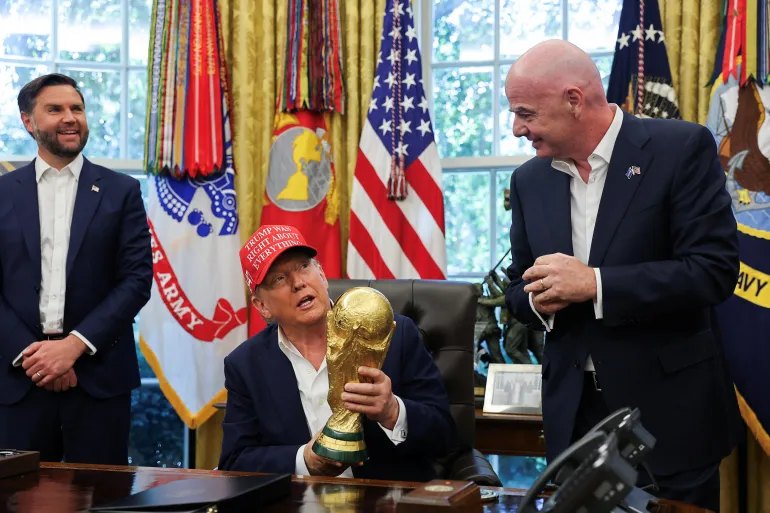
The decision to suspend United States forward Folarin Balogun’s one-match ban has triggered a storm of controversy at the World Cup, with allegations emerging that political influence played a decisive role in FIFA’s reversal.
FIFA confirmed on Sunday that the red card Balogun received in the last-32 win over Bosnia and Herzegovina would no longer result in an immediate suspension. Instead, the punishment has been suspended for one year, clearing him to feature in the last 16 against Belgium on Monday.
The timing of the decision, coming just hours before a knockout tie, immediately raised questions across the football world.
United States President Donald Trump publicly welcomed the ruling, describing it as the correction of a “great injustice”, amid growing reports that the White House World Cup Task Force had engaged in discussions with FIFA leadership.
Blatter raises serious questions over influence
Former FIFA president Sepp Blatter has been the most vocal critic of the decision, suggesting that the reversal undermines the independence of football’s disciplinary structures.
In a strongly worded statement on social media, Blatter insisted that disciplinary rulings should never be altered through external pressure.
“Red cards are not overturned by political phone calls. They are overturned by rules, evidence and independent bodies,” he wrote.
He went further, questioning the integrity of the governing body’s decision-making process.
“If a US President intervenes with the FIFA President — and a player is suddenly cleared before a World Cup knockout match — the question is unavoidable: Quo vadis (where are you going), FIFA?”
Blatter also warned that football risked being drawn into political territory, adding: “Football must never become a playground for political power.”
FIFA under pressure as governing body stays silent
Both FIFA and the White House have so far declined to comment on claims of political involvement in the disciplinary reversal, leaving the governing body under mounting scrutiny during the tournament’s most sensitive stage.
The controversy has placed FIFA’s disciplinary committee at the centre of an international debate over governance, transparency and independence in football.
While supporters of the decision argue that the suspension review was based on procedural reassessment, critics believe the timing and circumstances have fuelled unavoidable suspicion.
Belgium furious as appeal is launched
The decision has also triggered an immediate backlash from the Belgian camp. The Belgian Football Association described itself as “astonished” by FIFA’s ruling and confirmed it was exploring all possible options in response.
Reports suggest the association has already lodged an appeal and was given a tight deadline to submit supporting documentation on Monday.
Head coach Rudi Garcia expressed disbelief at the situation, comparing the ruling to an April Fool’s joke and questioning the logic behind overturning a knockout-stage suspension.
Meanwhile, England manager Thomas Tuchel also voiced concern after his side’s win over Mexico, calling the decision “strange” and raising broader concerns about consistency in officiating.
“Who overturns this decision and when and on what grounds?” he asked. “It’s just strange for me. We just want to have consistency in the decisions.”
Tournament tension rises ahead of knockout stage
With Balogun now eligible to feature against Belgium, attention has shifted from the pitch to the political and administrative corridors surrounding the World Cup.
What was expected to be a straightforward disciplinary ruling has instead evolved into one of the tournament’s most contentious talking points, raising wider questions about governance at football’s highest level.
-
 Mbekezeli Mbokazi ranked fourth in MLS 22 Under 22 list Oct 20, 2026
 -
Gavin Hunt aims to help Bradley Grobler break PSL scoring record Oct 20, 2026
-
Bakery Jatta steps up recovery as Hamburg target return during busy schedule Oct 20, 2026
-
AmaZulu’s strong start rewards Sandile Zungu’s faith in Arthur Zwane Oct 20, 2026


-
AFCON 2025: Fixtures, Results, Scores and Standings Jan 18, 2026
-
Match hero Taiwo Awoniyi reflects on team effort after Chelsea triumph May 5, 2026
-
Leadership and long-term vision key to rescuing Zamalek and inspiring Egyptian football – Hany Abou Rida Nov 5, 2025
-
South African giants Orlando Pirates set to lose influential forward Monnapule Saleng Mar 19, 2025




-
PSG v Barcelona: fiery attacks set up Champions League classic at Parc des Princes Oct 18, 2026
-
Real Betis v Barcelona: kick-off time, TV details and match preview Oct 16, 2026
-
Porto v PSV: predicted line-ups for Champions League league-phase clash Oct 19, 2026
-
Bayern Munich host Arsenal in heavyweight Champions League clash Oct 19, 2026