World Cup 2026: Iran exit prompts backlash after US official says ‘danced a happy dance’
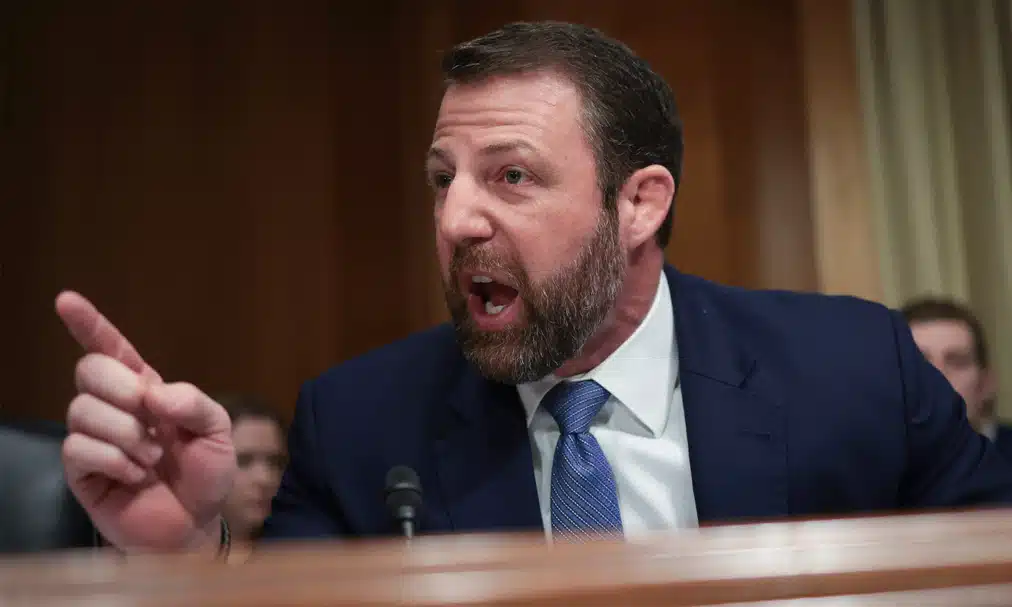
The United States’ World Cup has taken a political turn after remarks from homeland security official Markwayne Mullin sparked controversy following the elimination of Iran from the tournament.
Iran’s campaign ended in disappointment after three group-stage draws were not enough to carry them into the knockout rounds, as they finished third in their group and were eliminated on goal and result combinations elsewhere.
Their exit was confirmed after a dramatic 3-3 draw between Algeria and Austria sealed their fate, bringing a turbulent tournament to an abrupt end.
But their on-field struggles were only part of a far more complicated World Cup experience shaped by political tension and logistical disruption.
Off-field disruption and mounting pressure
Iran’s participation was overshadowed from the outset by complications away from the pitch. Their preparations were disrupted when their training base was relocated from Arizona to Tijuana in Mexico before the tournament even began.
Throughout the competition, the squad also faced travel restrictions and administrative hurdles that added strain to an already challenging campaign.
Head coach Amir Ghalenoei later described his squad as the “most oppressed” at the tournament, suggesting that external factors had a direct impact on performance and morale.
With all three group matches staged in the United States, the team endured constant scrutiny and operational difficulties that prevented them from establishing stability during the competition.
Mullin’s comments ignite backlash
Following Iran’s elimination, Mullin did not hide his satisfaction at their departure from the tournament, making comments that quickly circulated across social media and drew widespread criticism.
“I’m just glad they’re done, and they’re not coming back,” he said.
He added further remarks reflecting on administrative actions during the competition, saying, “I was so happy when we were able to pull their visas and said they could leave the US soil, and I might’ve sung a song or two or maybe even danced a happy dance.”
He also highlighted the strain the team placed on organisers during the tournament, stating, “There wasn’t a single team that we had to spend more time dealing with than Iran.”
The comments have triggered strong reactions online, with many users questioning the appropriateness of such statements from a senior government figure during a global sporting event intended to promote unity and international cooperation.
Fallout and wider implications
The backlash has added an unexpected political dimension to Iran’s already difficult World Cup journey, raising concerns about the intersection of sport, diplomacy and domestic politics.
While Iran’s players depart the tournament after a frustrating campaign defined by draws and disruption, attention has now shifted to the controversy surrounding the official’s remarks rather than the football itself.
The incident underscores how the World Cup, often framed as a global unifier, can also become a stage where broader geopolitical tensions are sharply exposed.
-
 CAF Champions League: North African clubs suffer setbacks as Sudan’s Al Hilal pick crucial away win Oct 19, 2026
 -
Wydad drop points at home after penalty drama against Amal Tiznit Oct 19, 2026
-
Ivorian star Yan Diomande stakes his claim for Real Madrid starting spot Oct 19, 2026
-
AFCON 2027 qualifier: Somalia’s Omar Artan to referee Morocco’s first-leg meeting against Niger Oct 19, 2026


-
AFCON 2025: Fixtures, Results, Scores and Standings Jan 18, 2026
-
Match hero Taiwo Awoniyi reflects on team effort after Chelsea triumph May 5, 2026
-
Leadership and long-term vision key to rescuing Zamalek and inspiring Egyptian football – Hany Abou Rida Nov 5, 2025
-
South African giants Orlando Pirates set to lose influential forward Monnapule Saleng Mar 19, 2025




-
Real Betis v Barcelona: kick-off time, TV details and match preview Oct 16, 2026
-
Morocco to face New Zealand as FIFA U-17 Women’s World Cup kicks off in Rabat Oct 16, 2026
-
PSG v Barcelona: fiery attacks set up Champions League classic at Parc des Princes Oct 18, 2026
-
Roma v Real Madrid: home side tipped to score first in Champions League clash Oct 12, 2026