World Cup 2026: Homeland security chief hits back over referee Omar Artan visa storm
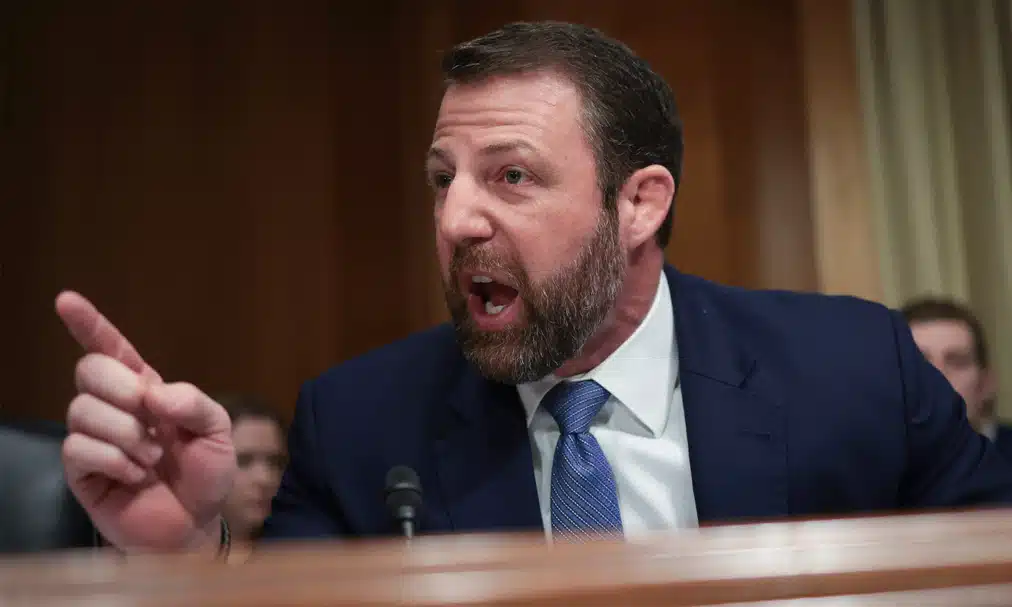
The United States’ handling of a World Cup officiating dispute has escalated into a political flashpoint, with Homeland Security Secretary Markwayne Mullin pushing back hard against international criticism after a Somali referee was denied entry over what officials described as “vetting concerns”.
Mullin accused sections of the press of distorting the issue, insisting the decision was grounded in security protocols rather than discrimination, as debate intensified over the exclusion of Africa’s top-ranked referee of 2025.
The controversy erupted after reports that Somali official Omar Artan was stopped at Miami International Airport and refused entry into the United States ahead of the tournament, despite being cleared by FIFA-linked planning processes.
Referee case triggers global scrutiny
According to reporting from the New York Times, Artan’s name closely matched that of an individual listed in connection with sanctions databases linked to the Al Shabab extremist group. A search of the U.S. Office of Foreign Assets Control records reportedly flagged the similarity, prompting heightened scrutiny.
Artan, however, has firmly denied any link to militant activity.
“They asked me several times if I had ever met representatives of Al Shabab,” Artan said. “I explained to them I knew nothing about this military group, that I was only in the United States to do my job as a referee.”
There is no publicly available evidence connecting him to terrorism, and the decision has triggered widespread criticism from sporting bodies and civil rights observers who argue that name similarity alone should not justify exclusion.
Security stance hardened amid criticism
Speaking on the opening day of the tournament in Mexico, Mullin dismissed the backlash and defended the broader approach taken by U.S. authorities.
“We’re not going to allow people that are perceived to have criminal ties to come into this country,” Mullin said.
“I don’t care what your situation is. I’m not going to get into why we denied this individual (Artan) but there is a reason why this person was denied.
“Now the left media wants to go out there and report this guy is a victim because we are anti-Somalia. No, we’re not.
“We work closely with FIFA and the administration on a regular basis. We talk to FIFA and their directors constantly. Anybody that was denied, we made the case for and showed them why they were denied.”
Wider visa scrutiny impacts multiple delegations
The referee incident has not been isolated. A photographer attached to the Iraq delegation was also refused entry, while star forward Aymen Hussein was briefly detained before being cleared to enter the country.
Mullin pointed to Iran’s participation as evidence that decisions were being made on a case-by-case basis, not through blanket restrictions.
“Iran chose a difficult path – if there was any country we weren’t going to allow in here, Iran would probably be the reason why, but we did,” he said.
“We worked closely with the individuals, with restrictions. There were more than just these two, there were multiple individuals.
“We have a World Cup here, we have got a lot of countries that don’t exactly have access to the United States and we did a phenomenal job on getting as many people cleared as we could.
“But some people, you couldn’t clear. And that’s the way it works with getting a visa to come into this great country.”
Mounting questions over access and fairness
The Iran squad is based in Mexico and is expected to enter the United States only for matchdays before returning immediately after fixtures against New Zealand, Belgium and Egypt.
Meanwhile, reports indicate that fans and media representatives from several nations, including Haiti, Ivory Coast and Senegal, were also denied travel permission.
-
 CAF Champions League: Egyptian sides win as preliminary round first legs conclude Oct 19, 2026
 -
Yan Diomande stars as Real Madrid beat Sevilla FC 4-1 in La Liga Oct 19, 2026
-
Morocco book place at 2026 Beach Soccer Africa Cup of Nations in Senegal Oct 19, 2026
-
Yan Diomande shines again as Real Madrid starlet sets Liga record Oct 19, 2026


-
AFCON 2025: Fixtures, Results, Scores and Standings Jan 18, 2026
-
Match hero Taiwo Awoniyi reflects on team effort after Chelsea triumph May 5, 2026
-
Leadership and long-term vision key to rescuing Zamalek and inspiring Egyptian football – Hany Abou Rida Nov 5, 2025
-
South African giants Orlando Pirates set to lose influential forward Monnapule Saleng Mar 19, 2025




-
Real Betis v Barcelona: kick-off time, TV details and match preview Oct 16, 2026
-
Morocco to face New Zealand as FIFA U-17 Women’s World Cup kicks off in Rabat Oct 16, 2026
-
Roma v Real Madrid: home side tipped to score first in Champions League clash Oct 12, 2026
-
Atletico Madrid v Manchester United: probable line-ups for Champions League clash Oct 12, 2026