Competitions
Countries
Featured Stories
FIFA World Cup
History
Latest News
Predictions
World Football
World Cup 2026: Can Egypt finally make history at the global showpiece?
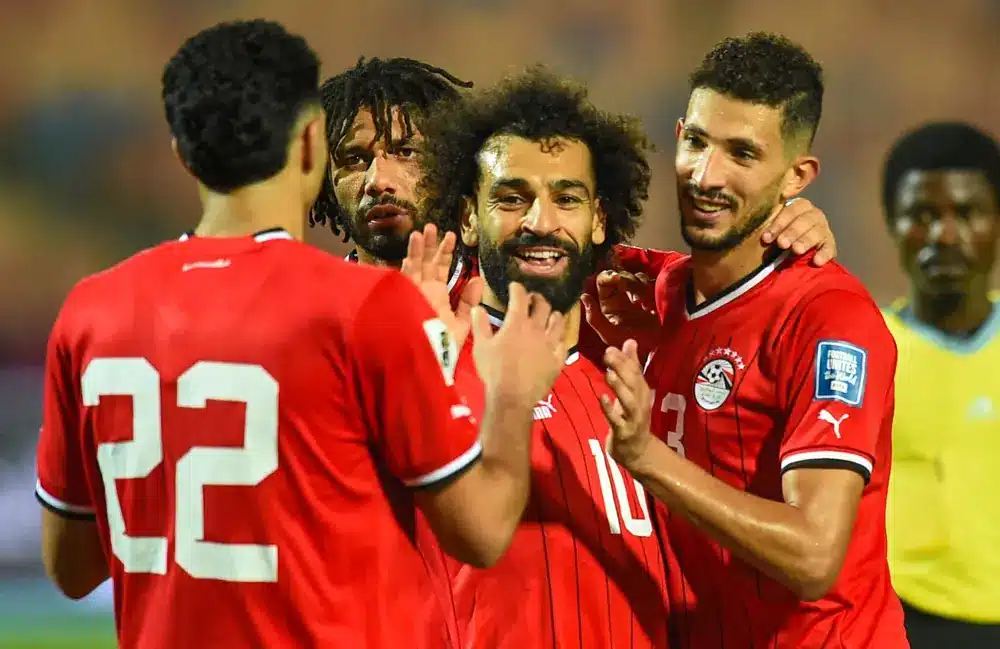
For a nation that has conquered Africa more than any other, the FIFA World Cup has long remained Egypt’s unfinished business.
The Pharaohs are seven-time African champions, one of the continent’s most decorated football nations and home to some of the finest players Africa has ever produced. Yet despite their rich footballing history, Egypt have never managed to progress beyond the first round of the World Cup.
As the 2026 FIFA World Cup kicks off across the United States, Canada and Mexico, Egypt once again find themselves standing before a historic opportunity.
This time, however, there is a growing sense that things could be different.
Led by national icon Mohamed Salah and guided by Egyptian legend Hossam Hassan, the Pharaohs arrive in North America carrying the hopes of more than 100 million people. They also arrive armed with perhaps their strongest chance yet of finally breaking their World Cup curse.
Drawn in Group G alongside Belgium, New Zealand and Iran, Egypt face a series of challenges that will test their quality, character and ambition. But unlike previous tournaments, there is a genuine belief that the knockout stage is within reach.
A chance to rewrite history
Egypt’s relationship with the World Cup has been complicated.
They became the first African nation to participate in the tournament when they appeared in Italy in 1934. Yet despite that historic achievement, World Cup success has remained frustratingly out of reach.
The Pharaohs returned to the tournament in 1990 and then again in 2018, but failed to register a victory in either campaign. Across their previous appearances, Egypt have struggled to translate their continental pedigree onto football’s biggest stage.
That disappointing record has become a burden every new generation of players inherits.
Now, the current squad has the chance to change the narrative.
The expanded 48-team format has opened the door for more nations to dream of progression, and Egypt know they cannot afford to waste the opportunity.
The Salah factor
Every discussion about Egypt inevitably begins with Mohamed Salah.
The Liverpool superstar is not only Egypt’s captain but also the symbol of the country’s football ambitions. Revered across the Arab world and respected globally, Salah has spent years carrying the expectations of a football-mad nation.
The 2026 World Cup may represent his final realistic opportunity to leave a lasting legacy on the biggest stage of all.
In 2018, he entered the tournament carrying an injury suffered in the UEFA Champions League final and was unable to perform at his absolute best. Eight years later, he arrives healthier, more experienced and determined to lead Egypt into uncharted territory.
For all his individual achievements, Salah knows that taking Egypt beyond the group stage would rank among the greatest accomplishments of his career.
Belgium: The ultimate test
Egypt’s campaign begins against Belgium, arguably the strongest side in the group.
Although Belgium’s famous Golden Generation is nearing its end, the Europeans still possess an abundance of quality. Players such as Kevin De Bruyne, Romelu Lukaku and Jeremy Doku remain capable of deciding matches at the highest level.
For Egypt, the opening fixture could define the entire tournament.
A positive result would immediately transform the complexion of Group G and inject belief into the squad. Defeat, on the other hand, would place enormous pressure on the remaining matches.
The Pharaohs will likely approach the contest with caution, relying on defensive organisation and quick transitions through Salah and Omar Marmoush.
New Zealand: No room for complacency
If Belgium represents Egypt’s biggest challenge, New Zealand may be their most important match.
On paper, Egypt possess superior quality across virtually every position. However, World Cups have repeatedly shown that underestimating opponents can be fatal.
New Zealand arrive with little pressure and everything to gain. Their physicality, discipline and direct style could cause problems for any side that fails to match their intensity.
Egypt know that anything less than victory would be regarded as a major setback.
This is the type of match that separates teams that advance from those that go home early.
Iran: A potential decider
The final group game against Iran could become one of the defining moments of Egypt’s modern football history.
Iran have established themselves as one of Asia’s most consistent World Cup participants and possess a reputation for tactical discipline and defensive resilience.
The Iranians rarely make life easy for opponents and are capable of frustrating even the world’s strongest teams.
Should qualification remain undecided heading into the final round of matches, Egypt and Iran could find themselves engaged in a high-stakes battle for a place in the knockout rounds.
It is exactly the kind of pressure-filled scenario that defines World Cups.
A new generation ready to deliver
While Salah remains the headline act, Egypt are no longer a one-man team.
Omar Marmoush has developed into one of Europe’s most exciting attacking players, while Mahmoud Hassan Trezeguet continues to provide experience and leadership.
At the back, Mohamed Abdelmonem offers defensive stability, and several emerging talents are beginning to establish themselves within the national team setup.
This blend of youth and experience has created a squad capable of competing with anyone on its day.
Unlike previous Egyptian teams that often relied heavily on a handful of individuals, the current group appears more balanced and versatile.
The weight of a nation’s expectations
Few countries live and breathe football quite like Egypt.
Every World Cup match will bring cities to a standstill, with millions glued to television screens from Cairo to Alexandria and beyond.
The expectations are enormous, but so too is the opportunity.
For decades, Egyptian football fans have waited to celebrate a World Cup victory and witness their team progress beyond the group stage. The current generation has the chance to provide both.
The road ahead will not be easy. Belgium, New Zealand and Iran each present unique challenges. Yet for perhaps the first time in many years, Egypt enter a World Cup with realistic hopes of making history rather than merely participating.
As the tournament begins, one question hangs over the Pharaohs’ campaign:
Can this generation finally achieve what no Egyptian team has managed before?
The answer will unfold over the coming weeks, but one thing is certain — Egypt’s quest for World Cup redemption has never felt more attainable.
-
 Miguel expects Kaizer Chiefs fans to turn Red Arrows tie into home match Oct 17, 2026
 -
Fisayo Dele-Bashiru set for Lazio contract extension discussions Oct 17, 2026
-
Issa Doumbia attracts Newcastle interest as Sporting set €80m clause Oct 17, 2026
-
Mikel Arteta backs Noni Madueke to reach his best form at Arsenal Oct 17, 2026




-
AFCON 2025: Fixtures, Results, Scores and Standings Jan 18, 2026
-
Match hero Taiwo Awoniyi reflects on team effort after Chelsea triumph May 5, 2026
-
Leadership and long-term vision key to rescuing Zamalek and inspiring Egyptian football – Hany Abou Rida Nov 5, 2025
-
South African giants Orlando Pirates set to lose influential forward Monnapule Saleng Mar 19, 2025




-
Real Betis v Barcelona: kick-off time, TV details and match preview Oct 16, 2026
-
Roma v Real Madrid: home side tipped to score first in Champions League clash Oct 12, 2026
-
Atletico Madrid v Manchester United: probable line-ups for Champions League clash Oct 12, 2026
-
Celta Vigo v Juventus: Probable line-ups for Europa League encounter Oct 14, 2026