A new name will be added to the Women’s Africa Cup of Nations roll of honour on Sunday when Cameroon face Malawi in the final in Rabat.
Neither side has won the competition before, guaranteeing a first-time champion in a tournament that has been dominated by Nigeria since the modern format began.
For the purposes of the competition’s record, 1998 is regarded as the starting point of the current format, when the tournament featured a group stage involving eight teams. Since then, Nigeria have established an unrivalled record on the continent.
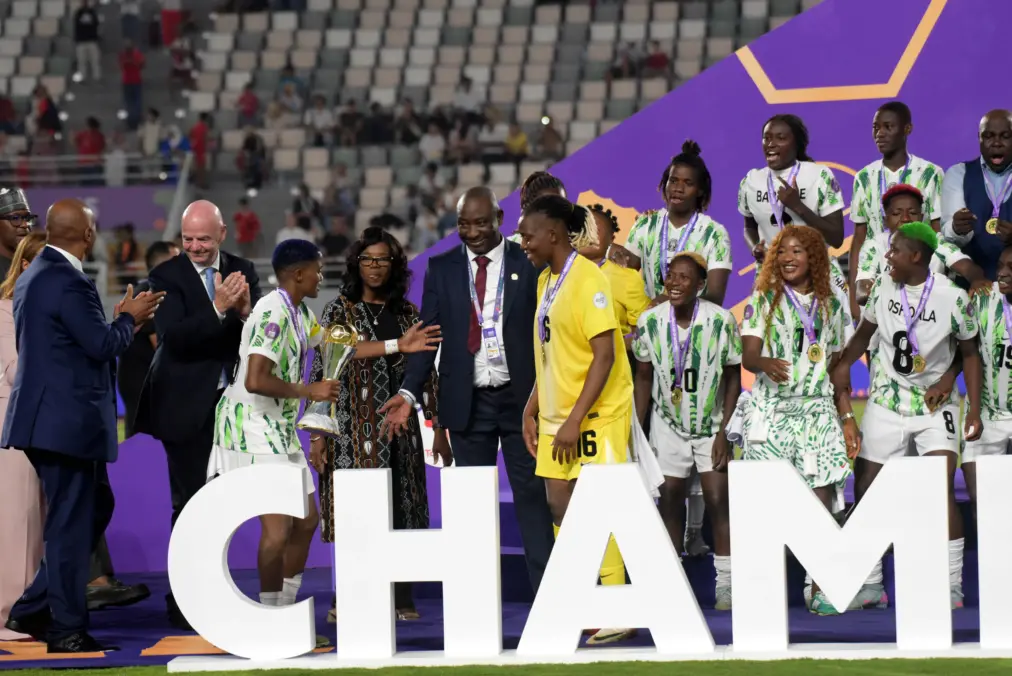
The Super Falcons have won 10 of the 13 editions played between 1998 and 2024. For many years, they were the undisputed benchmark in African women’s football and also appeared at every Women’s World Cup until the qualifying cycle for the 2027 tournament.
That dominance was finally disrupted at the 2026 Women’s Africa Cup of Nations. Nigeria entered as defending champions and strong favourites, but Rasheedat Ajibade and her team-mates were beaten 1-0 by Cameroon in the quarter-finals, leaving the route to the final far more open.
Nigeria’s main challengers
Only one team had managed to make a sustained impact against Nigeria’s supremacy before the latest tournament: Equatorial Guinea.
The Nzalang Femenino caused a major upset in 2008 by eliminating Nigeria, before defeating South Africa in the final. They became the first African champions other than the Super Falcons since the modern competition format was introduced.
Equatorial Guinea repeated that achievement four years later, winning the 2012 edition after again overcoming South Africa in the final. That tournament took place in the same year that their men’s national team co-hosted the Africa Cup of Nations with Gabon.
Those two titles still make Equatorial Guinea the second most successful nation in the competition’s history since 1998, despite the country’s decline on the continental stage in more recent years.
South Africa provided the other significant interruption to Nigeria’s dominance. The Banyana Banyana had previously lost five finals, but finally claimed their first continental trophy in Morocco in 2022.
Led by a generation that included captain Refiloe Jane, South Africa became only the third nation to win the competition since 1998, behind Nigeria and Equatorial Guinea.
Cameroon and Malawi make history
The 2026 tournament will produce a fourth champion from that period, regardless of Sunday’s result.
Cameroon earned their place in the final by first eliminating Nigeria and then defeating hosts Morocco. The Indomitable Lionesses have considerable experience of major finals, having finished as African runners-up several times without lifting the trophy.
Malawi’s run has been even more unexpected. The Scorchers reached the final during their first appearance at the tournament’s finals stage, with sisters Tabitha Chawinga and Temwa Chawinga among the players to have driven their remarkable campaign.
Their progress has also secured a historic qualification for the 2027 Women’s World Cup.
With Nigeria eliminated, South Africa out of the competition and Morocco denied a place in the final, several of the leading powers of recent years have made way for a new contender.
By the end of Sunday evening, the trophy will be heading to either Yaounde or Lilongwe and the Women’s Africa Cup of Nations will have a new champion.
-
 Burkina Faso U17 reach UFOA-B semi-finals after Ghana draw Oct 16, 2026
 -
CAF Confederation Cup: Al Ahli Tripoli take commanding lead with 4-0 win at Welwalo Oct 16, 2026
-
TP Mazembe v Club Africain: kick-off time and TV details for CAF Champions League tie Oct 16, 2026
-
Fouzi Lekjaa to remain at FRMF despite promotion to Moroccan finance minister Oct 16, 2026




-
AFCON 2025: Fixtures, Results, Scores and Standings Jan 18, 2026
-
Match hero Taiwo Awoniyi reflects on team effort after Chelsea triumph May 5, 2026
-
Leadership and long-term vision key to rescuing Zamalek and inspiring Egyptian football – Hany Abou Rida Nov 5, 2025
-
South African giants Orlando Pirates set to lose influential forward Monnapule Saleng Mar 19, 2025




-
Real Betis v Barcelona: kick-off time, TV details and match preview Oct 16, 2026
-
Roma v Real Madrid: home side tipped to score first in Champions League clash Oct 12, 2026
-
Atletico Madrid v Manchester United: probable line-ups for Champions League clash Oct 12, 2026
-
Celta Vigo v Juventus: Probable line-ups for Europa League encounter Oct 14, 2026