Why Kaizer Chiefs-Orlando Pirates derby rules South African football despite Sundowns’ dominance
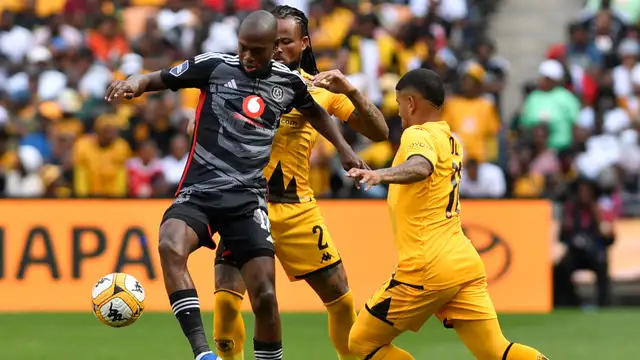
For nearly a decade, Mamelodi Sundowns have dominated South African football, collecting league titles with remarkable consistency and establishing themselves as the country’s modern powerhouse. Yet despite Sundowns’ success on the pitch, no fixture captures the imagination of South Africans quite like the Soweto derby between Orlando Pirates and Kaizer Chiefs.
Whenever the two giants meet, the atmosphere stretches far beyond football. Stadiums fill to capacity, millions tune in across the continent, and conversations in homes, taxis, workplaces and townships revolve around one match. The rivalry remains the biggest sporting spectacle in South Africa and one of the most passionately followed derbies in African football.
The latest chapter of the historic rivalry will once again see Pirates and Chiefs collide twice in the Betway Premiership season, continuing a tradition that has shaped South African football for generations.
A rivalry rooted in history
The popularity of both clubs is deeply connected to Soweto itself — South Africa’s largest and most historically significant township. With millions of residents and a powerful cultural influence on Johannesburg and the country as a whole, Soweto became fertile ground for football identity, loyalty and pride.
Orlando Pirates, founded in 1937, emerged as one of the earliest symbols of black football excellence during a period when apartheid heavily restricted opportunities for black South Africans. The club survived decades of political and footballing change, becoming a symbol of resilience and pride for generations of supporters.
Kaizer Chiefs arrived later, founded in 1970 by former Pirates star Kaizer Motaung after disagreements within his former club following his return from the North American Soccer League. What began as a breakaway project quickly transformed into one of the continent’s most influential football institutions.
Chiefs’ rise coincided with the growth of Black Consciousness movements in South Africa, helping the club establish itself as a powerful symbol of ambition, identity and black excellence during a difficult political era.
More than football during apartheid
During apartheid, football became one of the few spaces where black South Africans could openly express collective identity and pride. Pirates and Chiefs were not simply clubs — they represented aspiration, resistance and hope for many communities.
One of the defining moments in Chiefs’ early history came in 1975 when they defeated Hellenic, a club traditionally associated with white South Africans, in the Chevrolet Champions of Champions competition. Although Chiefs did not win the tie overall, the victory carried enormous symbolic significance at the time.
South African football itself also became one of the first sectors in the country to embrace racial integration. In 1978, the country launched its first multiracial football league — years before political democracy eventually arrived in 1994.
Because of that history, both Pirates and Chiefs occupy a special place in the evolution of South African sport and society.
Continental glory and lasting legacy
The rivalry continued to grow in the democratic era as both clubs achieved major success domestically and internationally.
Orlando Pirates reached a historic milestone in 1995 by becoming the first South African club to win Africa’s premier club competition, now known as the CAF Champions League. Their victory over ASEC Mimosas remains one of the defining achievements in the country’s football history.
That triumph elevated Pirates’ status across the continent and strengthened the mythology surrounding the Soweto Derby.
Crossing the divide
Part of what makes the rivalry so compelling is the number of players, coaches and officials who have crossed from one side to the other over the decades.
The connection between the clubs has existed since Chiefs’ formation, with several former Pirates figures helping Kaizer Motaung build his new team in the early 1970s.
Over time, multiple stars have represented both sides, though few moves generated as much controversy as Jimmy Tau’s switch. The defender captained Orlando Pirates to league glory before later doing the same with Kaizer Chiefs, becoming one of the few players to achieve success at both clubs.
Even in recent years, movement between the rivals has continued, with players such as Thabiso Monyane and Paseka Mako making the transition.
Why the derby still matters
Although Sundowns have become the dominant force in recent PSL history, Pirates and Chiefs continue to command the largest fanbases in South Africa. Their influence stretches across generations, provinces and even national borders.
The Soweto Derby is no longer just about league positions or trophies. It is about identity, history, pride and legacy. It represents decades of triumph, heartbreak, political change and football culture woven into one fixture.
That is why, regardless of form or standings, whenever Orlando Pirates and Kaizer Chiefs meet, South African football comes to a standstill.
-
 Assad Kotya-Fofana earns first FC Koln Bundesliga call-up Oct 15, 2026
 -
Justin Njinmah set to return to Werder Bremen training Oct 15, 2026
-
Evanilson gives Bournemouth half-time lead against Sturm Graz in Europa League Oct 15, 2026
-
Hoffenheim and Besiktas level at half-time in Europa League encounter Oct 15, 2026




-
AFCON 2025: Fixtures, Results, Scores and Standings Jan 18, 2026
-
Match hero Taiwo Awoniyi reflects on team effort after Chelsea triumph May 5, 2026
-
Leadership and long-term vision key to rescuing Zamalek and inspiring Egyptian football – Hany Abou Rida Nov 5, 2025
-
South African giants Orlando Pirates set to lose influential forward Monnapule Saleng Mar 19, 2025




-
Roma v Real Madrid: home side tipped to score first in Champions League clash Oct 12, 2026
-
Atletico Madrid v Manchester United: probable line-ups for Champions League clash Oct 12, 2026
-
Celta Vigo v Juventus: Probable line-ups for Europa League encounter Oct 14, 2026
-
Arsenal backed to edge out Lille in Champions League clash Oct 11, 2026