Vladimir Petkovic confronts Algeria’s attacking fragility without influential Mohamed Amine Amoura
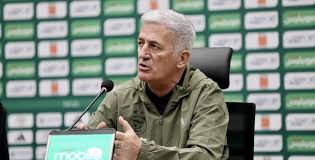
Algeria face Saudi Arabia in a Tuesday evening friendly without their most influential attacker, Mohamed Amine Amoura, whose withdrawal — along with that of Hicham Boudaoui — leaves Vladimir Petkovic’s side without the player who has shaped their productivity throughout the year.
Amoura, who “scored and assisted again three days ago against Zimbabwe,” has been central to Algeria’s attacking identity in 2025.
No African international has matched his output this year, with the VfL Wolfsburg winger registering 14 goal contributions, comprising 11 goals and three assists, a tally that places him well ahead of Nigeria’s Victor Osimhen, who stands at nine.
His influence stretches far beyond individual brilliance.
In the 2026 World Cup qualifying campaign, Amoura finished as the competition’s top scorer with 10 goals, adding four assists.
Algeria struck 24 goals during their 10 qualifiers, meaning Amoura “contributed nearly 60%” of the team’s attacking return — an extraordinary ratio by any measure.
Without him, Algeria’s performances have repeatedly dipped.
Both defeats of the Petkovic era have come in matches in which Amoura did not start.
He was benched for the 1–2 loss to Guinea, introduced only after the hour mark, and was unavailable entirely for the 4–3 defeat to Sweden.
These matches underline how markedly different the team’s offensive sharpness becomes when their most decisive forward is absent.
Petkovic’s record — 14 wins, three draws and two defeats in 19 games — is impressive on paper, yet those setbacks highlight a structural reliance on Amoura’s pace, movement and finishing.
His ability to transform otherwise tight matches has been a recurring theme, and without him, Algeria often struggle to convert dominance into end product.
As Algeria prepare to meet Saudi Arabia, the question is whether Petkovic can adapt his front line to compensate for the loss of their most prolific threat.
The team will likely require alternative sources of creativity and composure in the final third, but replicating Amoura’s impact remains a daunting task.
Whether the Bosnian coach can engineer a balanced attacking performance against Saudi Arabia without his star forward remains to be seen.
What is clear, however, is that the discussion around Algeria’s dependence on Amoura is one that never drifts far from view.
-
 Wydad officially part ways with Portuguese coach Paulo Sergio Oct 23, 2026
 -
FIFA approves Normalisation Committee to run Nigeria Football Federation until May 2027 Oct 23, 2026
-
Paulo Sergio thanks Wydad fans and calls for continued support after exit Oct 23, 2026
-
Nigeria defender Ryan Alebiosu set for Blackburn Rovers milestone against Wrexham Oct 22, 2026


-
AFCON 2025: Fixtures, Results, Scores and Standings Jan 18, 2026
-
Match hero Taiwo Awoniyi reflects on team effort after Chelsea triumph May 5, 2026
-
Leadership and long-term vision key to rescuing Zamalek and inspiring Egyptian football – Hany Abou Rida Nov 5, 2025
-
South African giants Orlando Pirates set to lose influential forward Monnapule Saleng Mar 19, 2025




-
PSG v Barcelona: fiery attacks set up Champions League classic at Parc des Princes Oct 18, 2026
-
Champions League: PSG beat Barcelona as Liverpool complete comeback against Villarreal Oct 20, 2026
-
Real Betis v Barcelona: kick-off time, TV details and match preview Oct 16, 2026
-
PSG beat Barcelona 4-2 in Champions League thriller Oct 21, 2026