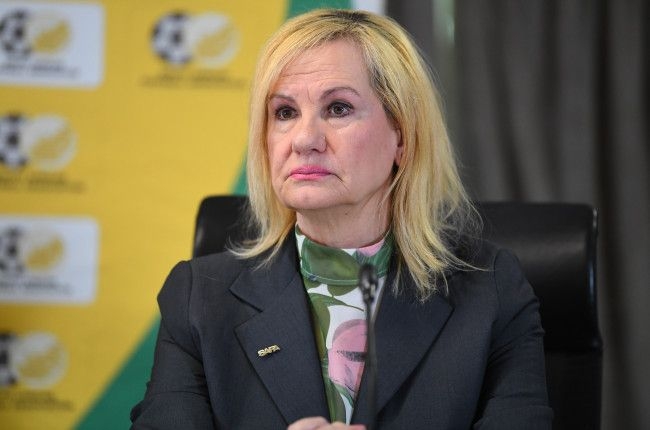
Newly re-elected South African Football Association (SAFA) deputy president Natasha Tsichlas says she has no ambition to become the organisation’s president, insisting her priority is developing women’s football.
Tsichlas was confirmed for another term alongside fellow deputy president Linda Zwane and newcomer Tankiso Modipa at a SAFA National Executive Committee (NEC) ordinary meeting in Sandton.
The trio will serve four-year terms as the direct deputies of SAFA president Dr Danny Jordaan, helping oversee the administration of South African football as the association implements its Vision 2030 roadmap.
Dr Jordaan recently won a fourth term as president after defeating AmaZulu owner Sandile Zungu. He has expressed confidence in the balance provided by the new leadership structure.
Under SAFA’s regulations, members of the wider NEC are elected at the organisation’s general elective congress. The three deputy-president positions are then chosen from that group by the NEC members.
Tsichlas, who has played a prominent role in football administration, said she was content with her current responsibilities.
“We are four vice presidents together with the PSL chairman, but I don’t think I will one day become the president of SAFA; I am very happy to be where I am,” Tsichlas told KickOff.
She identified the advancement of women within the game as her central objective, particularly through the national women’s team Banyana Banyana.
“What’s important to me is to develop more women into our national teams, specifically Banyana Banyana, and other levels of women’s football. My passion has always been about women in football,” she said.
Tsichlas also outlined the administrative role she intends to play during her new term, saying she would focus on ensuring SAFA’s policies were properly established and implemented.
“My role is to see that policies are in place, and that the organization is working properly, and also to advise the president,” she added.
She believes South Africa’s national teams are progressing, but said the association’s focus must remain firmly on football’s development rather than individual ambitions.
“Our national teams are doing very well, and we are growing every day. Our business is football; we are there for football. We are there to help and develop,” Tsichlas said.
“That’s what I’m really passionate about. I want football to win, anything else to me it’s not important.”
-
 Natasha Tsichlas rules out future SAFA presidency after deputy re-election Oct 22, 2026
-
Wiliete coach Bianchi reveals plan that held Mamelodi Sundowns to a draw Oct 22, 2026
-
Mandla Ncikazi returns to Golden Arrows after Orlando Pirates exit Oct 22, 2026
-
Orlando Pirates cautiously assess Oswin Appollis before African Stars return Oct 22, 2026




-
AFCON 2025: Fixtures, Results, Scores and Standings Jan 18, 2026
-
Match hero Taiwo Awoniyi reflects on team effort after Chelsea triumph May 5, 2026
-
Leadership and long-term vision key to rescuing Zamalek and inspiring Egyptian football – Hany Abou Rida Nov 5, 2025
-
South African giants Orlando Pirates set to lose influential forward Monnapule Saleng Mar 19, 2025




-
PSG v Barcelona: fiery attacks set up Champions League classic at Parc des Princes Oct 18, 2026
-
Champions League: PSG beat Barcelona as Liverpool complete comeback against Villarreal Oct 20, 2026
-
Real Betis v Barcelona: kick-off time, TV details and match preview Oct 16, 2026
-
PSG beat Barcelona 4-2 in Champions League thriller Oct 21, 2026