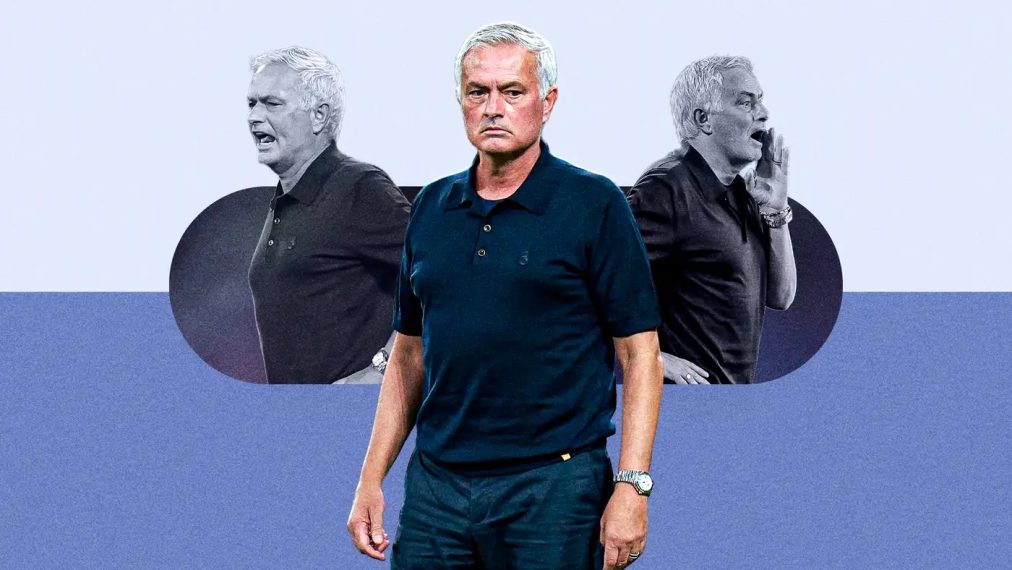
Real Madrid’s 2-1 victory over Barcelona at Camp Nou on Sunday was more than a valuable three points in La Liga. It underlined the changes Jose Mourinho has introduced since returning to the Santiago Bernabeu, with the Portuguese manager reshaping his team’s tactics, dressing-room hierarchy and approach to difficult decisions.
The win may prove a turning point in Mourinho’s second spell in charge. Real Madrid went into the clasico facing a strong Barcelona side, with expectations largely favouring the Catalan club. Instead, Mourinho’s tactical choices and the players’ understanding of their roles produced a more balanced and clearly defined performance.
According to The Athletic, three decisions have been central to that progress: Federico Valverde’s redeployment at right-back, Arda Guler’s increasing influence and Mourinho’s handling of Vinicius Junior.
Valverde accepts an unwanted role
Valverde prefers playing in midfield, but he has increasingly been used at right-back to meet the team’s needs. Carlo Ancelotti started him there 15 times during the 2024-2025 season, while Xabi Alonso also explored the option during the first half of the following campaign.
Valverde was unconvinced by the move and said in September: “The coach knows that I don’t like playing at right-back.”
Alvaro Arbeloa returned him to midfield after replacing Alonso, who was dismissed in January. Mourinho initially held the same view, saying in August: “Right-back? I don’t like it; for me, he is a midfielder.”
However, injuries and tactical demands changed his calculations. Valverde appeared at right-back in the second half against Villarreal, then started there against Roma in the Champions League, Sevilla, Leipzig and Barcelona. Real Madrid won all five matches, strengthening the case for his use in that position.
The role gives the team greater defensive security and attacking width, while allowing a more creative midfield and additional attacking options when Guler moves inside. It has, however, limited opportunities for Trent Alexander-Arnold, who joined from Liverpool in summer 2025, and Denzel Dumfries, signed from Inter Milan in July for 20m euros.
Sources close to Alexander-Arnold say he remains focused on succeeding at Real Madrid and is not considering leaving. He also returned to the England squad under Thomas Tuchel during September’s latest international break.
Guler earns a bigger platform
Mourinho believes the 21-year-old Guler is best suited to the right side of the attacking midfield three in a 4-2-3-1 system. The manager has repeatedly praised his vision, creativity and ability to find attacking solutions, although fitting those qualities into the side without weakening its balance had been difficult.
Valverde’s move to right-back and the arrival of Yan Diomande on the left have created more space for Guler. Against Barcelona, he was one of Real Madrid’s most dangerous attackers, shooting just over the bar early on and supplying an outside-of-the-foot cross for Kylian Mbappe.
Guler also helped create the winning goal, passing to Eduardo Camavinga, whose delivery set up Mbappe. He finished the match with three shots, the most among Real Madrid players, and shared the team’s lead for chances created with two.
His influence increases when he drifts centrally, particularly alongside another playmaker such as Bernardo Silva, giving Real Madrid more ways to build attacks and reducing their reliance on individual moments.
Mourinho changes his approach to Vinicius
Vinicius has been one of Mourinho’s most sensitive challenges. His relationship with Alonso had become strained, with the Brazilian frequently benched or substituted early.
Mourinho initially gave him strong backing and supported a contract renewal despite interest from clubs including Arsenal. Real Madrid extended Vinicius’ deal until 2032 in early August, and he remained a regular starter.
The manager continued to defend him publicly while his form declined. In his first 11 appearances, Vinicius scored once and created three goals. From September, though, Mourinho began reducing his minutes when he was not making the required impact.
He was substituted before or shortly after the hour against Elche, Atletico Madrid, following Dean Huijsen’s sending-off, and Roma. He was left out against Villarreal and was the first substitute used against Leipzig, despite being suspended for the clasico four days later.
Those decisions came as supporters at the Santiago Bernabeu continued to boo him. Mourinho avoided a direct confrontation, helped by the confidence he had previously shown in the player and by positive results during his absence. Vinicius’ omission is now accepted by the club, squad and supporters, unlike under Alonso, when he reacted angrily to being replaced in a clasico.
Diomande’s emergence on the left has added further competition. Vinicius and his representatives recognise that he has not reached his best level and are taking a realistic view as he attempts to regain form. Mourinho had hoped to build an effective partnership between Vinicius and Mbappe, but the Brazilian’s decline forced him to prioritise the team’s stability.
A test beyond the clasico
Mourinho said the manner of victory over Barcelona mattered as much as the result: “The way we won is important too. You can win through luck or by relying heavily on defence, but we won calmly and fully deserved it.”
Real Madrid followed their plan, remained organised after Raphinha equalised in the 60th minute and secured victory through Mbappe’s goal in the 87th. The performance suggested a side capable of controlling a major match rather than relying on a late comeback or an exceptional individual contribution.
Mourinho, aged 63, has also gained considerable respect in the dressing room because of his authority and record. Against Barcelona, Mbappe and Jude Bellingham worked for the collective, while Camavinga produced an influential display after a difficult spell.
The next test is away to Racing Santander on Sunday. Racing are 13th, and the match will carry less glamour than the clasico. Real Madrid’s ability to show the same concentration and discipline against a lesser opponent will indicate whether Mourinho’s changes are becoming a lasting identity or remain the product of one major victory.
-
 Martin O’Neill praises Haitham Hassan’s impact after Celtic’s draw with Dundee United Oct 30, 2026
-
Martin O’Neill faces growing criticism over Haitham Hassan’s limited role at Celtic Oct 30, 2026
-
Cafu breaks silence on Brazil-Norway controversy that ended Morocco’s 1998 World Cup hopes Oct 30, 2026
-
Hassania Agadir lodge formal protest over refereeing decisions in defeat to Raja AC Oct 30, 2026




-
AFCON 2025: Fixtures, Results, Scores and Standings Jan 18, 2026
-
Match hero Taiwo Awoniyi reflects on team effort after Chelsea triumph May 5, 2026
-
Leadership and long-term vision key to rescuing Zamalek and inspiring Egyptian football – Hany Abou Rida Nov 5, 2025
-
South African giants Orlando Pirates set to lose influential forward Monnapule Saleng Mar 19, 2025




-
Barcelona v Real Madrid: Catalans backed at 1.65 to win October Clasico Oct 23, 2026
-
Barcelona and Real Madrid meet in pivotal 265th Clasico Oct 23, 2026
-
Sevilla FC v Osasuna: probable line-ups for Monday’s La Liga meeting Oct 25, 2026
-
Inter Milan v Fiorentina: probable line-ups for San Siro clash Oct 24, 2026