Ibrahim Traoré questions football governance as Burkina Faso considers new sports law
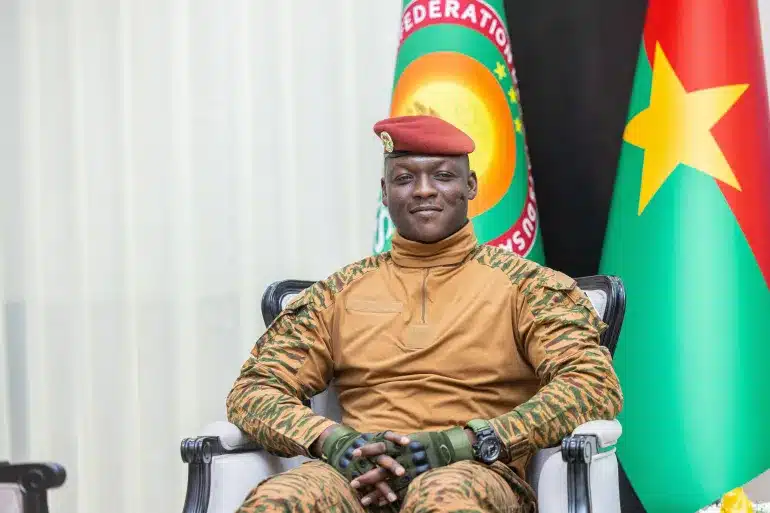
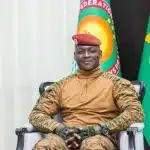
Burkina Faso’s leader Ibrahim Traoré has criticised the country’s football governance system, questioning why the state is expected to finance much of the game but has limited authority to intervene in the affairs of football authorities.
Traoré says the government covers a wide range of expenses associated with football, including players’ flights, accommodation and bonuses, as well as travel costs for supporters.
He argues that the financial burden raises questions about accountability, particularly when the government is unable to exercise direct control over the decisions of the national football federation because of football’s governance regulations.
The comments have renewed attention on the relationship between state authorities and football associations in Africa, where governments often provide significant financial support while federations are expected to operate independently under the rules of international football bodies.
New sports law under consideration
Traoré revealed that a new sports law was being considered, with proposals to introduce sports companies and strengthen financial accountability in the sector.
The proposed reforms are intended to address concerns about how football is financed and managed, including the responsibilities of clubs and the use of public funds.
He questioned why the government should continue spending billions on football when some clubs reportedly struggle to meet their financial obligations, including paying players’ salaries.
The issue raises broader questions about the financial sustainability of domestic football and whether clubs should be required to operate under stronger financial controls before receiving public support.
Introducing sports companies could also lead to changes in how clubs are structured, financed and held accountable, although the precise provisions of the proposed legislation have yet to be established from the details available.
CAF raises concerns over state interference
Traoré also disclosed that the Confederation of African Football (CAF) had recently sought clarification over allegations of state interference in football administration.
He warned that the national team could face suspension, highlighting the potential consequences of a dispute between the government and football authorities.
International football regulations generally require national associations to manage their affairs independently of government interference. FIFA, which governs world football, can impose sanctions on associations where political or other external interference breaches its statutes.
Such sanctions can have serious consequences, potentially preventing national teams and clubs from competing in international competitions.
However, a warning about possible suspension does not mean that a ban has been imposed. The available details do not establish whether CAF or FIFA has opened formal disciplinary proceedings or taken any further action against Burkina Faso.
A wider debate over football funding and independence
Traoré’s remarks highlight a longstanding tension in football administration: governments may provide funding for national teams and sporting infrastructure, but international governing bodies expect football associations to retain operational independence.
For governments, public expenditure on football can be difficult to justify when clubs face financial problems and players reportedly go unpaid. For football authorities, independence from political control is a central principle of the international football system.
The challenge for Burkina Faso will be to determine how to improve transparency and financial discipline without breaching the rules governing national football associations.
The proposed sports law could become a significant part of that debate, particularly if it introduces clearer financial reporting requirements and stronger oversight of clubs benefiting from public resources.
For now, the details of the proposed legislation, the nature of CAF’s request for clarification and any formal response from the football authorities remain unclear.
The outcome could have implications for Burkina Faso’s football administration as the country seeks to balance public investment, accountability and compliance with international football regulations.
-
 Ibrahim Traoré questions football governance as Burkina Faso considers new sports law Oct 15, 2026
 -
CAF insiders deny growing discontent with Patrice Motsepe’s leadership Oct 15, 2026
-
Burna Boy, Oshoala among six stars for SportyBet’s USD 100,000 Crash Games World Cup Oct 15, 2026
-
Esperance urge fans not to travel to Libya for Al-Swehly CAF Champions League clash Oct 15, 2026


-
AFCON 2025: Fixtures, Results, Scores and Standings Jan 18, 2026
-
Match hero Taiwo Awoniyi reflects on team effort after Chelsea triumph May 5, 2026
-
Leadership and long-term vision key to rescuing Zamalek and inspiring Egyptian football – Hany Abou Rida Nov 5, 2025
-
South African giants Orlando Pirates set to lose influential forward Monnapule Saleng Mar 19, 2025




-
Roma v Real Madrid: home side tipped to score first in Champions League clash Oct 12, 2026
-
Atletico Madrid v Manchester United: probable line-ups for Champions League clash Oct 12, 2026
-
Real Madrid fitness update: Valverde a doubt for Villarreal as Kylian Mbappe returns Oct 8, 2026
-
Arsenal backed to edge out Lille in Champions League clash Oct 11, 2026