Frenkie de Jong steps into defence as Barcelona’s injury crisis opens new tactical option
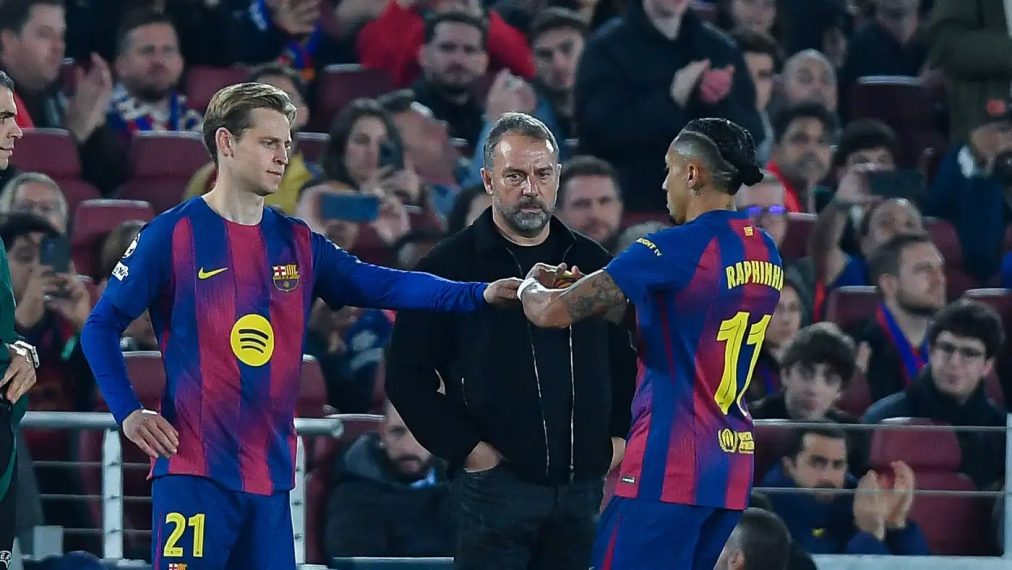
Hans-Dieter Flick’s decision to use Frenkie de Jong in central defence paid off as Barcelona beat Deportivo Alaves 6-1, with the Netherlands international showing he can provide a reliable solution at the back.
De Jong attracted attention after starting alongside Pau Cubarsi rather than in his usual midfield role. His selection came as Barcelona continue to cope with a number of absences through injury, an issue that had already led Flick to suggest the midfielder could be used as a centre-back.
The match also marked De Jong’s return to Barcelona’s starting line-up. He had been given minutes in the El Clasico against Real Madrid after recovering from injury, but his previous start had come on 22 February, when he played the full match in a victory over Levante and also scored.
His positioning against Alaves was significant beyond simply restoring him to Flick’s plans. With Barcelona comfortably controlling the game, De Jong’s presence deeper in the team gave them greater tactical flexibility. The responsibility for building attacks was shared more evenly, rather than relying as heavily on Cubarsi to begin moves from defence.
De Jong’s ability to carry the ball forward also offered Barcelona another way to launch attacks. His movement and changes of position with Rodri added to the team’s options, while Rodri’s ability to read the game helped create better situations for his team-mates.
The main uncertainty before the game concerned De Jong’s defensive duties. He had previously played as a centre-back during his time at Ajax, for the Netherlands and on some occasions for Barcelona under former manager Ronald Koeman.
There were moments against Alaves when he struggled in physical duels and took risks by stepping forward to press opponents. However, those shortcomings did not prevent him from producing a composed display. He remained focused throughout the game and repeatedly anticipated the opposition’s movements.
His timing was particularly impressive when intercepting passes. He also showed good awareness when dropping back to protect the defence, with one of his most important interventions preventing Lucas Boye from reaching a goalscoring opportunity.
The performance strengthened Flick’s case for considering De Jong as a defensive option while Barcelona’s regular choices remain unavailable. It also demonstrated that, although midfield remains his established position, he can give the team a different method of progressing the ball and managing matches from a deeper role.
-
 Al Ahly name squad for Al Mokawloon clash as Zizo, Emam Ashour miss out Nov 2, 2026
-
Al Ahly explain Emam Ashour’s absence from squad Nov 2, 2026
-
Steve Barker excited by Orlando Pirates reunion in CAF Champions League Nov 2, 2026
-
CAF proposes June 2028 dates for Africa Cup of Nations finals Nov 2, 2026



-
AFCON 2025: Fixtures, Results, Scores and Standings Jan 18, 2026
-
Match hero Taiwo Awoniyi reflects on team effort after Chelsea triumph May 5, 2026
-
Leadership and long-term vision key to rescuing Zamalek and inspiring Egyptian football – Hany Abou Rida Nov 5, 2025
-
South African giants Orlando Pirates set to lose influential forward Monnapule Saleng Mar 19, 2025




-
Liverpool v Chelsea: Barcola backed at 3.25 in EFL Cup quarter-final clash Oct 26, 2026
-
Le Havre AC host Paris Saint-Germain as Ligue 1 leaders seek another win Oct 28, 2026
-
Liverpool host Chelsea in EFL Cup last-16 clash at Anfield Oct 26, 2026
-
DRC’s Leopardeaux beat Oman 2-0 to reach FIFA U15 World Cup quarter-finals Oct 29, 2026