FECOFA elections plunged into major crisis as candidates demand suspension
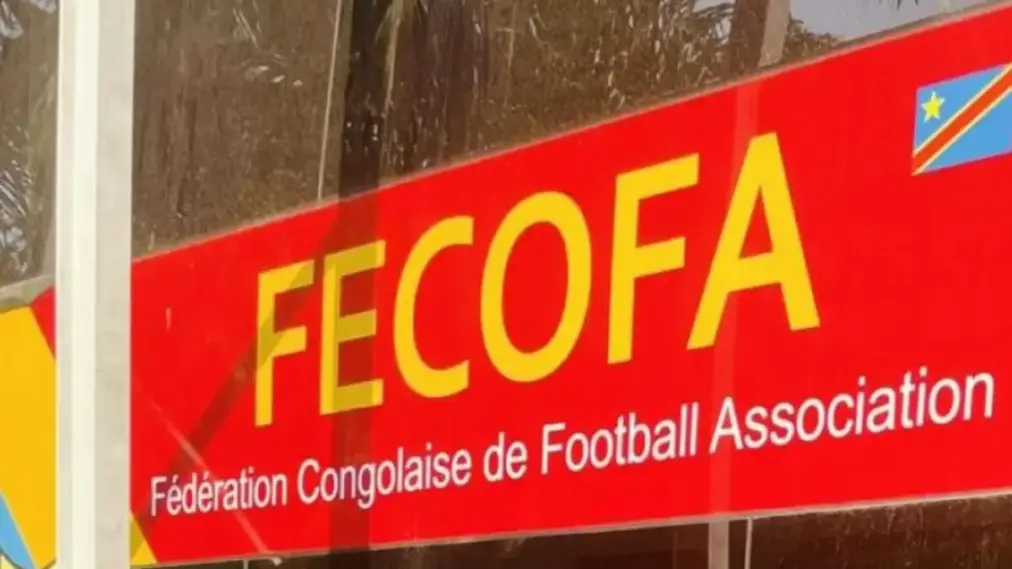
Tensions surrounding the upcoming elections of the Congolese Football Federation (FECOFA) escalated on Friday after a coalition of disqualified candidates demanded the immediate suspension of the electoral process.
The group, made up of candidates whose applications were rejected, accused the organisers of serious irregularities and alleged favoritism that they say threatens the credibility and transparency of the election.
The dispute has added fresh uncertainty to the race for leadership of Congolese football, with growing pressure now being placed on state authorities to intervene.
Speaking on behalf of the coalition, former Democratic Republic of Congo captain Jean-Claude Mukanya publicly criticised the handling of the electoral process and called for urgent action from the country’s leadership.
Mukanya, who was himself excluded from the presidential race, delivered an official statement to the media in which the coalition appealed directly to the President of the Republic and the Minister of Sports.
The rejected candidates are demanding what they describe as immediate state intervention to halt a process they collectively view as flawed and predetermined.
According to the coalition, the current electoral framework has failed to guarantee fairness and equal treatment for all candidates involved in the race to lead FECOFA.
The group argues that the credibility of the election has already been damaged by the manner in which certain applications were rejected, increasing concerns about transparency within the federation.
Their intervention marks a significant escalation in the growing tensions surrounding the organisation of the elections, which are intended to establish a new executive committee for the federation.
The coalition also attempted to counter arguments suggesting that the elections must proceed urgently to ensure stability within Congolese football.
Members insisted that the absence of a permanent executive committee had not negatively affected the sport in recent months, pointing instead to the national team’s achievements under transitional leadership.
As part of their argument, they highlighted the Democratic Republic of Congo’s qualification for the 2026 World Cup, describing it as proof that football activities had continued successfully despite the federation’s transitional management structure.
The qualification campaign has become a central point in the coalition’s criticism, with protesters arguing that there is no immediate institutional emergency requiring the election to proceed under disputed conditions.
The latest developments have placed the country’s sporting authorities in a delicate position as pressure grows from both sides of the dispute.
On one side, the coalition of rejected candidates is demanding intervention in the name of transparency and fairness.
On the other, the electoral commission faces increasing scrutiny over whether it will continue with the process according to the planned timetable despite the accusations.
The disagreement has now evolved beyond a simple electoral dispute and risks creating broader questions about the legitimacy of the federation’s future leadership.
Observers within Congolese football are closely monitoring whether government institutions will respond to the calls for intervention or allow the FECOFA electoral commission to continue independently.
The controversy also reflects the wider importance of football governance in the country, where the federation’s leadership plays a major role in managing both domestic football and national team structures.
For now, uncertainty continues to surround the electoral process as tensions remain high between the rejected candidates and the organisers of the vote.
Jean-Claude Mukanya’s involvement has further amplified public attention on the issue given his status as a former Leopards captain and prominent figure in Congolese football.
The coming days may prove decisive in determining whether the elections proceed as scheduled or whether pressure from the coalition leads to a suspension or review of the process.
What already appears certain, however, is that the dispute has cast a shadow over the FECOFA elections and raised serious questions about the future governance of football in the Democratic Republic of Congo.
-
 Sabah FK secure historic Champions League win with three Africans starting Oct 14, 2026
 -
Paris Saint-Germain tracking Leny Yoro as Manchester United future remains uncertain Oct 14, 2026
-
Victor Osimhen praises FC Barcelona ahead of Galatasaray Champions League clash Oct 14, 2026
-
Carlos Baleba makes Champions League debut as Manchester United lose to Atletico de Madrid Oct 14, 2026


-
AFCON 2025: Fixtures, Results, Scores and Standings Jan 18, 2026
-
Match hero Taiwo Awoniyi reflects on team effort after Chelsea triumph May 5, 2026
-
Leadership and long-term vision key to rescuing Zamalek and inspiring Egyptian football – Hany Abou Rida Nov 5, 2025
-
South African giants Orlando Pirates set to lose influential forward Monnapule Saleng Mar 19, 2025




-
Atletico Madrid v Manchester United: probable line-ups for Champions League clash Oct 12, 2026
-
Manchester United host winless Tottenham in Premier League clash Oct 7, 2026
-
Roma v Real Madrid: home side tipped to score first in Champions League clash Oct 12, 2026
-
Real Madrid fitness update: Valverde a doubt for Villarreal as Kylian Mbappe returns Oct 8, 2026