Christian Kofane hails Cameroon coach Pagou’s man-management
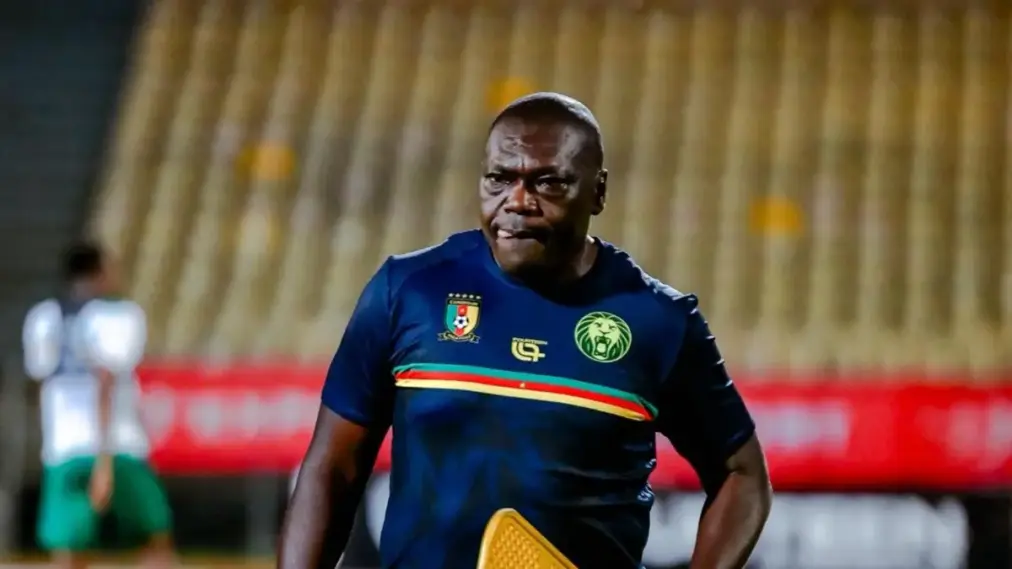
Cameroon international Christian Kofane has praised his coach David Pagou for his rare blend of humility, authority, and emotional intelligence.
Speaking on Talents d’Afrique, Kofane, who plies his trade for Bayer Leverkusen shed light on what it is like working under Pagou, describing a manager whose influence extends far beyond tactics and matchday instructions.
For Kofane, the coach’s strength lies in his ability to manage personalities while maintaining respect and unity within the squad.
“The coach is a humble man,” Kofane said. “I don’t know if you’ve seen his press conferences, but in the dressing room, it’s the same.”
That consistency between public image and private leadership, according to Kofane, is part of what makes Pagou stand out. There is no sense of a divided persona—what fans see is exactly what players experience behind closed doors.
But it is not just humility that defines the coach. Kofane emphasized Pagou’s emotional awareness, suggesting he possesses a sharp understanding of when to motivate and when to challenge his players.
“He knows when to support you and when to give you a shake-up,” he explained. “He’s quite a character.”
It is this balance that has reportedly earned Pagou respect within the camp. In modern international football, where squads are often made up of diverse personalities and rising expectations, man-management can be just as crucial as tactical preparation. Kofane’s comments suggest Pagou has found a way to strike that balance.
For players like Kofane, the impact of such leadership is significant. It creates an environment where young talents can grow, experienced players remain accountable, and the team identity stays intact regardless of results.
The praise also reflects a growing sense of unity within the Cameroon setup, where leadership off the pitch is seen as a key driver of performance on it.
As the Cameroon national football team continue their journey under Pagou, Kofane’s words offer a glimpse into a dressing room shaped not only by tactics, but by trust, discipline, and emotional understanding.
In his eyes, the coach is more than a tactician—he is a presence that commands respect, demands effort, and knows exactly when to speak, and when to listen.
-
 Morocco face Argentina with Women’s Under-17 World Cup place at stake Oct 23, 2026
 -
MC Alger need a historic comeback to keep African Champions League hopes alive Oct 23, 2026
-
Barcelona and Real Madrid tracking Aston Villa midfielder Johan Manzambi Oct 23, 2026
-
Nagida shines as Rennes hold Juventus to 2-2 draw Oct 23, 2026



-
AFCON 2025: Fixtures, Results, Scores and Standings Jan 18, 2026
-
Match hero Taiwo Awoniyi reflects on team effort after Chelsea triumph May 5, 2026
-
Leadership and long-term vision key to rescuing Zamalek and inspiring Egyptian football – Hany Abou Rida Nov 5, 2025
-
South African giants Orlando Pirates set to lose influential forward Monnapule Saleng Mar 19, 2025




-
PSG v Barcelona: fiery attacks set up Champions League classic at Parc des Princes Oct 18, 2026
-
Champions League: PSG beat Barcelona as Liverpool complete comeback against Villarreal Oct 20, 2026
-
Real Betis v Barcelona: kick-off time, TV details and match preview Oct 16, 2026
-
PSG beat Barcelona 4-2 in Champions League thriller Oct 21, 2026