CAF faces criticism over decision to keep Olivier Safari in referees role
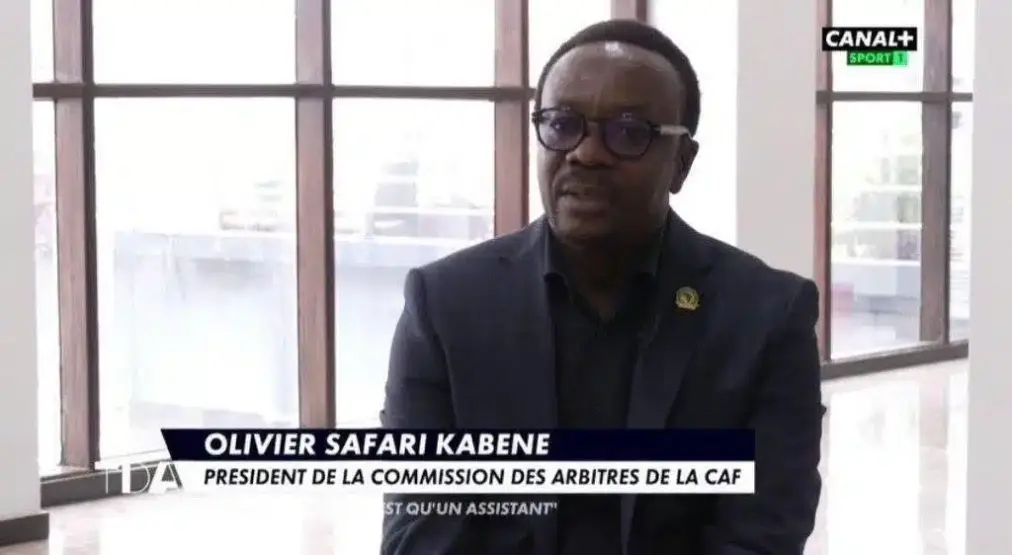
The continued presence of Olivier Safari as head of the referees committee at Confederation of African Football has triggered growing criticism and confusion within African football circles.
The controversy intensified after Safari admitted to intervening during the final of the 2025 Africa Cup of Nations by asking referee Jean-Jacques Ndala not to issue yellow cards to Senegalese players after they had left the pitch.
Despite the incident and the reactions that followed, Safari has remained in his position at the head of CAF’s refereeing structure.
The decision has reportedly caused frustration among observers and even within sections of CAF’s executive committee, where several members are said to have expressed dissatisfaction over the situation.
The debate surrounding Safari’s role has intensified further following his appointment as an evaluator for the first leg of the CAF Champions League final between Mamelodi Sundowns and AS FAR on 17 May in Pretoria.
That nomination has reportedly added to the surprise among officials and supporters already questioning the continued involvement of Jean-Jacques Ndala in the same match.
The issue has become one of the most sensitive administrative matters currently facing CAF, particularly because it concerns refereeing decisions and governance during one of the continent’s biggest competitions.
According to information, interim CAF secretary general Samson Adamu had wanted to replace Safari following the controversy.
However, the report states that CAF president Patrice Motsepe and other officials opposed making immediate changes within the refereeing commission.
The leadership reportedly believes that no restructuring should take place before proceedings at the Court of Arbitration for Sport are concluded.
The case relates to Senegal’s appeal after Morocco were declared winners by default of the 2025 AFCON.
CAF officials are said to be concerned that changes within the refereeing structure before the end of the legal process could create additional complications around the ongoing dispute.
The controversy has therefore become linked not only to refereeing questions but also to broader political and administrative tensions inside the organisation.
According to the same report, Adamu’s ability to introduce significant administrative changes may also be limited by the influence still exercised by former CAF secretary general Véron Mosengo-Omba through individuals considered close to him within the confederation.
That situation is believed to have reduced the room for manoeuvre available to the interim secretary general at a delicate moment for CAF governance.
Safari’s continued presence has nevertheless remained difficult to understand for many observers following the admission concerning his intervention during the AFCON final.
The incident raised questions about the independence of officiating decisions and the level of influence exercised by officials during major international matches.
Critics argue that keeping him in place risks damaging confidence in CAF’s refereeing structures at a time when transparency and credibility remain important concerns for African football.
The appointment for the Champions League final has further intensified those discussions because of the visibility and importance of the fixture.
The match between Mamelodi Sundowns and AS FAR is expected to attract major attention across the continent, making refereeing appointments particularly sensitive.
CAF, however, appears determined to maintain stability within its refereeing department until the CAS proceedings involving Senegal’s appeal are resolved.
Pourquoi Olivier Safari, le patron de la commission arbitrale de la CAF, n’a pas été licencié après la finale de la CAN et le Comex s’en étant suivi ?
Avec toutes les luttes politiques internes et la procédure au TAS…
Pour @snewsafrica https://t.co/QGcD509DuI
— Romain Molina (@Romain_Molina) May 6, 2026
For now, Safari remains in office despite the controversy surrounding his actions and the criticism that has followed.
The situation continues to expose divisions within CAF and highlights the challenges facing the organisation as it attempts to manage both legal disputes and growing scrutiny over football governance in Africa.
-
 Aston Villa make approach for AC Milan defender Fikayo Tomori Oct 24, 2026
 -
CAF Champions League: Colombe Sportive take 2-0 lead into Teungueth return Oct 24, 2026
-
Napoli and Arsenal tracking Monza striker Gustavo Varela Oct 24, 2026
-
Romaric N’Dri tips Barcelona to beat Real Madrid in Sunday’s Clasico Oct 24, 2026



-
AFCON 2025: Fixtures, Results, Scores and Standings Jan 18, 2026
-
Match hero Taiwo Awoniyi reflects on team effort after Chelsea triumph May 5, 2026
-
Leadership and long-term vision key to rescuing Zamalek and inspiring Egyptian football – Hany Abou Rida Nov 5, 2025
-
South African giants Orlando Pirates set to lose influential forward Monnapule Saleng Mar 19, 2025




-
Barcelona v Real Madrid: Catalans backed at 1.65 to win October Clasico Oct 23, 2026
-
Barcelona and Real Madrid meet in pivotal 265th Clasico Oct 23, 2026
-
PSG v Barcelona: fiery attacks set up Champions League classic at Parc des Princes Oct 18, 2026
-
Champions League: PSG beat Barcelona as Liverpool complete comeback against Villarreal Oct 20, 2026