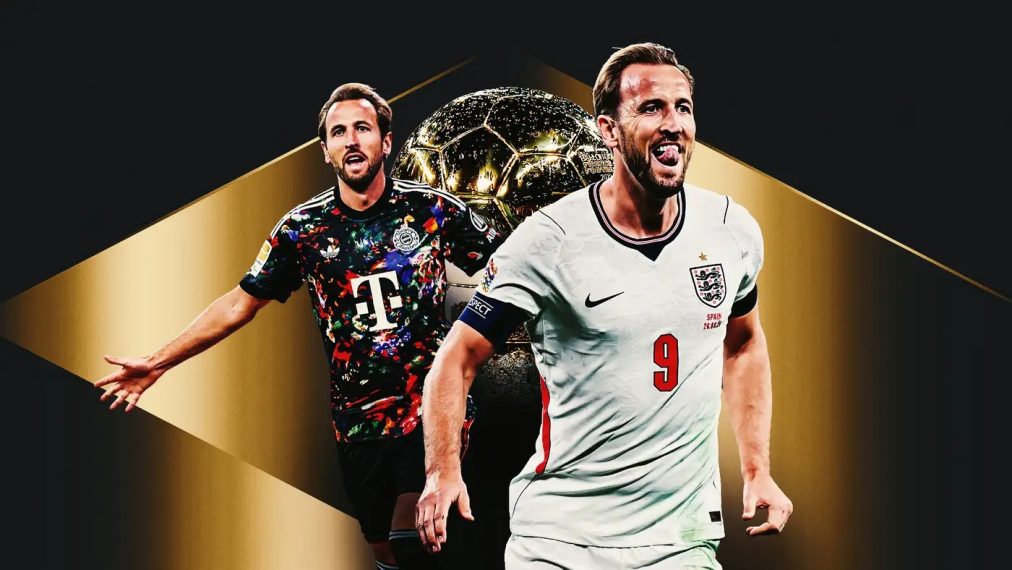
Harry Kane’s Ballon d’Or victory for Bayern Munich in 2026 has reignited the annual debate around football’s most prominent individual award – but its critics argue the controversy is rooted in the prize itself, rather than any particular winner.
The central view expressed here is that the Ballon d’Or has become “a farce benefiting one side” and is given far more importance than it deserves. The criticism is not directed at the latest result, or at a player winning while another loses, but at the award’s entire history.
An award created to boost a magazine
France Football is widely reported to have launched the award partly to increase sales around the end-of-year holiday period. It also created additional income through advertising.
As the organisation behind the initiative, the magazine established the rules and continues to control the award’s operation. Until 1994, only European players were eligible to win it, despite Europe’s leagues featuring many leading footballers from around the world.
The magazine has also controlled the shortlist. Its editors, with limited involvement from others, select the nominees before voters choose from that list. That process has regularly prompted questions, including about the latest 30-player shortlist, which omitted several notable names while including Sadio Mane, despite the view that he was not the best player for either Senegal or Al-Nassr.
Questions over the voting system
France Football says voting is carried out by 100 journalists representing the top 100 countries in the FIFA rankings. That system has changed over the decades, having initially been limited to journalists working in Europe.
However, the criteria for selecting those 100 voters have not been publicly explained. Journalists are contacted directly by the magazine and invited to participate.
The published voting records have also exposed what critics see as the influence of nationality, club loyalty and public pressure. Some Arab journalists are accused of choosing Arab nominees to avoid hostile reactions, while voters in other countries may favour players from their national teams.
Club allegiance can also affect decisions. A journalist supporting Real Madrid may be inclined to select a Madrid player, while a Barcelona supporter could favour a Barcelona player, particularly when there is no obligation to vote for a player from their own country.
Claims of bias and inconsistent criteria
France Football has faced accusations of racism over many years, beginning with the exclusion of non-European players until 1994. The rules changed the following year, after widespread criticism, and George Weah became the first African winner under the revised system.
The issue has continued to be raised. Weah himself argued that Samuel Eto’o was overlooked after Barcelona’s treble-winning season and Didier Drogba after Chelsea won the Champions League. Vinicius Junior’s defeat by Rodri also prompted claims that he had been denied recognition during his campaign against racism.
Other disputed outcomes have involved Andres Iniesta, whom the magazine later apologised to, as well as Franck Ribery, Vinicius Junior, Erling Haaland, Robert Lewandowski and Xavi Hernandez. Critics also point to changing explanations: the World Cup is sometimes treated as decisive, while goals and individual performances are emphasised in other years.
There have additionally been reports of clubs campaigning for selected players, including Yamal and Rodri this year, while some former voters have described approaches from intermediaries urging them to support particular candidates.
France Football even launched a public vote this year to identify the greatest Ballon d’Or winner, charging one euro per vote. That has been criticised as an attempt to profit from the longstanding rivalry between Cristiano Ronaldo and Lionel Messi.
The conclusion is that there are no consistently applied criteria for nominees, no transparent process for selecting voters, and no guarantee that voting is free from emotion or allegiance. For those reasons, the Ballon d’Or should not be treated as a definitive measure of the world’s best player.
-
 Morocco face North Korea for historic Under-17 World Cup quarter-final place Oct 28, 2026
-
Kaizer Chiefs boss Fernando da Cruz hopes TS Galaxy win can spark revival Oct 28, 2026
-
Ramy Bensebaini set for Borussia Dortmund exit as contract runs down Oct 28, 2026
-
Da Cruz says Kaizer Chiefs’ game model is working before Soweto Derby Oct 28, 2026




-
AFCON 2025: Fixtures, Results, Scores and Standings Jan 18, 2026
-
Match hero Taiwo Awoniyi reflects on team effort after Chelsea triumph May 5, 2026
-
Leadership and long-term vision key to rescuing Zamalek and inspiring Egyptian football – Hany Abou Rida Nov 5, 2025
-
South African giants Orlando Pirates set to lose influential forward Monnapule Saleng Mar 19, 2025




-
Barcelona v Real Madrid: Catalans backed at 1.65 to win October Clasico Oct 23, 2026
-
Barcelona and Real Madrid meet in pivotal 265th Clasico Oct 23, 2026
-
Sevilla FC v Osasuna: probable line-ups for Monday’s La Liga meeting Oct 25, 2026
-
Inter Milan v Fiorentina: probable line-ups for San Siro clash Oct 24, 2026