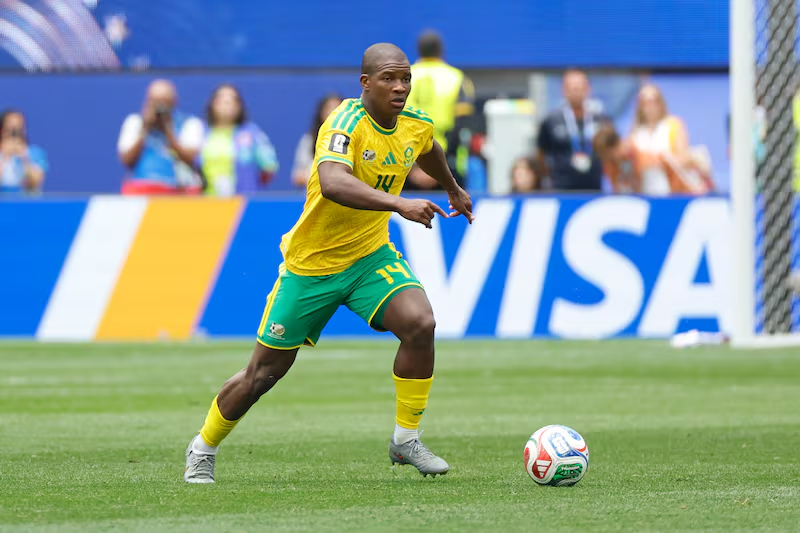
Safa chief medical officer Dr Thulani Ngwenya says the demanding schedule faced by several Bafana Bafana players before the World Cup may have contributed to a series of serious muscle injuries since the tournament in North America.
Four members of the South Africa squad have suffered significant injuries after returning from the World Cup, with Ngwenya warning that the physical demands placed on the players could be a factor.
“It’s different injuries, so it could be different issues, but we can’t take away the fact that if you look at most of these players, the number of games they played leading up to the World Cup was a lot,” he told Sowetan.
“It could be a factor of overload. However, football being a contact and physical sport, players are bound to get injured. In this case, though … muscles may have been highly overloaded.”
Mbekezeli “TLB” Mbokazi was the first Bafana Bafana player to sustain a serious non-contact injury after the tournament. The defender, who plays for Chicago Fire in Major League Soccer, tore a thigh muscle while taking a shot during training.
Mbokazi featured in all of Bafana Bafana’s matches at the World Cup. Chicago Fire initially said he would miss the remainder of the season, but the club confirmed a few days ago that he could return before the campaign ends. He has already begun a rehabilitation programme.
Mudau facing lengthy absence
Bafana Bafana first-choice right-back Khuliso Mudau has suffered a ruptured Achilles tendon and is expected to be unavailable for at least six months.
The injury occurred last week as Mamelodi Sundowns defeated Marumo Gallants 2-0 at home. Mudau, 31, also played in each of South Africa’s four World Cup matches.
Orlando Pirates players Thalente Mbatha and Evidence Makgopa are also set to undergo knee surgery after aggravating injuries during the World Cup.
Ngwenya believes clubs could have made better use of medical information supplied by the national team following international camps, particularly when preparing players for the new season.
“That’s why there’s off-season. Maybe something could have been done in terms of managing their loads leading up to the new season,” he said.
He said the data provided by the national team’s medical staff should allow clubs to assess the demands placed on individual players and take appropriate precautions.
“With the information that clubs get from the medical team of the national team, especially after the World Cup, it becomes easier to manage, or rather assess, the data that you’re given to say, ‘Oh! this player has covered so much ground and distance, so we need to be cautious with him’. Maybe the data could have been used better.”
Ngwenya added that the injuries did not necessarily have a single cause, acknowledging that football is both a physically demanding and contact sport. However, he said the amount of football played by the affected players before the World Cup meant their muscles may have been placed under excessive strain.
-
 Somali referee Omar Artan awaits approval to officiate in Egyptian Premier League Oct 10, 2026
 -
Noussair Mazraoui’s Manchester United comeback delayed after injury during international break Oct 10, 2026
-
Morocco v Senegal: TAS decision on CAN 2025 title expected in October Oct 9, 2026
-
Chelsea look to secure Josh Acheampong’s future amid Premier League interest Oct 9, 2026




-
AFCON 2025: Fixtures, Results, Scores and Standings Jan 18, 2026
-
Match hero Taiwo Awoniyi reflects on team effort after Chelsea triumph May 5, 2026
-
Leadership and long-term vision key to rescuing Zamalek and inspiring Egyptian football – Hany Abou Rida Nov 5, 2025
-
South African giants Orlando Pirates set to lose influential forward Monnapule Saleng Mar 19, 2025




-
Croatia face Spain with Nations League hopes on the line in Split Oct 5, 2026
-
France v Belgium: Probable line-ups for Nations League clash Oct 3, 2026
-
Morocco coach Mohamed Ouahbi refuses to single out player after Mali draw Oct 4, 2026
-
Manchester United host winless Tottenham in Premier League clash Oct 7, 2026