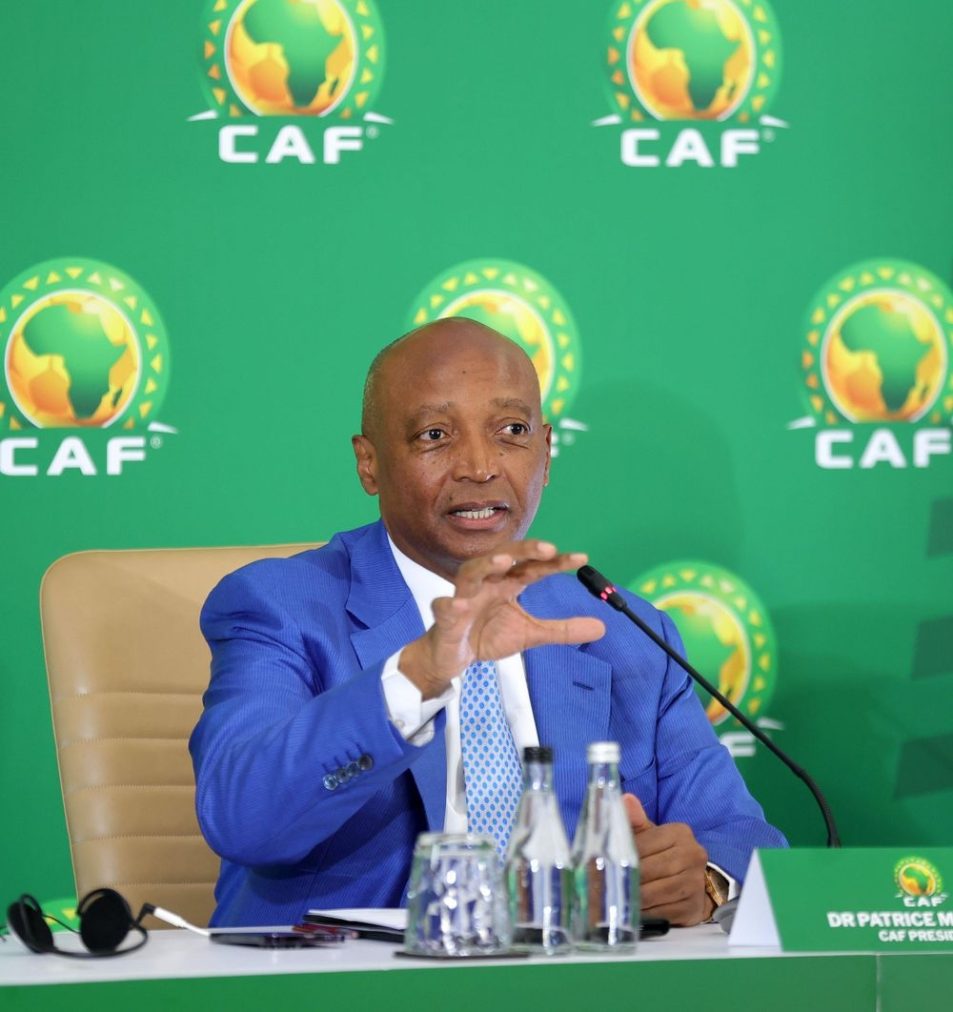
The Africa Cup of Nations will return to a two-year cycle after the Confederation Africaine de Football (CAF) Executive Committee unanimously reversed last year’s decision to stage the tournament every four years.
The next edition will still be held in 2027, with Kenya, Tanzania and Uganda serving as co-hosts. CAF has also confirmed tournaments for 2028, 2031 and 2033, while there will be no AFCON in 2030 because FIFA regulations prevent continental competitions from taking place in the same year as the FIFA World Cup.
The decision followed discussions led by CAF President Dr Patrice Motsepe during the organisation’s recent Strategy Conference in Cabo Verde, where officials reconsidered the future structure of the competition.
CAF had previously proposed introducing a biennial Africa Nations League which would eventually replace AFCON. However, the governing body concluded that the new pan-African competition would not be commercially viable in the short term.
Officials acknowledged that it would take several years for the Africa Nations League to produce the level of revenue required to support African football and ensure CAF competitions remained globally competitive and financially self-supporting.
Motsepe said the return to a two-year AFCON cycle was intended to protect the finances of CAF’s 54 member associations and safeguard the interests of African players employed by clubs outside the continent.
“The decision by the CAF EXCO that the CAF AFCON should take place every two years was based on advancing, protecting and promoting the interest of African Football and CAF’s 54 Member Associations, as well as the interest of African players employed by Football Clubs outside Africa,” Motsepe said.
“We were also concerned by the several years required before the proposed new Africa Nations League Pan-African competition could make the substantial financial and football development contributions for African Football and CAF competitions to be globally competitive and self-supporting.”
The four-year model had been approved in a controversial move last year, but CAF has now abandoned that plan before it could become the tournament’s established format.
Motsepe said AFCON’s importance extended beyond the competition itself, describing it as a celebration of the continent’s football, cultures and traditions.
“The AFCON competition is also about celebrating African Football and Africa’s rich and diverse cultures, customs and traditions and bringing people together from Africa’s 54 Countries, the African Diaspora and throughout the world,” he added.
“The CAF EXCO decision is in the best interest of African Football and will contribute significantly to the development and growth of football in Africa.”
-
 Athletic Bilbao v Real Sociedad: Predicted line-ups for Basque derby Nov 2, 2026
-
Idrissa Gana Gueye scores first Al Diriyah goal after Everton exit Nov 2, 2026
-
Massire Sylla’s Union Saint-Gilloise rise backed by Diambars president Nov 2, 2026
-
Liverpool make Rio Ngumoha contract extension a priority Nov 2, 2026


-
AFCON 2025: Fixtures, Results, Scores and Standings Jan 18, 2026
-
Match hero Taiwo Awoniyi reflects on team effort after Chelsea triumph May 5, 2026
-
Leadership and long-term vision key to rescuing Zamalek and inspiring Egyptian football – Hany Abou Rida Nov 5, 2025
-
South African giants Orlando Pirates set to lose influential forward Monnapule Saleng Mar 19, 2025




-
Liverpool v Chelsea: Barcola backed at 3.25 in EFL Cup quarter-final clash Oct 26, 2026
-
Le Havre AC host Paris Saint-Germain as Ligue 1 leaders seek another win Oct 28, 2026
-
Liverpool host Chelsea in EFL Cup last-16 clash at Anfield Oct 26, 2026
-
DRC’s Leopardeaux beat Oman 2-0 to reach FIFA U15 World Cup quarter-finals Oct 29, 2026