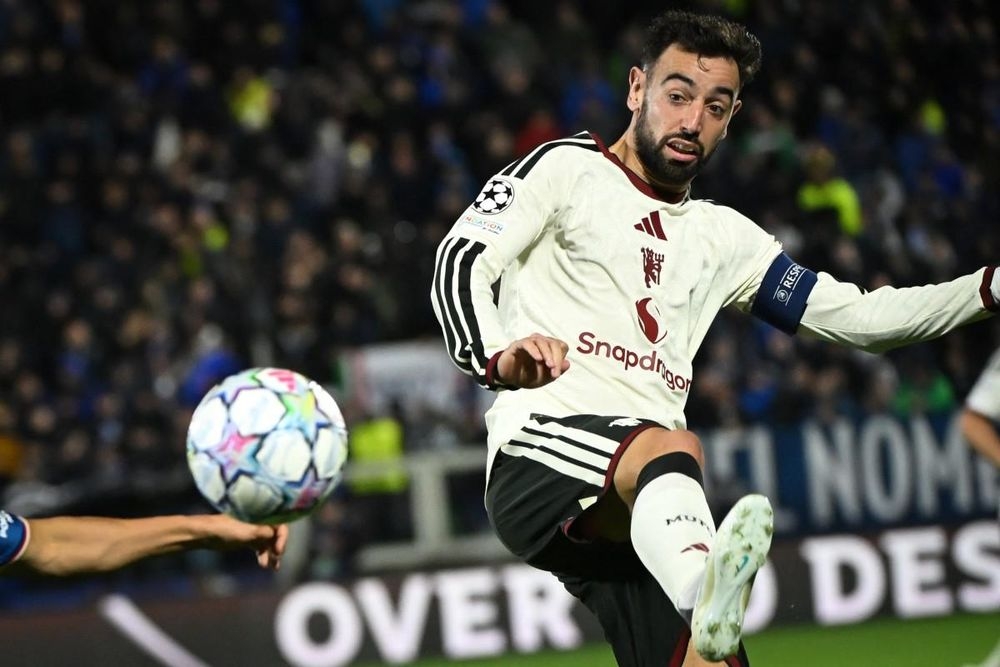
Manchester United manager Michael Carrick has reached an uneasy understanding with captain Bruno Fernandes after the Portugal midfielder publicly questioned his tactics in the defeat by Como.
Fernandes was subsequently left out of the starting line-up for last weekend’s 3-0 loss to Bournemouth, but his absence did little to settle the wider questions over Carrick’s authority. The result left United with only one league win this season and perilously close to the relegation places.
Reports this week suggested Carrick and Fernandes had held a constructive discussion and agreed to move forward. The apparent reconciliation offered Manchester United a chance to present the dispute as a private disagreement between two strong personalities, resolved in the interests of the club.
However, the lack of any clear public apology from Fernandes has underlined the imbalance between manager and captain.
Had the midfielder accepted unequivocal responsibility for challenging Carrick’s tactical plan, that would almost certainly have been reflected in briefings surrounding the meeting. Instead, the language used was familiar to football clubs seeking to draw a line under internal disputes, with references to “constructive dialogue”, “frank exchanges” and a mutual decision to move on.
That leaves the impression that Fernandes did not withdraw his criticism and Carrick chose to accept the situation. More importantly, the captain questioned his manager’s tactical judgement without facing an obvious, lasting sanction.
The contrast with other clubs is stark. At Arsenal, Pierre-Emerick Aubameyang was removed as captain and eventually left the club after breaching Mikel Arteta’s standards. Joao Cancelo’s tactical frustrations at Manchester City were followed by his move to Bavaria. Fabian Hurzeler expects complete commitment to Brighton’s collective pressing demands, while Unai Emery’s positional instructions at Aston Villa are treated as non-negotiable.
At Manchester United, by contrast, the club appears reluctant to risk the consequences of sidelining one of its leading players. Fernandes being on the bench for the defeat by Bournemouth may have strengthened his position rather than weakened it.
The episode also recalls the controversy involving Lisandro Martinez in Madrid, when the defender was emboldened to criticise technical director Jason Wilcox during a live television appearance. Taken together with Fernandes’ public challenge to Carrick, those incidents suggest a club hierarchy struggling to impose clear authority.
Carrick may regard the agreement with Fernandes as necessary preparation for another significant test, with United due to visit Chelsea in the league this weekend. But the truce has also reinforced the perception that the manager depends on the influence of senior players in his dressing room.
Sir Alex Ferguson’s long-standing principle was that a club could not survive once a player became more powerful than the manager. Carrick’s accommodation with Fernandes suggests that, at Manchester United, player influence remains the strongest force within the club.
-
 Athletic Bilbao v Real Sociedad: Predicted line-ups for Basque derby Nov 2, 2026
-
Idrissa Gana Gueye scores first Al Diriyah goal after Everton exit Nov 2, 2026
-
Massire Sylla’s Union Saint-Gilloise rise backed by Diambars president Nov 2, 2026
-
Liverpool make Rio Ngumoha contract extension a priority Nov 2, 2026


-
AFCON 2025: Fixtures, Results, Scores and Standings Jan 18, 2026
-
Match hero Taiwo Awoniyi reflects on team effort after Chelsea triumph May 5, 2026
-
Leadership and long-term vision key to rescuing Zamalek and inspiring Egyptian football – Hany Abou Rida Nov 5, 2025
-
South African giants Orlando Pirates set to lose influential forward Monnapule Saleng Mar 19, 2025




-
Liverpool v Chelsea: Barcola backed at 3.25 in EFL Cup quarter-final clash Oct 26, 2026
-
Le Havre AC host Paris Saint-Germain as Ligue 1 leaders seek another win Oct 28, 2026
-
Liverpool host Chelsea in EFL Cup last-16 clash at Anfield Oct 26, 2026
-
DRC’s Leopardeaux beat Oman 2-0 to reach FIFA U15 World Cup quarter-finals Oct 29, 2026