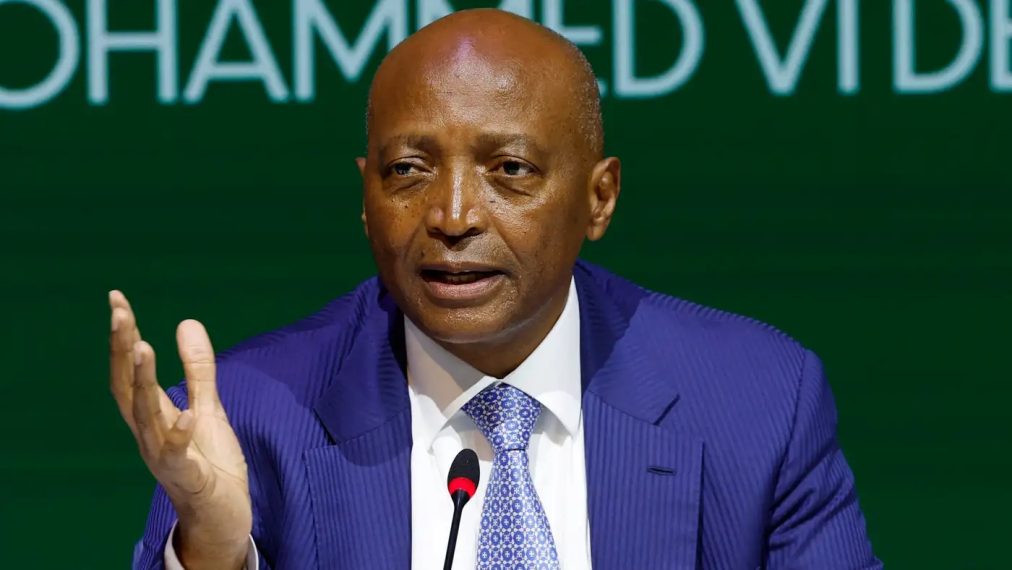
The Africa Cup of Nations will be played every two years after the Confederation of African Football (CAF) executive committee unanimously reversed its previous decision to hold the tournament every four years.
CAF president Patrice Motsepe said the decision was reviewed following the recognition that the proposed African Nations League would need several years to generate the substantial financial resources required to make CAF competitions and African football globally competitive and financially self-sufficient.
The new continental competition had been intended to replace the current Africa Cup of Nations format and take place every two years.
Motsepe announced during the CAF Strategic Conference in Cape Verde, held from 7 to 9 October 2026, that the executive committee would reassess last year’s decision to move the Africa Cup of Nations to a four-year cycle.
In an official CAF statement, Motsepe said the return to a two-year schedule was based on the need to “strengthen, protect and promote the interests of African football”, as well as those of CAF’s 54 member associations and African players who play professionally for clubs outside the continent.
He added that CAF had also considered the length of time the African Nations League would require before it could make a significant financial contribution and have a meaningful impact on the development of African football.
“Such contributions are necessary to make CAF competitions globally competitive and financially self-sufficient,” Motsepe said.
The next Africa Cup of Nations will be hosted by Kenya, Tanzania and Uganda in 2027. Motsepe said he was confident the tournament would be a major success.
The following editions are scheduled for 2028, 2031 and 2033.
The revised programme also takes account of the international calendar. The next World Cup will be held in 2030 and, according to FIFA traditions, the final stages of the Africa Cup of Nations and other continental national-team competitions may not be held in the same year as the World Cup.
Motsepe said the Africa Cup of Nations was about more than the sport itself.
“The Africa Cup of Nations is not only a celebration of African football, but also an opportunity to celebrate the rich and diverse cultures, customs and traditions of the continent,” he said.
“It brings together people from Africa’s 54 countries and African communities in the diaspora, as well as people from across the world.”
Motsepi concluded that the executive committee’s decision served the interests of African football and CAF’s 54 member associations, while also making a significant contribution to the development and growth of the game in Africa.
-
 BREAKING NEWS: Samson Adamu appointed substantive CAF General Secretary Oct 30, 2026
-
Three Egyptian clubs battle to sign Percy Tau ahead of January transfer window Oct 30, 2026
-
Nigeria star Victor Osimhen becomes father for the second time Oct 30, 2026
-
Motsepe explains CAF’s decision to restore AFCON’s two-year cycle Oct 30, 2026




-
AFCON 2025: Fixtures, Results, Scores and Standings Jan 18, 2026
-
Match hero Taiwo Awoniyi reflects on team effort after Chelsea triumph May 5, 2026
-
Leadership and long-term vision key to rescuing Zamalek and inspiring Egyptian football – Hany Abou Rida Nov 5, 2025
-
South African giants Orlando Pirates set to lose influential forward Monnapule Saleng Mar 19, 2025




-
Barcelona v Real Madrid: Catalans backed at 1.65 to win October Clasico Oct 23, 2026
-
Barcelona and Real Madrid meet in pivotal 265th Clasico Oct 23, 2026
-
Sevilla FC v Osasuna: probable line-ups for Monday’s La Liga meeting Oct 25, 2026
-
Inter Milan v Fiorentina: probable line-ups for San Siro clash Oct 24, 2026