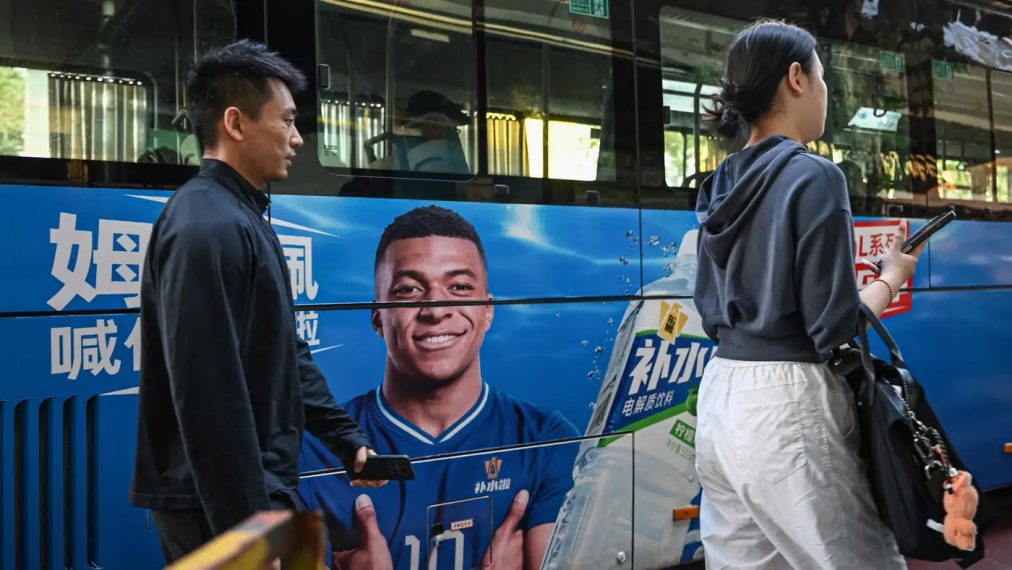
Real Madrid forward Kylian Mbappe has lost partnerships with two major Chinese companies after a video in which he appeared to joke about former Chinese leader Mao Zedong triggered widespread anger in China.
Dongpeng, a drinks company, and dairy producer Mengniu announced on Tuesday that they were ending their collaborations with the France international. The decisions followed remarks attributed to Mbappe in a video that caused significant debate across Chinese social media.
Dongpeng said in a statement that it “strongly rejects any behaviour that harms national feelings” and operates a policy of zero tolerance towards such conduct. The company said it was immediately ending all forms of cooperation with Mbappe.
Mengniu issued a similar statement shortly afterwards.
The controversy centres on footage in which Mbappe discusses the internet memes that have made him laugh most. He refers to an edited image in which his face had been placed over that of a figure he described as a “Chinese dictator”, in an apparent reference to Mao Zedong.
Agence France-Presse’s digital verification services were initially unable to confirm whether the video was genuine. However, anger grew after it circulated, with critics accusing Mbappe of insulting China and its people.
Mbappe is highly popular in China, where supporters closely follow the world’s leading footballers. The China men’s national team has not appeared at a World Cup since its only participation, in 2002.
Historical figures – particularly prominent political leaders – are treated with particular sensitivity in China, and comments perceived as mocking them can provoke a strong public reaction.
The announcement that Dongpeng had ended its partnership with Mbappe became one of the most searched topics on the Chinese social media platform Weibo. Some users called for legal action against the player and demanded compensation.
One user wrote that they would no longer buy products from either company unless legal proceedings were brought against Mbappe. Another described his comments as “extremely dangerous and inappropriate”, saying they had crossed the boundaries of what was acceptable.
Chinese sports website Dongqiudi also criticised the circulating footage, saying the remarks amounted to an insult to China and the Chinese people and hurt the feelings of football supporters in the country.
-
 TS Galaxy and Kaizer Chiefs set for cup clash after social media taunt Oct 27, 2026
-
Jayden Adams remembered at 2026 Ballon d’Or ceremony Oct 27, 2026
-
Kopo reveals how he persuaded Ronwen Williams to return to football Oct 27, 2026
-
Agent expects Sipho Mbule to remain abroad after Zakho contract Oct 27, 2026


-
AFCON 2025: Fixtures, Results, Scores and Standings Jan 18, 2026
-
Match hero Taiwo Awoniyi reflects on team effort after Chelsea triumph May 5, 2026
-
Leadership and long-term vision key to rescuing Zamalek and inspiring Egyptian football – Hany Abou Rida Nov 5, 2025
-
South African giants Orlando Pirates set to lose influential forward Monnapule Saleng Mar 19, 2025




-
Barcelona v Real Madrid: Catalans backed at 1.65 to win October Clasico Oct 23, 2026
-
Barcelona and Real Madrid meet in pivotal 265th Clasico Oct 23, 2026
-
Sevilla FC v Osasuna: probable line-ups for Monday’s La Liga meeting Oct 25, 2026
-
Champions League: PSG beat Barcelona as Liverpool complete comeback against Villarreal Oct 20, 2026