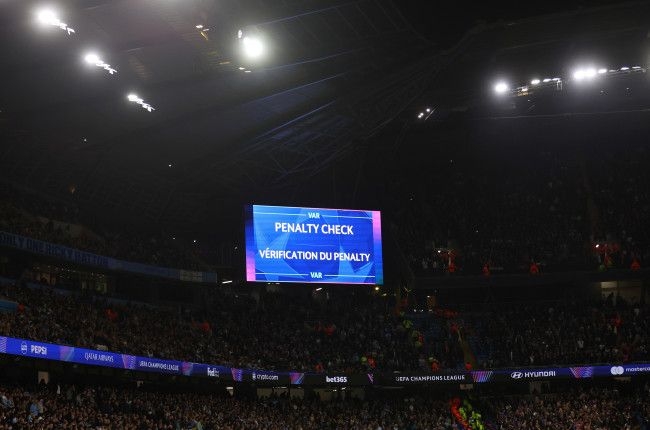
SAFA chief executive Lydia Monyepao says the introduction of Video Assistant Referee technology in South African football has taken longer because the project involves far more than buying equipment.
The association and its VAR project team will work with COSAFA to train referees over the next six months, following pressure from the Sport, Arts and Culture ministry, which has provided R20 million in funding.
SAFA is also due to hold further discussions with FIFA on Thursday, 15 October, to clarify the technical requirements needed for the next stage of the rollout.
Monyepao said the implementation process remained dependent on agreement between SAFA, the National Soccer League (NSL) and official broadcasters. Those discussions include how VAR will operate, as well as the additional costs involved in running and maintaining the system.
“The project team expressed concerns that unresolved stakeholder alignment issues such as the NSL and the broadcasters, combined with a limited time framework hindered implementation until such a time these matters are fully addressed before significant procurement commitments are made,” Monyepao said at Freedom Park Heritage Site & Museum.
She said VAR could not be introduced responsibly without addressing a range of technical, administrative and financial issues.
“Why has implementation taken longer than anticipated? The implementation of VAR is not merely the purchase of equipment, it is a complex, football modernization programme requiring FIFA approval, referee certification and training,” Monyepao said.
She added that the project also required competition integration, compatibility with broadcast systems, suitable infrastructure, procurement in line with SAFA policies, sustainability planning and long-term operational funding.
Monyepao, a former Banyana Banyana midfielder, said an internal assessment had highlighted several risks that needed to be resolved before full deployment.
“The internal readiness assessment conducted internally identified a number of significant risks such as camera coverage requirements, reliability to remote VAR operations, over and above life cycle planning and ongoing maintenance and support costs. These matters must be resolved before full deployment can responsibly take place,” she said.
At present, only Abongile Tom, Luxolo Badi and Akhona Makalima have FIFA approval to operate VAR.
SAFA intends to introduce the technology gradually by testing the systems in its own competitions. The ABC Motsepe National Championship Play-Offs are expected to provide the initial trial, before VAR is considered for cup competitions in the elite league, including the Nedbank Cup.
The staged approach is designed to allow the association to assess the system, referee readiness and operational arrangements before any wider use in South African football.
-
 Injuries expose Kaizer Chiefs’ midfield depth, says Frank Makua Oct 15, 2026
 -
Da Cruz says Kaizer Chiefs must improve finishing after Stellenbosch draw Oct 15, 2026
-
African Stars teenager Micah Davids set for Orlando Pirates test Oct 15, 2026
-
SAFA sets out six-month plan to move VAR rollout forward Oct 15, 2026


-
AFCON 2025: Fixtures, Results, Scores and Standings Jan 18, 2026
-
Match hero Taiwo Awoniyi reflects on team effort after Chelsea triumph May 5, 2026
-
Leadership and long-term vision key to rescuing Zamalek and inspiring Egyptian football – Hany Abou Rida Nov 5, 2025
-
South African giants Orlando Pirates set to lose influential forward Monnapule Saleng Mar 19, 2025




-
Roma v Real Madrid: home side tipped to score first in Champions League clash Oct 12, 2026
-
Atletico Madrid v Manchester United: probable line-ups for Champions League clash Oct 12, 2026
-
Arsenal backed to edge out Lille in Champions League clash Oct 11, 2026
-
Real Madrid fitness update: Valverde a doubt for Villarreal as Kylian Mbappe returns Oct 8, 2026