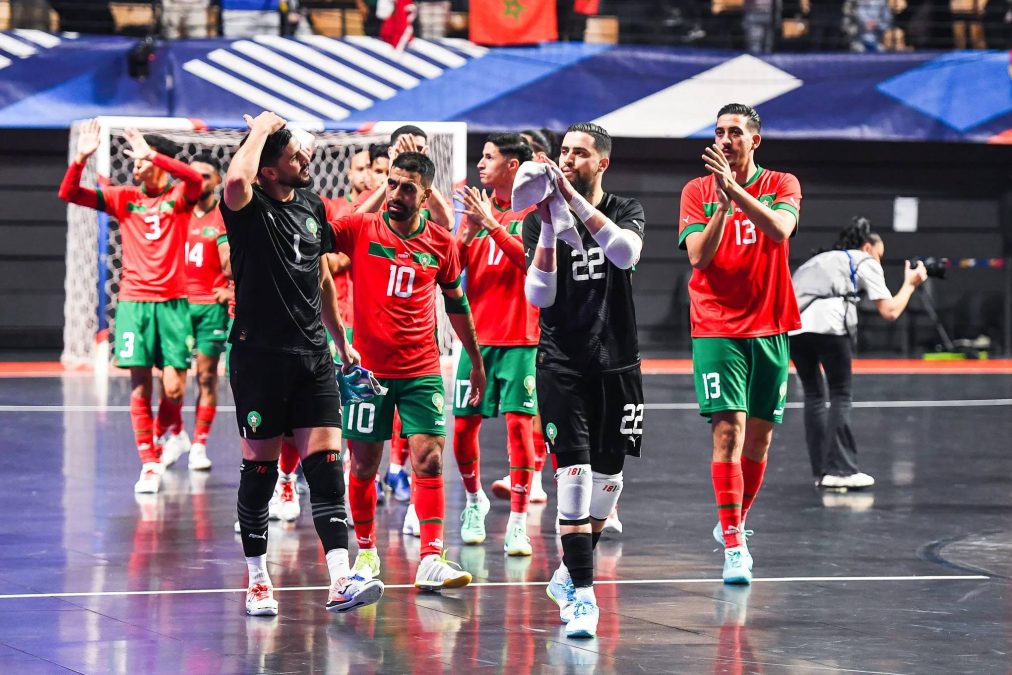
The Africa Futsal Cup of Nations returns to Morocco from 12 to 21 October 2026, with eight teams competing to succeed the hosts, who have won the last three editions.
Morocco, coached by Hicham Dguig, are aiming to retain the trophy in front of their home supporters after lifting it in 2016, 2020 and 2024. They will face Libya, Zambia and Algeria in Group A, while Group B contains Egypt, Angola, Mozambique and Tanzania.
Morocco are hosting the tournament for a third consecutive edition, following the 2020 and 2024 competitions. Most matches will be played at Rabat’s 10,000-capacity Salle Moulay Abdellah, with two games on the final day of the group stage taking place at the Salle Ibn Yassine.
All kick-off times are in Morocco time (GMT). Add two hours for France.
A win is worth three points, a draw one and a defeat none. The top two teams in each group will reach the semi-finals, with the Group A winners facing the Group B runners-up and the Group B winners meeting the Group A runners-up.
The hosts are the clear favourites, having also reached the quarter-finals at each of the past two Futsal World Cups. Egypt have the deepest history in the competition, winning the first three of their four titles in 1996, 2000 and 2004. Libya were champions in 2008, while Mozambique were runners-up in 2004 and Angola reached the final in 2024.
Zambia finished fourth in 2016 and have previous finals experience. Tanzania will make their tournament debut, as will Algeria, who begin their campaign against Morocco in a derby on Monday.
The tournament will be broadcast by Moroccan channel Arryadia. CAF may also show matches on its YouTube channel, CAF TV.
The 2026 competition is not expected to serve as qualification for the 2028 Futsal World Cup, as CAF has made no announcement to that effect. The World Cup is scheduled for October 2028, while another Africa Futsal Cup of Nations is also planned for that year. As in 2024, it is expected to be held a few months earlier, in March or April, and is likely to determine qualification for the global tournament.
How futsal works
Matches consist of two 20-minute periods of effective playing time, with the clock stopping whenever the ball is out of play. Teams field five players, including a goalkeeper, and may make unlimited substitutions. Each side can request one one-minute timeout per half.
From a team’s sixth accumulated foul in a period, opponents generally receive a direct free-kick without a wall, taken from 10 metres or, in certain cases, from where the offence occurred. Yellow and red cards are used, with a team playing a player short for two minutes after an expulsion. Goalkeepers have four seconds to restart play in the relevant situations.
Morocco’s three titles have brought them level with Egypt at the top of the honours list. The hosts can move clear with a fourth triumph in 2026.
-
 Nicolas Pepe backs Senegal star Pape Gueye to win African Footballer of the Year award Oct 11, 2026
 -
Morocco seek fourth straight crown as 2026 Africa Futsal Cup of Nations begins Oct 11, 2026
-
Khalis Merah receives Algeria call-up hint from international team-mate Oct 11, 2026
-
FIFA’s Chief of Global Football Development Arsene Wenger wants African nation to win World Cup Oct 11, 2026



-
AFCON 2025: Fixtures, Results, Scores and Standings Jan 18, 2026
-
Match hero Taiwo Awoniyi reflects on team effort after Chelsea triumph May 5, 2026
-
Leadership and long-term vision key to rescuing Zamalek and inspiring Egyptian football – Hany Abou Rida Nov 5, 2025
-
South African giants Orlando Pirates set to lose influential forward Monnapule Saleng Mar 19, 2025




-
Croatia face Spain with Nations League hopes on the line in Split Oct 5, 2026
-
Manchester United host winless Tottenham in Premier League clash Oct 7, 2026
-
Morocco coach Mohamed Ouahbi refuses to single out player after Mali draw Oct 4, 2026
-
Lens v Lyon: Can the in-form visitors extend their unbeaten Ligue 1 run? Oct 6, 2026