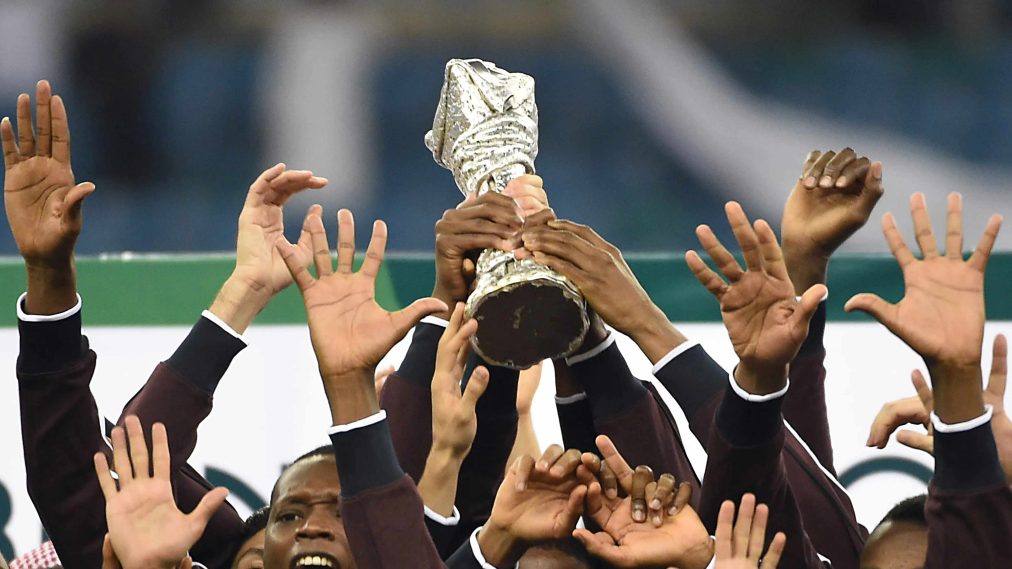
The next Arabian Gulf Cup will be staged in Iraq, with the 28th edition scheduled to take place from 9 to 22 December 2028.
Iraq was awarded hosting rights on 28 September 2026 after the executive office of the Arab Gulf Cup Football Federation unanimously approved its bid. No rival submission was made, while Kuwait was designated as the alternative host in accordance with the tournament regulations.
It will be the third time Iraq has hosted the competition, following the 1979 edition in Baghdad and the 2023 tournament in Basra. The Arabian Gulf Cup will therefore return to Iraqi stadiums five years after Basra staged the previous edition.
The host cities and final tournament format are yet to be confirmed. Basra Governor Asaad Al-Eidani has proposed that one group be played at Basra Sports City, with the other group hosted by Dhi Qar Governorate.
The tournament has been held for more than five decades and has developed into one of the region’s leading international football competitions. Its first edition was held in Bahrain in 1970, and the event has since undergone several changes to its format and number of participating teams. The modern tournament features eight national sides.
The idea of creating a competition for Gulf national teams was initiated by Prince Khalid Al-Faisal and formally discussed during the 1968 Olympic Games in Mexico. The Bahraini delegation raised the proposal with Stanley Rous, who was then president of FIFA.
After returning to Bahrain, the Bahrain Football Association held a meeting on 19 June 1969 to examine the project. Less than a year later, the inaugural tournament took place in Bahrain from 27 March to 3 April 1970, featuring Kuwait, Bahrain, Saudi Arabia and Qatar.
The field expanded at the second edition in 1972, when United Arab Emirates joined. Oman entered at the third edition, while Iraq followed at the fourth, completing the group of Gulf teams taking part at that time.
Kuwait dominated the early years, winning the first four editions in succession. Iraq ended that run by claiming the 1979 title in Baghdad.
The competition has also been affected by a number of unusual incidents. Saudi Arabia and Iraq withdrew from the 1990 tournament in Kuwait. Saudi Arabia objected to the competition’s logo, while Iraq pulled out during the event after protesting against the refereeing in its match against United Arab Emirates.
Iraq missed the 1992 edition because of the consequences of the Second Gulf War. Qatar won the title that year, ending the dominance of Kuwait and Iraq that had lasted for more than two decades.
Yemen joined the tournament in 2003 despite not having a coastline on the Arabian Gulf. Iraq returned for the following edition in 2004, taking the number of participating teams to eight and establishing a format based on two groups followed by knockout rounds.
-
 Lamine Yamal backs Hamza Abdelkarim over Erling Haaland move Oct 6, 2026
 -
Ibrahim Maza overlooked for Golden Boy award despite Kopa Trophy nomination Oct 6, 2026
-
Burkina Faso claim four medals at African Laser Run Championship Oct 6, 2026
-
Argentina v Benin: How to watch Lionel Messi’s final Albiceleste appearance Oct 6, 2026




-
AFCON 2025: Fixtures, Results, Scores and Standings Jan 18, 2026
-
Match hero Taiwo Awoniyi reflects on team effort after Chelsea triumph May 5, 2026
-
Leadership and long-term vision key to rescuing Zamalek and inspiring Egyptian football – Hany Abou Rida Nov 5, 2025
-
South African giants Orlando Pirates set to lose influential forward Monnapule Saleng Mar 19, 2025




-
Denmark v Portugal: Nations League kick-off time, TV channel and match prediction Sep 29, 2026
-
France v Belgium: Probable line-ups for Nations League clash Oct 3, 2026
-
AFCON 2027 qualifiers: Manchester United injury crisis deepens as Noussair Mazraoui hobbles off in Morocco win Sep 30, 2026
-
Noussair Mazraoui leaves Morocco squad early after injury Oct 2, 2026