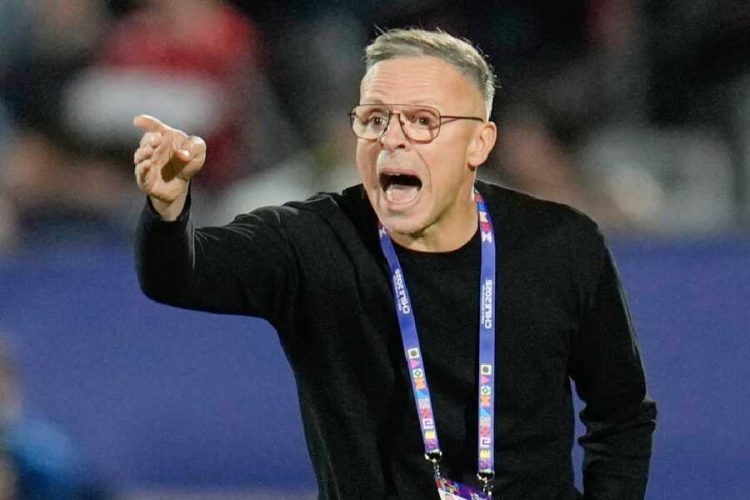
Mohamed Ouahbi’s first Morocco squad since the 2026 World Cup quarter-finals signals a gradual transition rather than a major overhaul, with established leaders retained alongside several new faces.
The Atlas Lions will face Gabon at Rabat’s Stade Moulay Abdellah on 25 September before playing Lesotho in Bloemfontein, South Africa, on 29 September in their opening matches of the 2027 Africa Cup of Nations qualifiers.
Former Morocco international and professional-club manager Faouzi Jamal believes the 29-player selection reflects three priorities: continuity, renewal and a redistribution of responsibility.
Morocco already has a clear identity, a settled core and considerable experience at the highest level. Ouahbi’s challenge is to preserve those foundations while preparing the next generation.
Bounou and Hakimi remain central
Yassine Bounou, Munir El Kajoui and Reda Tagnaouti have all been retained, while Alaa Bellaarouch has been added and El Mehdi El Harrar omitted.
Jamal considers Bounou the goalkeeper of the present, but believes Bellaarouch’s inclusion begins the process of preparing for the future. El Harrar’s absence does not close the door on him, with form and competition still important selection factors.
Achraf Hakimi has also been included despite being suspended for both matches. His presence allows him to remain close to the squad and help new players settle, while giving Ouahbi the chance to assess alternatives at right-back, including Zakaria El Ouahdi.
Sofyan Amrabat, however, has said he will not be involved with Morocco under Ouahbi. His absence is particularly significant because he provided protection in front of the defence, covered the central areas, recovered possession and helped secure transitions when the full-backs advanced.
Jamal said the situation should not be reduced to a personal dispute or speculation about motives. Amrabat has stated his position, while Ouahbi has made clear that no player has a guaranteed place and that selections will be based on form and team balance.
New options in midfield and attack
The midfield group includes Samir El Morabet, Ayyoub Bouaddi, Neil El Aynaoui, Oussama Targhalline, Bilal El Khannouss, Soufiane El-Faouzi, Azzedine Ounahi and Ismael Saibari. Their varied qualities offer options for building play, pressing, operating between the lines and attacking from deep.
Saibari, suspended for the opening game, can play as a number 10, in a more advanced role or as a striker. His versatility could allow Ouahbi to alter the attacking structure during matches.
The defence combines experience and youth. Noussair Mazraoui, Nayef Aguerd, Achraf Hakimi and Romain Saiss provide continuity, while Abdelhamid Ait Boudlal, Ali Maamar, Redouane Halhal and Issa Diop represent the emerging generation.
In attack, Brahim Diaz and Soufiane Rahimi remain part of the established group, joined by Yassir Zabiri, Abdellah Ouazane and Tawfik Bentayeb. Zabiri’s selection follows an impressive start to the season with Racing Santander, while Bentayeb’s status as the leading scorer in the French second tier last season has earned him an opportunity.
Both must now prove they can reproduce their club form internationally, including in pressing, movement and combination play.
The Gabon match will test Morocco without Hakimi, Saibari and Amrabat, while the meeting with Lesotho will offer a further chance to adjust roles and assess the newcomers.
Ouahbi’s squad is therefore less a revolution than a carefully managed succession plan. The immediate results matter, but so will the team’s style, balance and ability to develop a future beyond Bounou, Hakimi and the current generation.
-
 Morocco’s post-World Cup future begins with Ouahbi’s 29-player squad Sep 18, 2026
 -
Richards Bay set to appoint Dimitar Pantev after Marumo Gallants move collapses Sep 18, 2026
-
Sebelebele says Pirates players must ‘work for the badge’ Sep 18, 2026
-
Steve Komphela credits football and education for rise from farm hardship to Sundowns success Sep 18, 2026



-
AFCON 2025: Fixtures, Results, Scores and Standings Jan 18, 2026
-
Leadership and long-term vision key to rescuing Zamalek and inspiring Egyptian football – Hany Abou Rida Nov 5, 2025
-
South African giants Orlando Pirates set to lose influential forward Monnapule Saleng Mar 19, 2025
-
Match hero Taiwo Awoniyi reflects on team effort after Chelsea triumph May 5, 2026




-
African Stars choose Botswana’s Lucas Moripe Stadium to host Orlando Pirates in CAF Champions League Sep 16, 2026
-
Europa League: AC Milan, Benfica and Lyon begin new league phase Sep 16, 2026
-
Mohamed Fathi emerges as potential PSL option amid South Africa coaching shake-up Sep 11, 2026
-
Besiktas and Marseille reveal probable line-ups for Europa League opener Sep 15, 2026