Kaizer Chiefs join global push as women’s football grows, says Sophia Thiemann
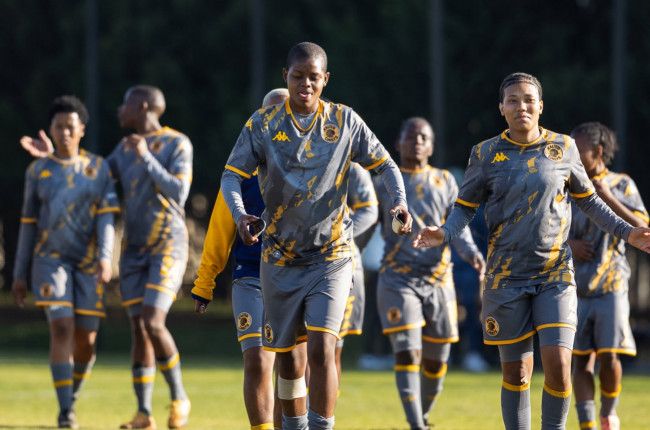
Arminia Bielefeld Ladies attacker Sophia Thiemann says the rapid growth of women’s football brings both greater opportunity and added responsibility for players, as Kaizer Chiefs continues to establish itself in the women’s game.
Thiemann was speaking during an online roundtable hosted by Arminia Bielefeld and Kaizer Chiefs to mark Women’s Month. The discussion, titled United for women, brought together players from both clubs, as well as media representatives and a host. KickOff attended the session.
Kaizer Chiefs entered women’s football earlier this year and has already built a strong following. The club also broadcasts its matches live on its official YouTube Channel, following a similar approach to Arminia Bielefeld.
The discussion considered projections from Nielsen Sports suggesting that women’s football could rank among the five most-watched sports worldwide by 2030. The report also forecasts a 38% increase in the women’s football fanbase and a 30% rise in the global audience, with women expected to account for 60% of supporters.
Thiemann said she believed those predictions were achievable, pointing to the increased visibility the women’s game is already receiving.
“Definitely, the interest in general for women’s football has grown, you cannot deny it. For the players, it is an amazing possibility to have the stage and not just play in front of ten people and those ten people are mom and dad, those are the most important people,” Thiemann said.
She added that greater exposure also means players must learn to manage the expectations that come with representing prominent clubs.
“But in general the fact that there is visibility in general, that also comes with responsibility for the players. But we should not forget that in the end it’s about football.
“Of course when the visibility comes, the pressure comes and we should be able to deal with the pressure. But if you are able to focus on the game and have fun, then people will be able to embrace the visibility. When you’re playing for a bigger club, it comes with responsibility, yes but in the end it’s about football,” the German midfielder said.
Women’s football remains at an early stage of development in many countries, and the panel also discussed the challenges faced by girls and women entering a sport still widely seen as male dominated.
Thiemann, who is 30, explained that she had initially played handball before moving into football. She recalled feeling uncertain about whether she belonged when she began playing alongside boys and men.
“So when I started playing football, I used to play handball, of course there were those questions, do you belong, do you not belong, because obviously everyone is male, it was kind of an odd feeling to start off but when we got to play, they started to appreciate what I was able to do and that there’s no difference in gender,” Thiemann said.
The Arminia Bielefeld player said the feeling of acceptance changed once her ability was recognised on the pitch.
“I just felt I belonged. I think that is a key point when it comes to the belonging issue. If you stop asking yourself, ‘Do I belong?’ I think you already do,” the German added.
-
 Da Cruz demands more from Kaizer Chiefs after late Siwelele scare Sep 7, 2026
 -
Kaizer Chiefs join global push as women’s football grows, says Sophia Thiemann Sep 7, 2026
-
Junior Dion’s contract situation raises transfer stakes for Golden Arrows Sep 7, 2026
-
Cardoso says Sundowns’ Champions League triumph is not about personal recognition Sep 7, 2026



-
AFCON 2025: Fixtures, Results, Scores and Standings Jan 18, 2026
-
Leadership and long-term vision key to rescuing Zamalek and inspiring Egyptian football – Hany Abou Rida Nov 5, 2025
-
South African giants Orlando Pirates set to lose influential forward Monnapule Saleng Mar 19, 2025
-
Full schedule for 2025 Africa Cup of Nations in Morocco confirmed Feb 12, 2025




-
SAFA announce Pitso Mosimane’s return as Bafana Bafana head coach Sep 1, 2026
-
Betis face stern Real Madrid test as La Liga leaders target fourth straight win Sep 1, 2026
-
Ivory Coast sweat over Evan Ndicka fitness ahead of FCON 2027 qualifiers Sep 1, 2026
-
Pitso Mosimane set to be unveiled as South Africa head coach Sep 1, 2026