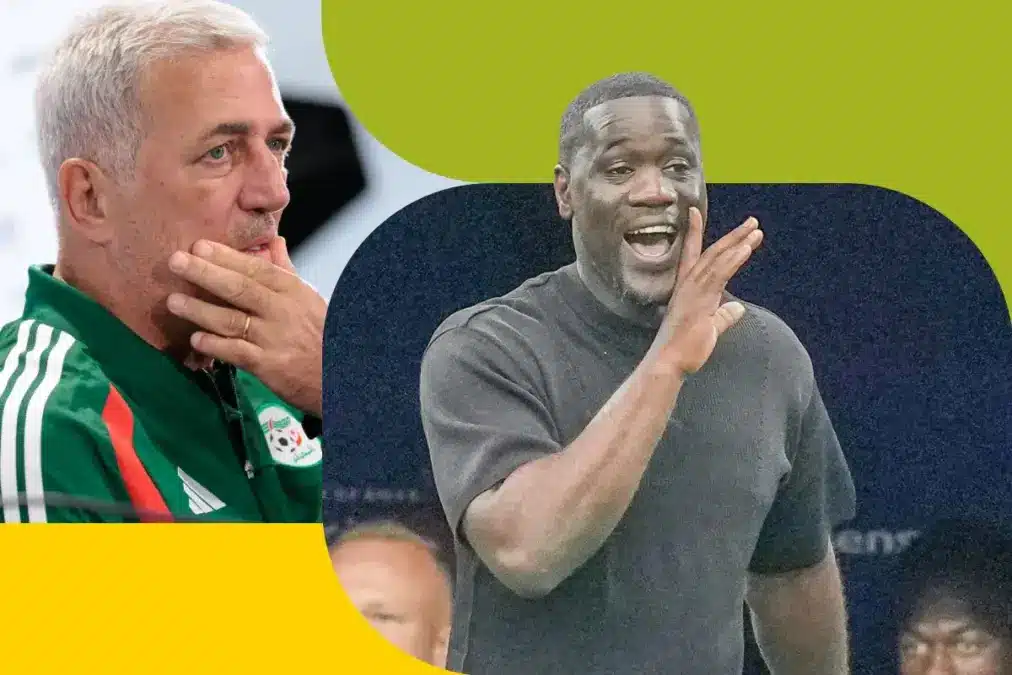
Only three of the 10 coaches who led African nations at the 2026 World Cup remain in charge, with seven departures confirmed or effectively decided little more than two weeks after the tournament ended.
The changes have taken different forms, including dismissals, negotiated exits and voluntary resignations. The scale of the turnover is striking given that Africa enjoyed a broadly successful tournament, with nine of its 10 qualifying teams reaching the last 16.
Three coaches lost their jobs after their teams were eliminated, although the circumstances surrounding each departure were markedly different.
In Senegal, Pape Thiaw’s position remains unresolved despite the Senegalese Football Federation (FSF) announcing his dismissal after a disappointing campaign in North America. Discussions over the terms of his departure have dragged on for several weeks because the state does not want to meet the cost of ending his contract.
The Senegalese federation is keen to move on and has already reached an agreement with Patrick Vieira, but the formal conclusion of Thiaw’s employment has yet to be completed.
Algeria’s Vladimir Petkovic faced a similarly complicated situation. The Bosnia and Herzegovina-born Swiss coach had signed an extension until 2028 before the World Cup, but his standing weakened as the Fennecs produced a series of disappointing performances at the tournament.
A number of measures taken by the Algerian Football Federation (FAF) after the competition were interpreted as attempts to force him out. Those included changes to his coaching staff and a requirement that he spend three weeks each month in Algeria. His departure was finally confirmed on Monday evening after lengthy negotiations.
It marked a mixed ending for Petkovic, who had helped revive the Fennecs following several years of instability.
The situation involving Cote d’Ivoire’s Emerse Fae was different. The former international became a national hero after taking charge during the 2024 Africa Cup of Nations and guiding the Elephants to continental glory. However, despite leading the country to a historic run to the last 16 of the 2026 World Cup, he was not offered a new contract.
With a presidential election in the federation due in one month, the Ivorian Football Federation announced on Friday that its collaboration with Fae would end. He had faced increasing criticism in recent months and will be replaced by Herve Renard.
Four other coaches left by choice, for contrasting reasons.
Cape Verde’s Bubista made the most high-profile decision after guiding his team on a historic journey to the last 16 of the World Cup, a run which captured attention around the world. Despite the challenge of preparing for qualification for the 2027 Africa Cup of Nations, he opted to pursue a new opportunity with Moroccan club RS Berkane.
The recent winners of the CAF Confederation Cup have signed Bubista on a two-year contract.
Renard also chose to end his brief and difficult spell in charge of Tunisia. He replaced Sabri Lamouchi after the Eagles of Carthage played their first match in North America, but did not wait for a decision from the Tunisian federation.
Instead, the Frenchman is preparing for a new challenge with Cote d’Ivoire, underlining the high regard in which he continues to be held across the continent.
Carlos Queiroz, who had been appointed by Ghana on a short-term basis, also decided that his time had come to an end. The Portuguese coach announced his immediate departure only days after taking part in his fifth successive World Cup.
Queiroz believed his cycle with Ghana was complete, despite the Black Stars reaching the last 16 in what was a relatively successful campaign.
South Africa’s Hugo Broos left after five years in charge with his reputation greatly enhanced. The South African federation tried to persuade the Belgian to continue following the Bafana Bafana’s historic progress to the last 16, but Broos stayed with his decision to retire.
At 74 years and 75 days, he became the oldest coach to win a match at a World Cup. Broos had also won the 2017 Africa Cup of Nations with Cameroon and played a central role in South Africa’s revival. However, he struggled with being away from his family and chose to close a long coaching career.
Only three of the World Cup coaches are still in their posts.
Mohamed Ouahbi remains in charge of Morocco after taking over a few months before the tournament from Walid Regragui. The Moroccan federation has kept faith with him after the Atlas Lions reached the quarter-finals and is choosing continuity.
Egypt’s Hossam Hassan emerged from the World Cup with his position strengthened. After the Pharaohs reached the last 16 for the first time in a historic campaign and were involved in a dramatic match against Egypt, the country’s football officials concluded that the progress made justified continuing with their coach.
The Egyptian Football Federation renewed Hassan’s contract, believing the project is moving in the right direction.
Sebastien Desabre is also firmly established as coach of DR Congo. The Frenchman continues to benefit from the credit he has built since taking charge, with the Leopards making steady progress and returning to the ranks of the continent’s most competitive national teams. He led them to a historic last-16 appearance at the World Cup.
The number of departures makes it difficult to draw one single conclusion. Some coaches have chosen to take advantage of an enhanced reputation, while others had reached the end of a cycle or had only been appointed for a short interim period.
The example of Cote d’Ivoire nevertheless suggests that federations are becoming more demanding. Fae was dismissed despite delivering the country’s best World Cup performance, but the federation may believe its golden generation can go further under a different coach.
Results are no longer the only measure. The quality of performances and a coach’s ability to exploit the full potential of a national team are increasingly being taken into account.
By Auguste Blanchet
Auguste Blanchet believes Hakim Ziyech and Youcef Belaili are misunderstood geniuses. Inspired in his youth by Senegal’s 2002 and Ghana’s 2010 World Cup runs, he now writes to share his passion for African football.
-
 Stuttgart and Atletico Madrid set for Champions League showdown: predicted line-ups Oct 19, 2026
 -
Stuttgart v Atletico Madrid: Champions League date, kick-off time and how to watch Oct 19, 2026
-
Congo U20 reach UNIFFAC semi-finals after crucial draw against DR Congo Oct 19, 2026
-
Amine Gouiri and Himad Abdelli shine as Marseille secure crucial win at Angers Oct 19, 2026


-
AFCON 2025: Fixtures, Results, Scores and Standings Jan 18, 2026
-
Match hero Taiwo Awoniyi reflects on team effort after Chelsea triumph May 5, 2026
-
Leadership and long-term vision key to rescuing Zamalek and inspiring Egyptian football – Hany Abou Rida Nov 5, 2025
-
South African giants Orlando Pirates set to lose influential forward Monnapule Saleng Mar 19, 2025




-
Real Betis v Barcelona: kick-off time, TV details and match preview Oct 16, 2026
-
Morocco to face New Zealand as FIFA U-17 Women’s World Cup kicks off in Rabat Oct 16, 2026
-
Roma v Real Madrid: home side tipped to score first in Champions League clash Oct 12, 2026
-
Atletico Madrid v Manchester United: probable line-ups for Champions League clash Oct 12, 2026