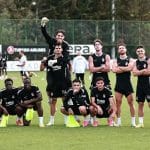
Jose Mourinho has returned to Real Madrid with a mandate to restore discipline, unity and authority at the club – but those around him insist he is doing so with a noticeably less confrontational approach than during his first spell.
The Portuguese coach, back at the Bernabeu after 14 seasons away, has been tasked with correcting the course of a team that has endured two extremely difficult years. The problems began in the final campaign of Carlo Ancelotti’s highly successful tenure and were compounded by a further turbulent season that badly undermined the head coach’s position. Confidence in Xabi Alonso evaporated quickly, and Alvaro Arbeloa was unable to reverse the slide.
According to Spanish newspaper Marca, Real Madrid’s hierarchy have turned to a familiar face to “fix” the situation and to reassert the authority of the coaching staff, which the board believes has been badly eroded in recent years. The club has rehired “The Special One” – but, insiders say, in a subtly altered guise.
Intensity on the training ground
Those who have worked with Mourinho for many years say his footballing ideas and daily methods have not changed greatly. He is still described as demanding, detail‐obsessed and relentless in his work. His immediate aim is to re‐establish a work ethic that many at the club feel has been lost and to pull together a squad that has become fragmented.
In his first stint in Madrid, the key word was “impose” – he sought to stamp his authority and identity on every aspect of the club, a stance that brought him into conflict with many of the big personalities of that era. People close to him now, however, believe he is prioritising greater harmony.
“I want to create a culture of work, responsibility and ambition, and something I know very well, which is the responsibility and honour of working for Real Madrid,” Mourinho said in an interview with the club’s official channels on his return.
“I really like this concept. It is not about working in Real Madrid, it is about working for Real Madrid. And with this spirit, driven by this mission, I am here.”
At Valdebebas, the club’s training base, the current squad have already had a taste of Mourinho’s trademark intensity. In the first week he scheduled double sessions on three separate days. The first session begins at 10:00, but players have been arriving in their cars up to two hours earlier.
Last season, by contrast, there were repeated instances of players being caught speeding in order to get to the training complex on time – something the new regime is keen to eradicate.
Mourinho is combining physical and tactical work, but as ever he is putting the ball at the centre of almost everything his players do. His sessions are not especially long, but they are described as extremely demanding. His influence is also being felt beyond the pitch: he and the board were already discussing a range of off‐field changes even before he formally set foot in Valdebebas.
Leaning on academy while squad builds
With several first‐team players yet to reach full fitness, Mourinho is currently relying heavily on Real Madrid’s youth academy to complete his training groups. He is following the academy players closely and is said to be particularly attentive to those he believes can contribute over the course of the season.
As in 2010, when he first arrived at Real Madrid surrounded by star names, he expects both the new recruits and the established senior players to prove themselves through their work on the training ground.
His personal commitment to the job has never seemed in doubt. During his time at Benfica, he would sometimes sleep beside the training pitch, especially when his family were not in Lisbon, underlining an obsessive dedication that he has not abandoned.
Softer tone away from the pitch
What may have changed is the way Mourinho confronts the outside world. In his first Real Madrid spell he engaged in constant battles – with referees, with Barcelona, with journalists. People who have spoken to him since his return to the Spanish capital believe he is no longer as combative in public as he was during those three turbulent years at the club.
As a result, open conflict with referees or all‐out wars with external rivals may no longer define his image to the same extent. Those around the team sense that he wants to start this chapter with a clean slate, seeking to unite all parties at the club behind a single target.
Mourinho himself acknowledged a personal evolution in an interview with UEFA a year ago, reflecting on how his outlook has shifted over time.
“In the past, I was thinking more about myself, I was more selfish, but now I have changed so much that I feel more altruistic,” he said.
“I feel that in the football world I am here to help others more than to help myself. I am here to help my players more than to think about what is going to happen in my life. I think more about the club, I think more about the happiness of the fans, more than I think about myself.”
For Real Madrid’s players and supporters, the hope is that this blend of familiar intensity and a less explosive public persona will be enough to steer the club back towards stability – and success.
-
 Injured Sadio Mané will return for Senegal’s next camp – Patrick Vieira Sep 19, 2026
 -
Cameroon players’ union challenges federation over minimum wage rules Sep 19, 2026
-
Patrick Vieira receives Senegal government backing ahead of first matches Sep 19, 2026
-
Patrick Vieira embraces Senegal challenge after mixed managerial spell Sep 19, 2026

-
AFCON 2025: Fixtures, Results, Scores and Standings Jan 18, 2026
-
Leadership and long-term vision key to rescuing Zamalek and inspiring Egyptian football – Hany Abou Rida Nov 5, 2025
-
South African giants Orlando Pirates set to lose influential forward Monnapule Saleng Mar 19, 2025
-
Match hero Taiwo Awoniyi reflects on team effort after Chelsea triumph May 5, 2026




-
African Stars choose Botswana’s Lucas Moripe Stadium to host Orlando Pirates in CAF Champions League Sep 16, 2026
-
 Europa League: AC Milan, Benfica and Lyon begin new league phase Sep 16, 2026
 -
Besiktas and Marseille reveal probable line-ups for Europa League opener Sep 15, 2026
-
Sadio Mané nominated for Ballon d’Or for fifth time Sep 12, 2026