Infantino says World Cup critics ‘consumed by hate’ as Fifa president defends tournament in open letter
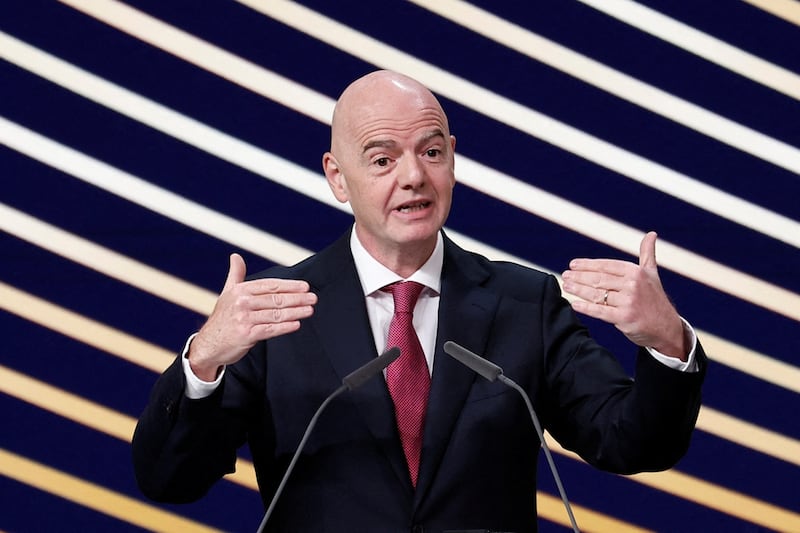
Fifa President Gianni Infantino has accused critics of this year’s World Cup of being “consumed by hate and criticism”, insisting the tournament across the United States, Canada and Mexico was a safe and inclusive global celebration.
In an open letter published on Monday, the 56-year-old defended the event – won by Spain – as a success that united millions of supporters worldwide, and claimed opponents had ignored what he called unprecedented joy and security.
“You were so consumed by hate and criticism that you missed it all,” Infantino wrote, addressing those he believes misrepresented the tournament.
He directly criticised journalists and online commentators, saying: “To those behind their pens and papers, behind their screens spreading hate and false rumours, I want to say that while you are sitting behind, we at Fifa are on the front lines organising, working hard, and delivering the best show in the world.
“We experienced no violence, no incidents, 100% safety and security, only joy and happiness!”
Response to controversy over visas and conflict-hit nations
The World Cup was held against a backdrop of disputes over US visa rules, which affected supporters and officials from several nations and prompted wider debate over travel access, particularly for those from politically sensitive or conflict-affected regions.
Infantino highlighted the participation of a number of countries dealing with political tensions, domestic crises or serious health challenges as proof, in his view, that football can cross borders and defuse tension.
He singled out Iran’s appearance at the tournament, which came despite ongoing hostilities with the United States, as emblematic of that principle.
“Iran entered the US without incident or conflict. The Iranian team received visas to enter because football is about peace. It’s not about politics,” he said.
He added that nations grappling with major health emergencies or instability were also able to take part, with visas being issued to allow them to travel.
“When football brought Haiti to the world, a country that many cannot or choose not to visit, it might be time to set aside your pens and keyboards and show some respect to the teams that played,” Infantino said.
He also referenced concern around travel restrictions linked to the Ebola outbreak in the Democratic Republic of Congo, which affected movement to and from the region.
Somali World Cup referee Omar Abdulkadir Artan, who had a valid visa, was nonetheless barred from entering the United States – a case that drew criticism from those who argued that officials and players should be exempt from such measures during a global tournament.
Fifa chief addresses refereeing and disciplinary disputes
Infantino’s letter came in the wake of specific rows over Fifa’s governance during the tournament, including its management of the Folarin Balogun disciplinary case and a series of contentious refereeing calls.
Fifa was heavily scrutinised after it suspended the automatic one-match ban that normally follows a red card, allowing Balogun to avoid missing a game after he was sent off against Bosnia and Herzegovina. The decision followed the intervention of US President Donald Trump and prompted questions over political influence on disciplinary processes.
In addition, officiating decisions during Argentina’s match against Egypt generated extensive debate among pundits and supporters, with some arguing that key calls had altered the course of the game.
Infantino did not mention any incident, team or player by name in his letter, but he insisted that the type of refereeing and disciplinary outcomes seen at the tournament were not unusual by global standards.
“Potentially mistaken red or yellow cards or subsequent decisions not to ban players in certain situations are routine and widely accepted in some of the biggest leagues worldwide,” he said.
“It’s curious that the same countries employing these practices are the ones criticising.”
Football presented as a force for unity
Throughout the letter, Infantino returned to the theme of football as a vehicle for peace and solidarity, arguing that the presence of countries dealing with conflict, instability or health emergencies underlined the World Cup’s role in bringing people together.
He maintained that, despite criticism on issues ranging from visa policy to disciplinary calls, the tournament had succeeded in offering a safe environment and a sense of shared experience for fans across three host nations.
Infantino’s message was that detractors had, in his view, chosen to focus on controversy rather than on what he described as a peaceful, incident-free competition.
For the Fifa president, the World Cup’s legacy lay not in the political debates surrounding it, but in the “joy and happiness” he believes were felt by supporters in stadiums and around the world.
-
 South Africa and Tanzania set to showcase contrasting styles in pivotal 2026 Women’s AFCON clash Jul 27, 2026
 -
Currie Cup: Four hat-tricks and SWD Eagles title as Cheetahs and Boland stay perfect Jul 27, 2026
-
Jayden Adams: SAFA president Danny Jordaan recalls defining World Cup qualifying header in emotional tribute Jul 27, 2026
-
Mchunu recalled as Erasmus expands Springbok squad for Argentina Test Jul 27, 2026




-
AFCON 2025: Fixtures, Results, Scores and Standings Jan 18, 2026
-
Leadership and long-term vision key to rescuing Zamalek and inspiring Egyptian football – Hany Abou Rida Nov 5, 2025
-
South African giants Orlando Pirates set to lose influential forward Monnapule Saleng Mar 19, 2025
-
Full schedule for 2025 Africa Cup of Nations in Morocco confirmed Feb 12, 2025




-
World Cup 2026: Morocco remain Africa’s highest-ranked nation as Spain move to world No. 1 Jul 20, 2026
-
CAF Champions League expansion proposal offers Al Ahly fresh hope Jul 20, 2026
-
World Cup 2026: Ronaldo, Hakimi and Alvarez among stars who failed to shine Jul 20, 2026
-
Vozinha’s dream move to Colo Colo in serious doubt as transfer nears collapse Jul 20, 2026