Tensions at CAF summit expose Morocco’s controversial defence of refereeing at AFCON 2025
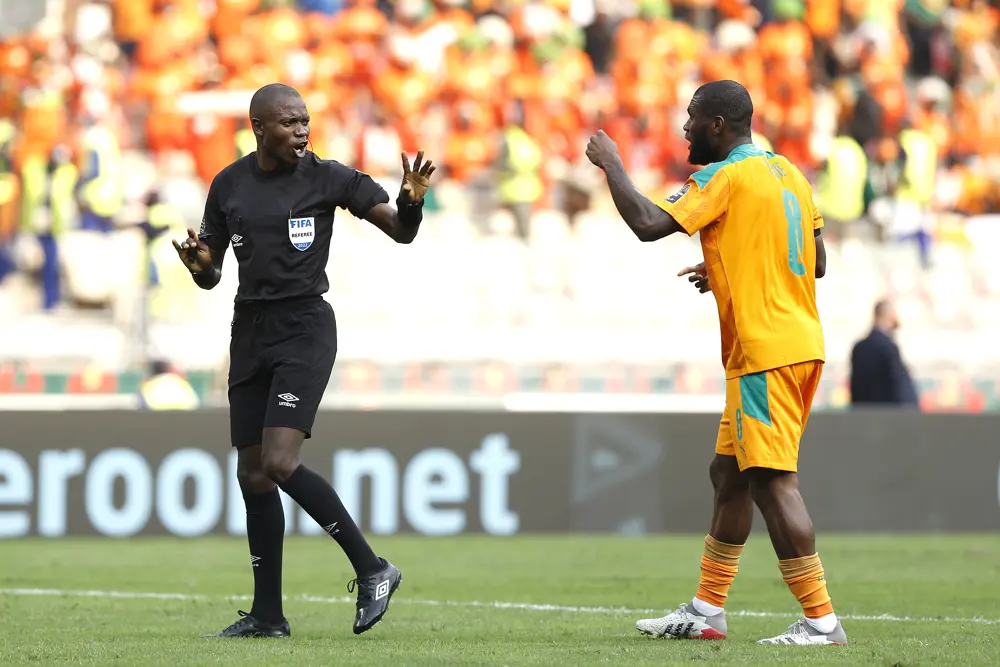
Morocco’s hosting of the 35th Africa Cup of Nations combined organisational excellence with deep institutional unease, as disputes over refereeing and governance surfaced at the highest levels of African football.
While the tournament drew praise for modernised stadiums and the quality of hospitality in cities such as Tangier, it also exposed sharp divisions within the Confederation of African Football (CAF).
Behind official messages of unity, reports describe unprecedented tension inside CAF offices, revealing a diplomatic approach that has unsettled several member associations.
According to DS Sports, with details later echoed by journalist Romain Molina, relations deteriorated during a CAF Executive Committee meeting held on Friday, 16 January.
During discussions, the president of the Nigerian Football Federation, Ibrahim Musa Gusau, reportedly raised concerns over irregularities following the semi-final between Morocco and Nigeria.
The response attributed to Fouzi Lekjaa, president of the Moroccan federation, was striking. “You are not grateful for what I have done for you,” he is said to have replied.
The remark was widely interpreted as suggesting that Morocco’s logistical and financial support to African football should be met with political alignment or restraint from criticism.
These exchanges followed a tournament marked by a succession of refereeing controversies.
DS Sports highlights several decisions that fuelled discontent, including the first penalty awarded to Brahim Diaz against Comoros, a handball called against Mali while a similar incident involving Sofyan Amrabat went unpunished, and a penalty denied to Tanzania in the round of 16.
Further questions were raised over officiating appointments.
During Morocco’s match against Cameroon, the late confirmation of referees reportedly prevented any formal challenge, prompting anger from Cameroon Football Federation president Samuel Eto’o.
The final against Senegal intensified the debate.
Several incidents were contested, including a heavy challenge on Nicolas Jackson that went unpunished and a goal by Ismaïla Sarr that was disallowed.
The penalty awarded following a VAR review, after an offside by Youssef En-Nesyri was overlooked, convinced Senegalese officials that the imbalance was systemic.
Assistant coach Pape Thiaw publicly refused to accept what he viewed as an injustice.
Beyond individual matches, scrutiny has also turned to CAF’s refereeing structures.
The dismissal of Ivorian official Doué Noumandiez, four days after Morocco’s defeat in the Women’s Africa Cup of Nations final, is seen as a pivotal moment.
His successor, Congolese referee Olivier Safari Kabene, later appointed Jean-Jacques Ndalla to officiate both the opening match and the final.
Ndalla had previously been involved in controversial fixtures linked to RS Berkane, a club chaired by Lekjaa.
Together, these developments have raised broader questions about influence, independence and accountability within CAF, as criticism from federations such as Senegal and Nigeria contrasts sharply with arguments of moral obligation voiced behind closed doors.
-
 Rayan Ait-Nouri faces Algeria exile after failing to apologise Oct 22, 2026
 -
Raja Casablanca host El Kanemi Warriors in CAF Confederation Cup second-leg decider Oct 22, 2026
-
Algeria delay appointment of Brahim Hemdani’s second assistant Oct 22, 2026
-
Serhou Guirassy targets three major scoring records with Borussia Dortmund Oct 22, 2026


-
AFCON 2025: Fixtures, Results, Scores and Standings Jan 18, 2026
-
Match hero Taiwo Awoniyi reflects on team effort after Chelsea triumph May 5, 2026
-
Leadership and long-term vision key to rescuing Zamalek and inspiring Egyptian football – Hany Abou Rida Nov 5, 2025
-
South African giants Orlando Pirates set to lose influential forward Monnapule Saleng Mar 19, 2025




-
PSG v Barcelona: fiery attacks set up Champions League classic at Parc des Princes Oct 18, 2026
-
Champions League: PSG beat Barcelona as Liverpool complete comeback against Villarreal Oct 20, 2026
-
Real Betis v Barcelona: kick-off time, TV details and match preview Oct 16, 2026
-
PSG beat Barcelona 4-2 in Champions League thriller Oct 21, 2026