Senegal: Cheikh Touré case exposes fake recruitment network exploiting young West African footballers
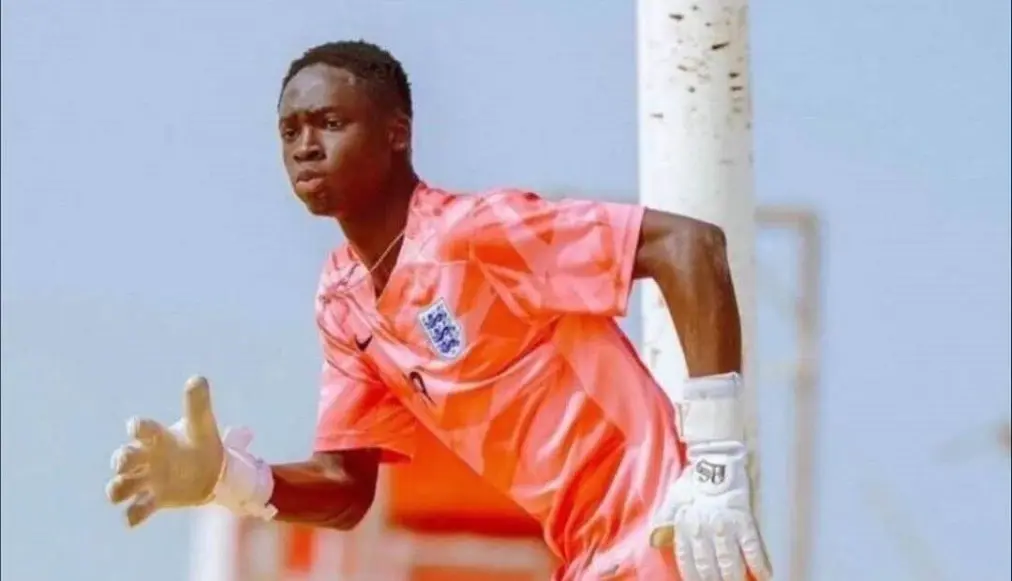
The death of young Senegalese footballer Cheikh Touré in Kumasi, Ghana, has exposed a deeply troubling network of fake recruiters exploiting the dreams of aspiring athletes across West Africa.
What began as a promise of opportunity has now emerged as a case of deceit, manipulation, and tragedy.
Early reports suggest that Touré was among several victims lured by a sophisticated recruitment scheme offering false hopes of professional contracts abroad.
Families of those affected have begun speaking out, revealing how young men from modest backgrounds were drawn into the scam by intermediaries posing as sports agents.
A costly and deceptive journey
Décès de Cheikh Touré au Ghana – Le Ministère de l’Intégration Africaine et des Affaires Étrangères se prononce : « Les autorités ghanéennes ont été officiellement saisies afin de diligenter une enquête approfondie…»
➡️ https://t.co/OU8eOfSVJq pic.twitter.com/JOYUyUfJ6Y— wiwsport (@wiwsport) October 18, 2025
According to testimonies, the process began informally — often through word of mouth rather than official channels.
Prospective players were asked to provide a football CV, a copy of their identity card, and a registration form.
Once approved, they were told to prepare for a trip to Ghana, a journey that took place in stages and came with a heavy financial burden.
Each player reportedly paid an initial fee of 220,000 CFA francs (around €335) to join the programme.
However, once in Ghana, they were confronted with new and unexpected demands.
Recruiters allegedly insisted on an additional payment of 850,000 CFA francs (about €1,300) for processing and signing fees, trapping families already stretched to their limits.
Promises, threats, and false assurances
Kidnapping de jeunes footballeurs sénégalais : le PAC Academy FC dément tout lien dans l’affaire !
➡️ https://t.co/o3rQr7h0nR pic.twitter.com/2qtrdRlRM0— wiwsport (@wiwsport) October 20, 2025
For the families back home, what was meant to be a dream quickly turned into a nightmare.
Several relatives have described being pressured and intimidated by agents who warned them that any delay in payment could jeopardise their children’s chances of being signed by a club.
The young players, meanwhile, were reportedly left in precarious conditions — poorly housed, lacking proper nutrition, and without any medical supervision or legitimate contact with professional teams.
Some were even denied communication with their families, deepening the sense of fear and isolation.
Death under unclear circumstances
Touré’s death, initially described as an accident, has since been classified as suspicious by Ghana’s Ashanti Regional Police.
A statement issued on 20 October 2025 confirmed that a criminal investigation had been opened, with authorities searching for witnesses to reconstruct the events leading to his death.
According to information shared with his family, Touré reportedly died alongside six other young players during what was described as a medical assessment.
However, inconsistencies surrounding the involvement of a man identified as Issah — said to have transported the victims to the hospital and later to the morgue — have raised serious questions.
A wider issue demanding accountability
The case has prompted a joint investigation by Senegalese and Ghanaian authorities.
Beyond the personal tragedy, it has drawn attention to the growing problem of cross-border fraud targeting young athletes.
Exploiting hope and vulnerability, these criminal networks profit from families desperate to see their children succeed.
The Cheikh Touré affair stands as a stark warning about the dangers of unregulated recruitment schemes in African football — and a call for greater protection of young players whose dreams too often end in deception, hardship, and loss.



-
 AFCON 2025: Fixtures, Results, Scores and Standings Jan 18, 2026
 -
Match hero Taiwo Awoniyi reflects on team effort after Chelsea triumph May 5, 2026
-
Leadership and long-term vision key to rescuing Zamalek and inspiring Egyptian football – Hany Abou Rida Nov 5, 2025
-
South African giants Orlando Pirates set to lose influential forward Monnapule Saleng Mar 19, 2025




-
AFCON 2027 Qualifiers: McCarthy warns South Africa to expect tough test against Eritrea Sep 29, 2026
-
Denmark v Portugal: Nations League kick-off time, TV channel and match prediction Sep 29, 2026
-
South Sudan vs Egypt: Where to watch AFCON 2027 qualifier Sep 29, 2026
-
Egypt lose defender Mohamed Abdel Moneim for South Sudan AFCON qualifier Sep 27, 2026