2027 AFCON qualifiers: Five factors putting Algeria coach Brahim Hemdani’s job at risk
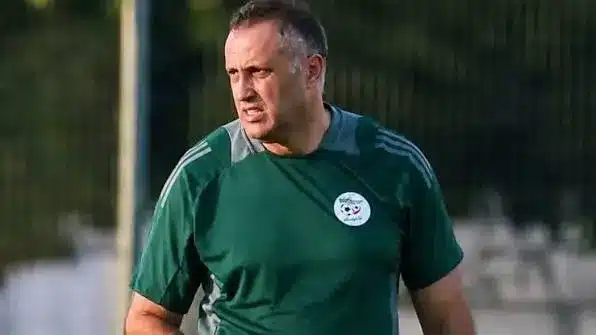
Algeria head coach Brahim Hemdani is facing growing uncertainty over his future following a humiliating 3-0 defeat to Togo in the 2027 Africa Cup of Nations qualifiers.
The Desert Foxes conceded three goals in the first half of Tuesday’s encounter in Lomé, raising questions about the team’s performances, tactical organisation and the authority of the coaching staff.
Although Algeria remain top of their qualifying group with seven points, their advantage over second-placed Togo has been reduced to just one point.
The Algerian Football Federation (FAF) has yet to announce a decision on Hemdani’s future, but the defeat has intensified scrutiny of the coach, who took charge of the national team just two months ago.
Several factors could influence whether the former Algeria international remains in charge ahead of the next international window in March.
1. Poor performances and a historic defeat
Algeria’s defeat in Lomé followed a series of performances that had already raised concerns about the team’s progress.
Before travelling to Togo, Hemdani’s side had struggled to secure a narrow 1-0 victory over the same opponents in Tizi Ouzou.
A draw against Burundi in the previous international window had also exposed difficulties in the team’s attacking play and overall organisation.
The defeat in Lomé represented a significant setback, with all three Togolese goals arriving between the 18th and 38th minutes.
It was Algeria’s first defeat in an Africa Cup of Nations qualifier since October 2018.
The Desert Foxes had also never previously trailed by three goals at half-time in an AFCON or World Cup qualifying match.
Their last defeat by such a margin against African opposition in a competitive fixture came in 2011, when Morocco secured a 4-0 victory.
Previous Algeria coaches, including Abdelhak Benchikha and Abdelghani Djadaoui, have left their positions following heavy defeats.
Hemdani’s limited experience at senior international level could make it difficult for him to survive a similar setback.
2. Tactical decisions come under scrutiny
Hemdani’s team selection and tactical approach against Togo have also attracted criticism.
With several players unavailable through injury, the coach introduced a reshaped starting lineup featuring inexperienced players.
The attacking combination of Rebbach, Ghedjemis and Abdelli struggled to establish an understanding, while Bakrar was deployed in an unfamiliar position.
Hemdani made several changes at half-time, including introducing Amine Gouiri, but Algeria were already three goals behind.
The decision to make three substitutions at the interval raised further questions about the effectiveness of the original tactical plan.
Seven players, including Belloumi, Maza and Hadj Moussa, had been ruled out through injury during or shortly before the international camp.
Despite those absences, the coaching staff did not call up additional players.
The omission of Ilan Kebbal, who could have provided another attacking option, has also become a subject of debate.
Similar concerns had emerged during the matches against Burundi and Togo in the previous qualifying round, with Hemdani’s substitutions failing to produce significant tactical improvements.
3. Limited coaching experience and dressing-room concerns
Hemdani’s appointment was accompanied by questions about his experience as a head coach.
Although he enjoyed a career as a professional footballer and helped Algeria’s youth team win gold at the Mediterranean Games, his senior managerial experience was largely limited to French third-tier side Marignane-Gignac.
His promotion to the senior national team therefore represented a significant step in his coaching career.
While positive results initially reduced concerns about his credentials, the defeat to Togo has brought those questions back into focus.
The coach has also faced difficulties involving several members of the squad.
A disagreement with Rayan Aït-Nouri during the match against Zambia reportedly resulted in the defender being excluded from the remainder of the squad.
The incident followed confusion over instructions given to the player during the encounter.
Questions have also emerged over Hemdani’s relationship with Ilan Kebbal, while the departures of Maza and Hadj Moussa from the international camp have attracted attention.
There is no evidence to suggest that the injuries suffered by the two players were not genuine, but their absence from the important match against Togo has added to the pressure surrounding the coaching staff.
4. Questions over partnership with Antar Yahia
The working relationship between Hemdani and former Algeria international Antar Yahia has also come under scrutiny.
The two former players were expected to bring their international experience to the national team, but concerns have emerged about communication and the distribution of responsibilities within the technical staff.
The disagreement involving Aït-Nouri highlighted some of those difficulties.
Reports suggested the defender received several instructions about warming up and returning to the bench, with Yahia involved in communicating some of the decisions.
The situation reportedly contributed to the player’s frustration.
Algeria’s tactical organisation against Togo has raised further questions about the effectiveness of the coaching arrangement.
The team appeared to operate in a formation resembling a 5-2-3, but struggled to respond to Togo’s attacking pressure.
The absence of an effective tactical response before the third goal has increased criticism of the technical team’s decision-making.
Any decision to retain Hemdani could therefore require a review of the coaching structure and the responsibilities of those working alongside him.
5. Four-month break increases pressure on Hemdani
Algeria’s next international fixtures are not scheduled until March, leaving Hemdani facing an extended period of uncertainty.
The four-month break provides time for the federation to assess the team’s performances, but it could also prolong criticism of the coach.
Hemdani accepted responsibility for the defeat against Togo while acknowledging that decisions concerning his future rest with the federation.
He described himself as “primarily responsible” for the result.
“To discuss these kinds of questions, I think it’s still premature,” he said when questioned about his position.
FAF president Walid Sadi has reportedly requested explanations from general manager Moussa Saïb following the defeat.
However, the federation has not publicly confirmed whether Hemdani will remain in charge for the next qualifying fixtures.
If he continues, the coach will face the challenge of restoring confidence within the squad, addressing tactical weaknesses and maintaining Algeria’s narrow lead at the top of the group.
The responsibility for the defeat does not rest entirely with Hemdani.
The players also struggled to match Togo’s intensity, while the federation’s decision to appoint a relatively inexperienced coach has come under renewed examination.
With qualification for the 2027 Africa Cup of Nations still undecided, Algeria must now determine whether Hemdani is the right person to guide the team through the remainder of the campaign.
-
 2027 AFCON qualifiers: Five factors putting Algeria coach Brahim Hemdani’s job at risk Nov 18, 2026
-
Mofokeng double sends South Africa top of AFCON qualifying group Nov 18, 2026
-
Orlando Pirates wary of Abdel Aziz Bouh appointment for Simba SC opener Nov 18, 2026
-
Kaizer Chiefs could face loan agreement fallout over Faiz Abrahams absence Nov 18, 2026


-
AFCON 2025: Fixtures, Results, Scores and Standings Jan 18, 2026
-
Match hero Taiwo Awoniyi reflects on team effort after Chelsea triumph May 5, 2026
-
Leadership and long-term vision key to rescuing Zamalek and inspiring Egyptian football – Hany Abou Rida Nov 5, 2025
-
South African giants Orlando Pirates set to lose influential forward Monnapule Saleng Mar 19, 2025




-
Morocco v Niger: Lions of the Atlas seek another win in CAN 2027 qualifying Nov 11, 2026
-
Nael El Aynaoui withdraws from Morocco squad for Niger clash over fitness issues Nov 11, 2026
-
AFCON 2027 Qualifiers: Benni McCarthy likens Kenya’s clash with South Africa to ‘David versus Goliath’ Nov 13, 2026
-
Morocco aim to extend lead against Niger in 2027 Africa Cup of Nations qualifier Nov 13, 2026