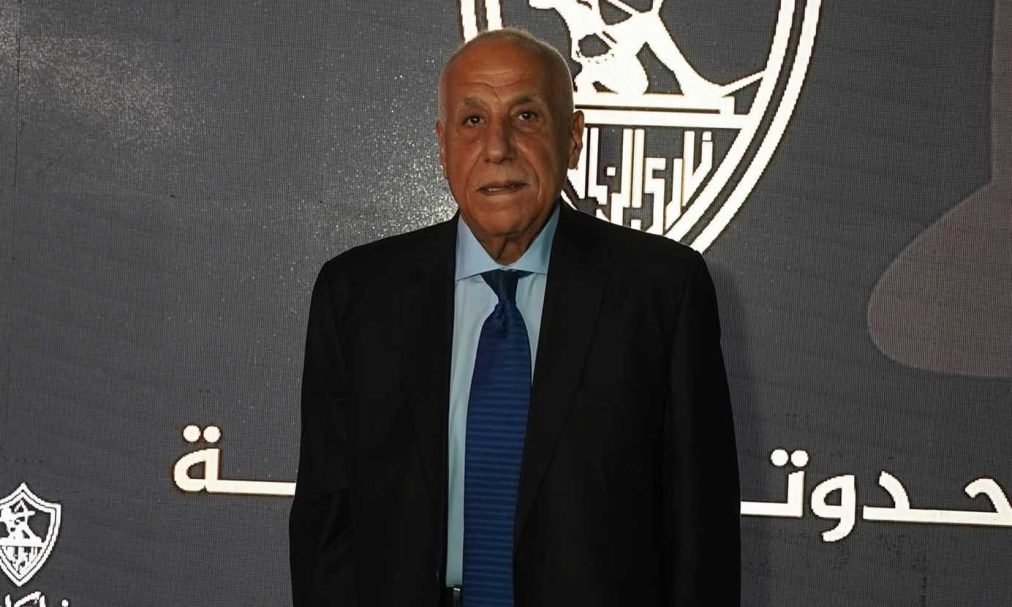
Zamalek president Hussein Labib has denied reports that the club or its football team could be sold, while outlining strict safeguards for any investment in the club’s football company.
Speaking to ON Sport, Labib said some football-related assets would be transferred to Zamalek Football Company so they could be marketed commercially.
The seven assets identified by the club are the first team, the youth sector and academies, sponsorship, television broadcasting revenue, match tickets, prize money from friendly fixtures and competitions, and player sales.
Labib said sponsorship income included a substantial element linked to marketing deals for the football department, with a smaller portion relating to the club’s other sports.
“We have seven sources of revenue, but we are forced to spend from them on the other sports because the club has 17 sports, as well as the social club and staff salaries,” he said.
He added that Zamalek’s football operation recorded a financial shortfall every season. The size of the deficit varied according to the circumstances of each year, including player sales and purchases, and could exceed 400 or 500 million Egyptian pounds annually.
Labib confirmed that no single investor would be allowed to acquire a majority stake in the football company. “The controlling share will remain with Zamalek, and no investor will receive the largest share,” he said.
The club has also established nine mandatory conditions intended to protect its identity and control. Under the terms, Zamalek’s name, badge, colours, trademark and kit cannot be changed or sold without the club’s approval.
The conditions also prohibit a merger between Zamalek and another club, the relocation of its main headquarters, and the sale of any club asset. The club’s stake cannot be reduced, and the company’s articles of association cannot be amended in a way that affects Zamalek’s rights.
New shareholders cannot be introduced and shares cannot be transferred without the club’s approval. The company cannot be sold or dissolved, and it cannot take out a loan without Zamalek’s consent.
“If there is any disagreement or legal dispute, arbitration will take place inside the Arab Republic of Egypt,” Labib said.
He also explained why Zamalek rejected an offer last season to sell part of the football company. Labib said it was the only proposal received and there had been no reason to rush into accepting it.
“The interest of Zamalek at that time was to study the matter carefully,” he said.
Labib added that the launch of Zamalek’s football company required approval from the general assembly and the administrative authority. He said the company was intended to help rescue the club from its financial crisis.
The president also expressed his happiness at being associated with Zamalek when they won last season’s league title, their 15th. “I am proud of my connection with Zamalek when we won the 15th league title. It was an extraordinary league,” he said.
“At that time, even the most optimistic people hoped only to qualify for the CAF Champions League, which meant finishing second.”
-
 Lamine Camara says Senegal must respect ‘very good’ Sudan in 2027 Afcon qualifier Nov 12, 2026
-
Senegal name Under-17 World Cup squad without Souleymane Commissaire Faye Nov 12, 2026
-
DR Congo host Sierra Leone with 2027 Africa Cup of Nations qualification in sight Nov 12, 2026
-
Senegal leave out Souleymane Commissaire Faye as agent questions World Cup decision Nov 12, 2026



-
AFCON 2025: Fixtures, Results, Scores and Standings Jan 18, 2026
-
Match hero Taiwo Awoniyi reflects on team effort after Chelsea triumph May 5, 2026
-
Leadership and long-term vision key to rescuing Zamalek and inspiring Egyptian football – Hany Abou Rida Nov 5, 2025
-
South African giants Orlando Pirates set to lose influential forward Monnapule Saleng Mar 19, 2025




-
Manchester United host Aston Villa as both sides seek a Premier League lift Nov 6, 2026
-
Ali Maher names first Egypt squad for 2027 Africa Cup of Nations qualifiers Nov 9, 2026
-
Atletico Madrid host Barcelona in Liga summit clash with history at stake Nov 6, 2026
-
Nottingham Forest v Manchester City: City Ground hosts clash at opposite ends of the table Nov 6, 2026