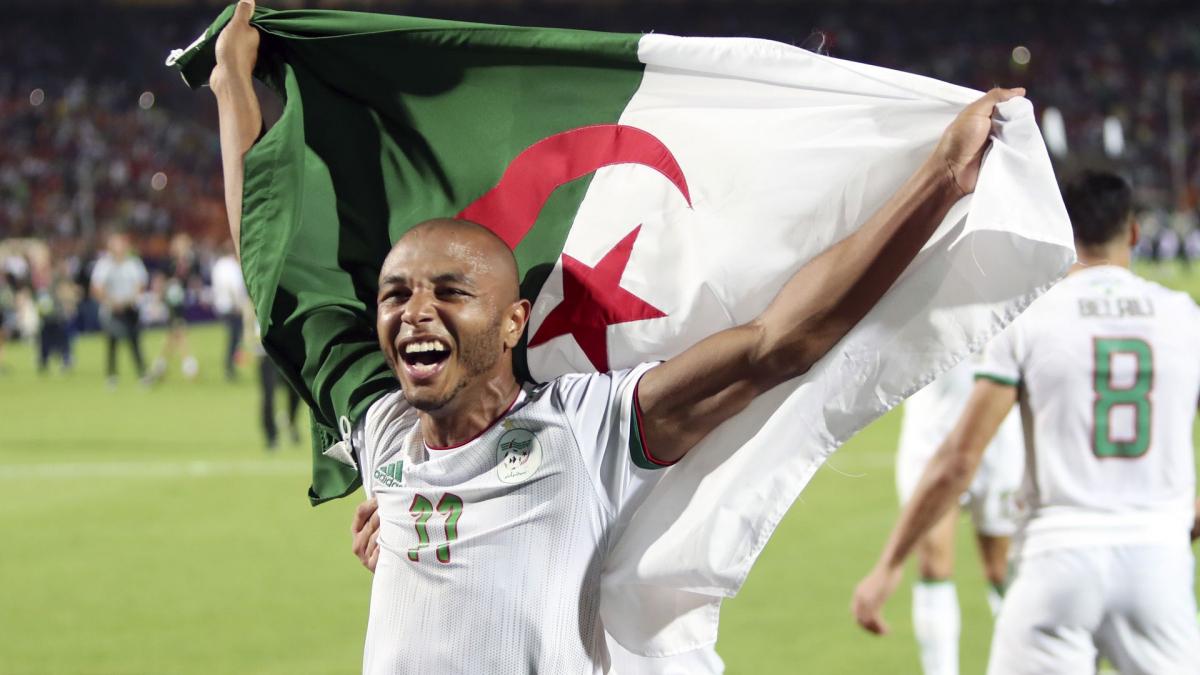
Yacine Brahimi has set out an ambitious plan to contribute to the future of Algerian football, revealing his desire to invest in youth development and sporting infrastructure across the country.
Speaking in a recent interview with Al Jazeera, the Algeria international delivered a message rooted in gratitude, responsibility, and long-term commitment to his homeland.
Brahimi, who has built a distinguished career at both club and international level, spoke openly about his attachment to Algeria and his determination to give back beyond his achievements on the pitch.
The experienced playmaker stressed that his motivation goes deeper than football success and focuses instead on sustainable development for future generations.
“I owe a great deal to my country, Algeria,” Brahimi said. “My dream is to create an international academy dedicated to nurturing young talent, contributing to the development of sport in my country, and participating in the establishment of sports infrastructure and facilities.”
His words underline a clear vision that extends beyond personal legacy. Brahimi aims to help young players access structured training, professional guidance, and modern facilities that can support long-term growth.
He views youth development as a foundation for strengthening Algerian football at every level, from grassroots participation to elite performance.
Now holding an executive role at Al-Gharafa in Qatar, the former FC Porto midfielder has gained valuable insight into football organisation and management.
That experience has shaped his thinking and reinforced his belief in the importance of planning, education, and mentorship.
Brahimi acknowledged the challenges facing Algerian sport but insisted that practical solutions must replace observation and criticism.
“This project is a dream I have carried for some time, and today I am taking the first small steps to launch it,” he explained, signalling that the idea has already moved beyond theory and into early stages of development.
Brahimi’s comments reflect the mindset of a player entering a new phase of influence. He no longer defines his contribution solely through performances on matchday.
Instead, he seeks to support structures that can outlast his playing career and benefit a wider community.
His approach mirrors a growing trend among African football figures who choose to invest in training systems and infrastructure rather than short-term visibility.
By focusing on education, facilities, and opportunity, Brahimi hopes to inspire young Algerians and offer them clearer pathways into professional sport.
If realised, his project could play a meaningful role in shaping the next generation of Algerian footballers and strengthening the country’s sporting foundations for years to come.