World Cup 2026: Opener under pressure as protests block access to Azteca Stadium
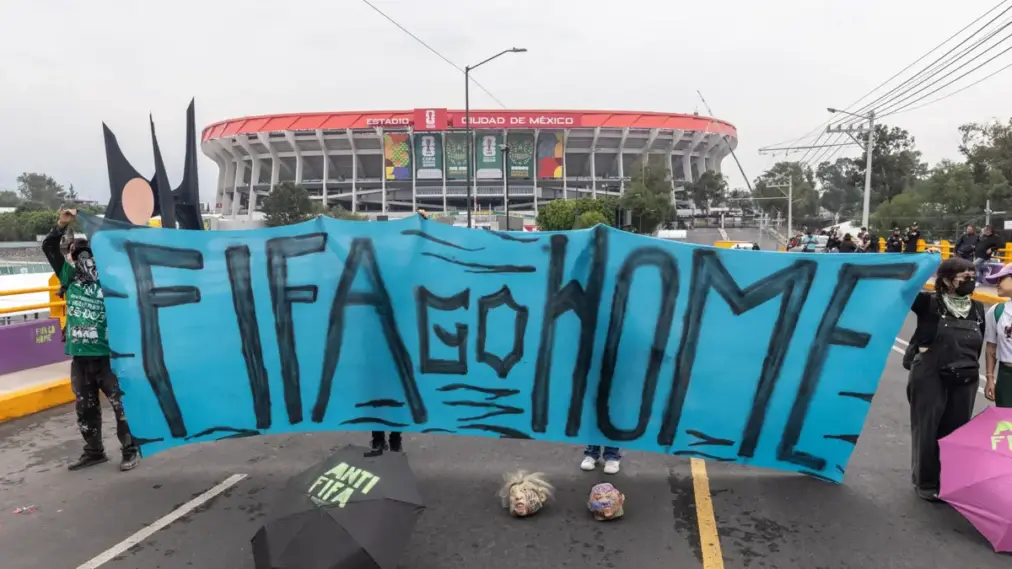
The opening match of the 2026 FIFA World Cup faces potential disruption after thousands of protesters blocked access routes to the Azteca Stadium in Mexico City, where Mexico are due to face South Africa in 48 hours’ time.
According to reports from AFP, large groups of demonstrators gathered around the stadium on Tuesday, raising concerns over whether preparations for Thursday’s 9pm local kick-off can proceed without interruption.
The situation has placed significant pressure on authorities, with a heavy police presence deployed in and around the area in an effort to maintain order and prevent further escalation.
Teachers lead protest movement
The demonstrations are being driven by teachers affiliated with a dissident faction of the CNTE education union.
The group is protesting over pay disputes and demanding the repeal of a pension law, which they say has negatively affected their rights and long-term security.
Protesters have blocked major roads leading to the stadium, significantly restricting access to one of the most high-profile venues in world football.
In some instances, there have also been reports of symbolic actions targeting World Cup-related installations in the city.
One of the demonstrators, Angel Villalobos, explained the group’s position, telling AFP: “We want to reach the stadium. The government has provided some answers, but they don’t satisfy us.”
The comments reflect the growing frustration among sections of the union, who have maintained pressure on authorities in the days leading up to the global tournament’s opening ceremony.
Government response and security concerns
Mexican authorities have responded by significantly increasing security around the stadium and surrounding districts.
Millions of police officers, according to official figures cited in reports, have been deployed in an attempt to control access routes and prevent any disruption to the scheduled match.
The government has also strongly criticised the timing and nature of the protests.
President Claudia Sheinbaum described the demonstrations as a “provocation”, pointing to actions such as blocking key avenues and damaging statues associated with World Cup branding and preparations.
Her comments highlight growing tension between the authorities and protest organisers, as both sides remain firm in their positions less than two days before the opening match.
Officials are now working under intense time pressure to ensure that the stadium remains secure and that fans, teams and officials can access the venue safely.
A critical 48-hour window
With only 48 hours remaining before the scheduled kick-off, the situation remains uncertain.
Authorities are continuing negotiations and security operations in an attempt to avoid any disruption to what is expected to be one of the most watched sporting events in the world.
The Azteca Stadium, one of football’s most iconic venues, is set to host Mexico’s opening match of the tournament against South Africa on Thursday evening.
The fixture carries significant symbolic importance as the first game of the expanded 2026 World Cup.
However, the ongoing protests have cast a shadow over preparations, raising questions about whether the match will proceed as planned or whether further escalation could force changes to access, timing or logistics.
Wider implications for tournament security
The situation has also raised broader concerns about security planning for the rest of the tournament in Mexico.
With several matches scheduled across the country, authorities are under pressure to demonstrate that they can manage large-scale public events safely.
While organisers remain confident that the opening match will go ahead, the presence of sustained protests so close to kick-off has added an unexpected challenge to final preparations.
For now, attention remains fixed on the Azteca Stadium, where the balance between protest action, security response and sporting anticipation continues to define the final hours before the World Cup begins.
-
 Morocco face injury worries as El Faouzi and Rahimi fitness remain uncertain Oct 24, 2026
 -
Steve McManaman backs Kylian Mbappe over Lamine Yamal in Ballon d’Or race Oct 24, 2026
-
Five clubs secure places in CAF Confederation Cup group stage Oct 24, 2026
-
CAF Confederation Cup: CS Sfaxien reach group stage after narrow win over AFAD Plateau Oct 24, 2026


-
AFCON 2025: Fixtures, Results, Scores and Standings Jan 18, 2026
-
Match hero Taiwo Awoniyi reflects on team effort after Chelsea triumph May 5, 2026
-
Leadership and long-term vision key to rescuing Zamalek and inspiring Egyptian football – Hany Abou Rida Nov 5, 2025
-
South African giants Orlando Pirates set to lose influential forward Monnapule Saleng Mar 19, 2025




-
Barcelona v Real Madrid: Catalans backed at 1.65 to win October Clasico Oct 23, 2026
-
Barcelona and Real Madrid meet in pivotal 265th Clasico Oct 23, 2026
-
PSG v Barcelona: fiery attacks set up Champions League classic at Parc des Princes Oct 18, 2026
-
Champions League: PSG beat Barcelona as Liverpool complete comeback against Villarreal Oct 20, 2026