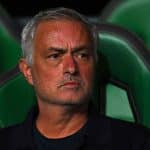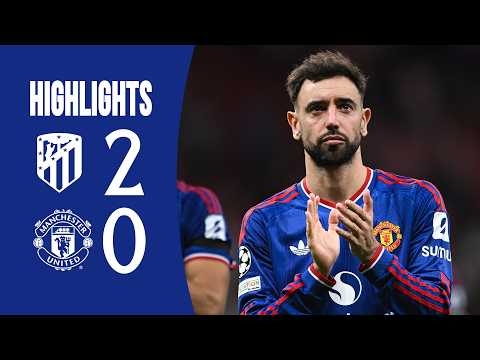
Brighton boss Fabian Hurzeler has been linked with the Manchester United job, but the club’s deepening crisis raises a more fundamental question: why would a manager with his reputation choose to take it?
Hurzeler’s Brighton dismantled champions Arsenal with high-intensity pressing, disciplined control of space and a squad carrying out a clear tactical plan. With United’s problems worsening after Tuesday’s Champions League defeat by Atletico Madrid, the 33-year-old German was quickly mentioned as a possible successor to Michael Carrick.
On paper, Hurzeler appears to fit the profile United need. He is a system-focused coach and had just been named Manager of the Month for September. But his current circumstances at Brighton are almost the complete opposite of those awaiting him at Old Trafford.
At the Amex Stadium, Hurzeler works within Tony Bloom’s data-led structure, where recruitment, expectations and planning are closely aligned. The club’s organisation allows him to focus on coaching while absorbing external pressure. His contract extension in May, which runs until 2029, underlined the confidence shared by manager and club.
United, by contrast, are dealing with an environment in which tactical ideas risk being overwhelmed by institutional instability.
That tension became clear in Madrid on Tuesday. Following a poor 2-0 defeat, defender Lisandro Martinez publicly criticised the club’s recruitment and questioned the work of technical director Jason Wilcox.
“I expect 100% more from our technical director (Jason Wilcox),” Martinez said, before asking: “You start changing, changing, changing managers … but what about other areas?”
Senior players challenging directors on live television, and reportedly continuing to voice their concerns on the flight back to Manchester, points to problems that cannot be solved by a tactical adjustment alone.
The situation also helps explain the appeal of Antonio Conte among sections of the United support. If fans see the former manager as the answer to Carrick’s decline, they are choosing an experienced short-term fixer rather than a coach seeking to construct a lasting footballing identity.
Conte’s reputation is based on discipline and immediate results. His approach could bring a back five, narrow 1-0 victories and a forceful dressing-room presence, but the source article argues that such a solution could eventually prove unsustainable after 18 months.
A demand for immediate pragmatism also risks confirming the board’s failure to establish a modern structure. Coaches such as Hurzeler require patience, organisational support and a clear alignment between recruitment and footballing strategy.
United are therefore competing not only with Manchester City, Arsenal and Liverpool for elite managers, but also with clubs such as Brighton and Aston Villa, whose internal structures may be more attractive. Unai Emery rejected big-six approaches because Villa offered him complete structural authority.
Conte may be willing to accept United’s disorder for a significant salary and a short-term rebuilding brief. But if the club wants a manager of Hurzeler’s type, its first priority must be creating an environment that can protect and support that manager’s reputation.
-
 Senegal striker Nicolas Jackson delights in Aston Villa’s clean sheet in Fenerbahce rout Oct 15, 2026
 -
Jose Mourinho defends Vinicius Junior after angry substitution Oct 15, 2026
-
Injuries expose Kaizer Chiefs’ midfield depth, says Frank Makua Oct 15, 2026
-
Da Cruz says Kaizer Chiefs must improve finishing after Stellenbosch draw Oct 15, 2026


-
AFCON 2025: Fixtures, Results, Scores and Standings Jan 18, 2026
-
Match hero Taiwo Awoniyi reflects on team effort after Chelsea triumph May 5, 2026
-
Leadership and long-term vision key to rescuing Zamalek and inspiring Egyptian football – Hany Abou Rida Nov 5, 2025
-
South African giants Orlando Pirates set to lose influential forward Monnapule Saleng Mar 19, 2025




-
Roma v Real Madrid: home side tipped to score first in Champions League clash Oct 12, 2026
-
Atletico Madrid v Manchester United: probable line-ups for Champions League clash Oct 12, 2026
-
Real Madrid fitness update: Valverde a doubt for Villarreal as Kylian Mbappe returns Oct 8, 2026
-
Arsenal backed to edge out Lille in Champions League clash Oct 11, 2026