Why Bryan Mbeumo is leading Manchester United’s attack over Benjamin Sesko
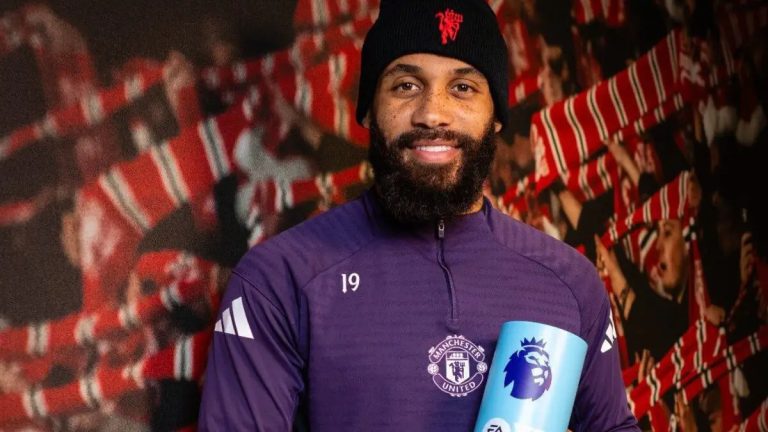
Despite high expectations surrounding the summer signing of Benjamin Sesko from RB Leipzig, it is Bryan Mbeumo who has emerged as Manchester United’s most effective attacking threat this season.
Sesko’s big-money move and expectations
Sesko, 22, was recruited for £74 million, a move intended as a vote of confidence in manager Ruben Amorim and a solution to United’s ongoing striker woes.
The Slovenian’s 39 goals in 87 Bundesliga appearances suggested a natural goalscorer capable of stepping in immediately.
Meanwhile, Mbeumo, the Cameroonian forward, arrived from Premier League rivals Brentford with a more modest profile, despite scoring 70 goals and providing 51 assists in 242 appearances, mostly from the right wing.
Struggles in the Premier League
The difference in impact between the two forwards has been stark. Sesko has struggled to adapt to the speed and physicality of the Premier League.
His pace, a recurring issue for previous United strikers Joshua Zirkzee and Rasmus Hojlund, has been exposed, and his decision-making in front of goal often leaves much to be desired.
A missed opportunity against Tottenham exemplified his struggles: a late through ball from Mason Mount left him one-on-one with the keeper, yet he hesitated, allowing the defender to intervene. In over 30 minutes on the pitch, Sesko touched the ball only three times in the penalty area, failing to register a single shot on target.
Mbeumo’s consistent impact
Mbeumo, by contrast, has thrived. Twelve games into the campaign, he has already scored six goals, four more than Sesko, with a conversion rate of 20.7% compared to Sesko’s 8.3%.
His movement off the ball, chance creation, and ability to combine with teammates have made him the more complete forward.
Mbeumo’s pass completion rate of 80.5% highlights his effectiveness in link-up play, while he has recovered possession 34 times, far surpassing Sesko’s 13 recoveries.
Why Mbeumo leads the line
Sesko does have advantages in aerial duels and one-on-one situations, but his shortcomings in finishing, associative play, and confidence have made Mbeumo the preferred attacking option for Amorim.
The Cameroonian forward has provided leadership and consistency in United’s frontline, whereas Sesko remains reactive rather than proactive.
The challenge ahead for Sesko
While Sesko is still adapting to a new league and environment, the reality is clear: United require goals, and so far, Mbeumo has been delivering.
Amorim may need to reconsider how best to integrate Sesko without hindering the team’s attacking rhythm, or risk repeating past recruitment mistakes that fail to translate to Premier League success.
Popular News




-

AFCON 2025: Fixtures, Results, Scores and Standings
Jan 18, 2026 -

Leadership and long-term vision key to rescuing Zamalek and inspiring Egyptian football – Hany Abou Rida
Nov 5, 2025 -

South African giants Orlando Pirates set to lose influential forward Monnapule Saleng
Mar 19, 2025 -

Full schedule for 2025 Africa Cup of Nations in Morocco confirmed
Feb 12, 2025

-

LIVE UPDATES: D.R Congo 1-0 Jamaica – 2026 FIFA World Cup Playoffs
Mar 31, 2026 -

Cameroon defeat China 2-0 in FIFA Series clash
Mar 31, 2026 -

Africa’s 2026 World Cup Teams: Fixtures and Results for March friendly games
Apr 1, 2026 -

Zimbabwe defender Teenage Hadebe dropped after code of conduct breach
Mar 30, 2026