
Senegal’s Abdoulaye Wade Stadium faces mounting costs and profitability concerns
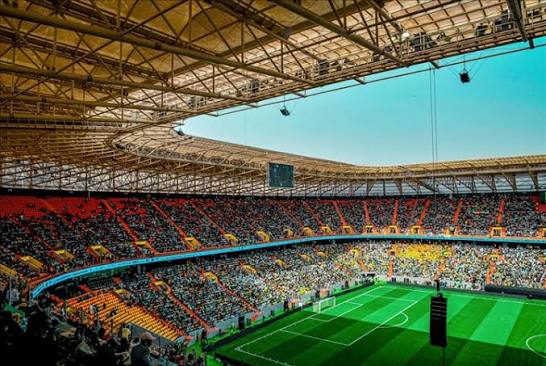
Three years after its grand inauguration, the Abdoulaye Wade Stadium in Diamniadio stands as both a symbol of Senegal’s modern sporting ambition and a growing financial concern.
The 50,000-seat arena, built at a cost of 156 billion CFA francs, is now struggling with high maintenance expenses, limited usage, and tensions between its management and sports federations.
If the stadium was expensive, it’s only natural that maintenance is expensive, said Dame Mbodji, Director General of SOGIP — the public company overseeing the country’s major sports and urban infrastructure. Cleaning alone, not to mention electricity or air conditioning, costs us 132 million a year.
According to projections by Mbodji’s predecessor, Gallo Ba, the stadium’s annual upkeep was estimated at around 800 million CFA francs.
But with few events held in Diamniadio, the stadium’s revenue is far from covering these costs.
The stadium doesn’t bring us anything, Mbodji admitted. We support the federations as best we can. But if they don’t pay us, how are we going to maintain it? If we remove the charges, it’s loss-making for us. He added that other SOGIP-run facilities — including the Dakar Arena — are effectively subsidising the stadium’s operations. It’s the operation of our other sites that allows us to maintain the Abdoulaye Wade Stadium today.
Even then, profitability remains limited.
The Dakar Arena is more profitable than the football stadium, but it’s not our most profitable site, Mbodji explained. For three years, the stadium rental rate has remained the same — 35 million CFA francs — even though maintenance and energy costs have increased.
The stadium’s financial strain has also fuelled friction between SOGIP and the Senegalese Football Federation (FSF), which owes a significant debt to the management company.
The FSF has admitted that this debt partly explains the rise in ticket prices for national team matches — a move that angered supporters.
For three years, the fee structure has not changed, Mbodji said. But if the Federation doesn’t pay its debts, it becomes difficult to maintain the infrastructure.
This standoff mirrors earlier disputes.
In 2022, the Basketball Federation and club side AS Douanes both clashed with SOGIP over high rental fees for the Dakar Arena during their competitions and training sessions.
Beyond financial challenges, the stadium also struggles to attract full crowds.
Since Senegal’s famous victory over Egypt in 2022, attendance has dropped sharply due to the venue’s distance from central Dakar, transport difficulties, and high travel costs for fans.
The FSF concedes that playing in Diamniadio doesn’t bring much in terms of revenue.
While the stadium remains a point of national pride and a benchmark for modern infrastructure, its financial sustainability is in question.
SOGIP is now exploring ways to transform it into a multi-purpose venue for concerts, exhibitions, and conferences to offset the costs of upkeep.
The Abdoulaye Wade Stadium, once a bold statement of ambition, has become a test of Senegal’s ability to balance prestige with practicality.
Without a viable management model and diversified revenue streams, this emblem of progress risks turning into a heavy financial burden — a gleaming monument caught between national pride and economic reality.
Popular News




-

AFCON 2025: Fixtures, Results, Scores and Standings
Jan 18, 2026 -

Leadership and long-term vision key to rescuing Zamalek and inspiring Egyptian football – Hany Abou Rida
Nov 5, 2025 -

South African giants Orlando Pirates set to lose influential forward Monnapule Saleng
Mar 19, 2025 -

Full schedule for 2025 Africa Cup of Nations in Morocco confirmed
Feb 12, 2025

-

Africa’s 2026 World Cup Teams: Fixtures and Results for March friendly games
Apr 1, 2026 -
DR Congo declares national holiday after 2026 World Cup qualification
Apr 1, 2026 -

Emotional return: DR Congo back on world stage after 52 years
Apr 1, 2026 -
Nigeria star Victor Boniface happy to return after three months injury absence
Apr 1, 2026
