Senegal football faces defining moment as federation elections loom
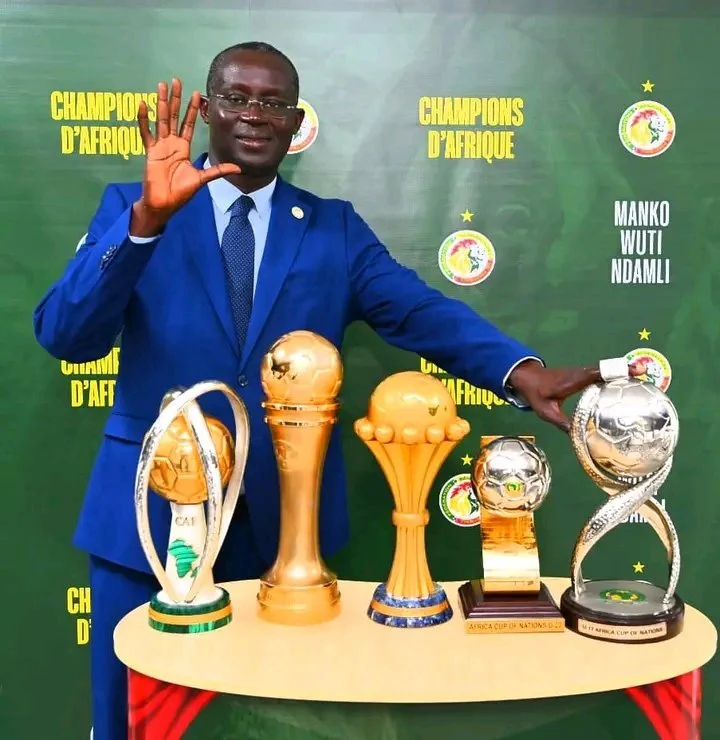
As Senegal’s football community prepares for the 2025 Senegalese Football Federation (FSF) elections, uncertainty clouds what had long seemed a stable leadership structure.
The unity once embodied by the Manko Wutti Ndamli movement appears to be unraveling, setting the stage for one of the most hotly contested electoral periods in the federation’s recent history.
At the centre of the uncertainty is Augustin Senghor, the FSF president since 2009. With his fourth term nearing its end, speculation about his intentions has intensified.
Senghor has yet to confirm whether he will seek re-election, instead choosing to reaffirm the electoral timeline.
“What I can assure the football community is that the elections will be held next August,” he stated. “The various candidates should come forward, because there is no question of changing the calendar.”
His comments followed the federation’s decision to postpone the Ordinary General Assembly from April 12 to May 24, a move that has sparked questions about internal manoeuvring.
Nonetheless, Senghor has maintained that the federation will adhere to constitutional deadlines.
“We were elected on August 12, 2021. The elections will be held no later than August 12, 2025,” he added.
Compounding the complexity is the scheduling of the 2025 African Nations Championship (CHAN), which will run from August 2 to 30, potentially overlapping with the electoral process.
Senghor downplayed the impact, saying, “We have trained enough executives to support the national team. If the outgoing team wins, it will continue the work. If not, others will take over.”
The Manko Wutti Ndamli coalition, once the backbone of FSF’s political consensus, is showing signs of strain.
Executive committee member Ousmane Thiané Sarr reflected this shift when he said, “We believe in Manko because we have seen its results.
But this year, 2025, is extremely complex. We are committed to six areas, between World Cup qualifiers, CHAN, and the AFCON at the end of the year.
We need a consensus. No one will be too many.”
Among those who have publicly declared their candidacy is Cheikh Seck, vice-president of the FSF and head of Jaraaf football club.
“I’m a candidate. That’s my ambition,” Seck said. “If it has to happen, it will happen.
If not, too bad. But I’m not hiding.” While expressing continued loyalty to Senghor, Seck made it clear that his own bid was firmly in place, contingent only on Senghor’s final decision.
Another figure to watch is Elimane Lam, also from the FSF executive committee.
Taking a more conciliatory tone, Lam said, “I will not be a candidate against a man, but for a new vision.
I believe in an intelligent and constructive transition, consolidating the achievements while bringing in new blood.”
The electoral process, governed by Articles 3 and 4 of FSF’s Article 40, requires candidates to be proposed by members at least 30 days prior to the General Assembly, with an official candidate list released no later than 15 days before the vote.
With deadlines fast approaching, the political landscape remains fluid.
Far more than a leadership change, this election will shape the trajectory of Senegalese football for years to come.
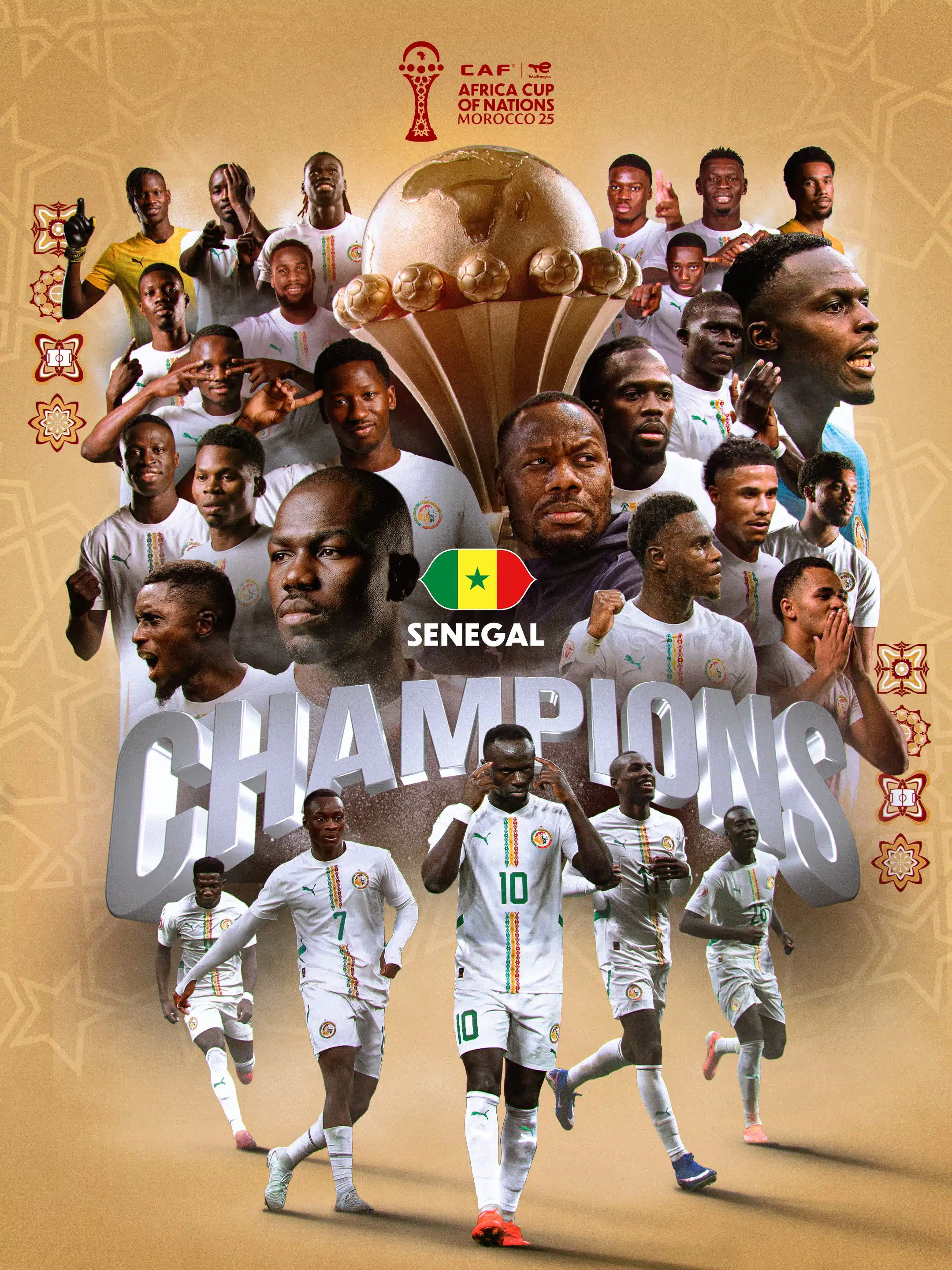
With recent successes—an Africa Cup of Nations title and multiple World Cup appearances—there is much to protect and more to build.
Calls for increased professionalism, transparent governance, and investment in grassroots football continue to grow louder.
As contenders emerge and alliances shift, Senegal’s football future hangs in the balance.
What unfolds in the coming months will define not only who leads but how the country’s beloved sport is governed until 2029.
Popular News

-
AFCON 2025: Fixtures, Results, Scores and Standings
Jan 18, 2026 -

Leadership and long-term vision key to rescuing Zamalek and inspiring Egyptian football – Hany Abou Rida
Nov 5, 2025 -

South African giants Orlando Pirates set to lose influential forward Monnapule Saleng
Mar 19, 2025 -

Full schedule for 2025 Africa Cup of Nations in Morocco confirmed
Feb 12, 2025
-

LIVE UPDATES: D.R Congo 1-0 Jamaica – 2026 FIFA World Cup Playoffs
Mar 31, 2026 -
Cameroon defeat China 2-0 in FIFA Series clash
Mar 31, 2026 -

Africa’s 2026 World Cup Teams: Fixtures and Results for March friendly games
Apr 1, 2026 -
Zimbabwe defender Teenage Hadebe dropped after code of conduct breach
Mar 30, 2026