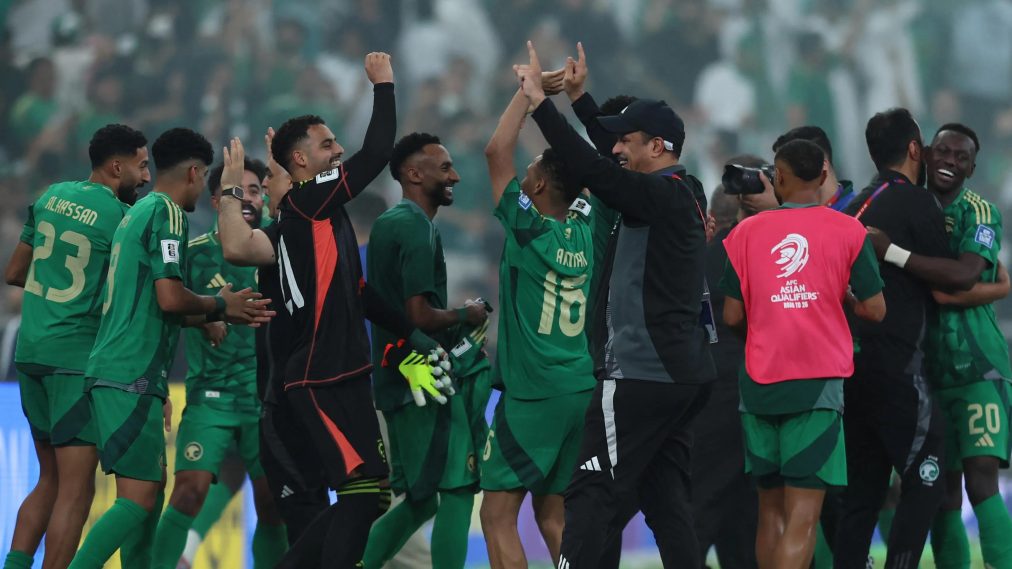
Saudi Arabia’s victory in Gulf Cup 27 has ended a 23-year wait for silverware and given head coach Georgios Donis a valuable platform to build on before the next AFC Asian Cup.
The Green Falcons beat United Arab Emirates 2-0 in Tuesday’s final at Alinma Stadium in Jeddah to claim the Arabian Gulf Cup, a significant achievement given their recent struggles and lengthy absence from the winners’ podium.
However, the regional tournament is not an official competition in itself, and Saudi Arabia’s greater ambition will be to win the AFC Asian Cup when they host the next edition in January and February.
Saudi Arabia have not won the continental title since 1996, when they beat United Arab Emirates on penalties in the final to secure their third and most recent triumph. They have since reached two more finals, losing to Japan in 2000 and Iraq in 2007.
A fourth Asian title would move Saudi Arabia level with Japan as the competition’s most successful nation, with both teams holding four championships. Japan currently stand alone at the top.
Pressure eased after Gulf Cup success
The task of finding a route to that achievement rests with Donis, who must prepare the team both technically and psychologically.
The Gulf Cup success has removed considerable pressure from the coach and his players. Although the tournament was a friendly competition, it ended Saudi Arabia’s complete drought of major honours and relieved the burden that had weighed on the squad for 23 years.
The team had lost five consecutive finals since its last title in 2003, including four Gulf Cup finals. Supporters will now hope to see Saudi Arabia win both the Gulf Cup and the AFC Asian Cup, but the recent success should allow those expectations to be managed with less intensity.
Stronger depth across the squad
Another benefit for Donis was the number of players who showed they could cover important absences during the Gulf Cup.
Saudi Arabia were without goalkeeper Nawaf Al-Aqidi, defender Hassan Kadesh, left-back Zakaria Al-Hawsawi and midfielder Alaa Al-Haji at different stages. Defender Hassan Al-Tambakti and winger Mohammed Al-Qahtani also missed one or two matches, yet the team found effective replacements each time.
The emergence of young player Hammam Al-Hammami, named the tournament’s best player, has also given Donis a potential alternative to captain Salem Al-Dawsari, either in the starting line-up or from the bench.
On the other wing, Donis can call on Sultan Mandash and Saleh Abu Al-Shamat, while his brother Mohammed can also operate in that position when required.
Saudi Arabia’s attacking options include Firas Al-Buraikan, the top scorer at Gulf Cup 27, Abdullah Al-Hamdan, the leading scorer at Gulf Cup 26, and Abdullah Al-Salem. All three scored in the competition.
Defensively, Hassan Al-Tambakti, Abdulelah Al-Amri, Hassan Kadesh and Jihad Dhakri are capable of playing alongside one another. Nawaf Boushal, Mohammed Abu Al-Shamat and Mohammed Mahzari provide options at right-back, while Mutab Al-Harbi and Zakaria Al-Hawsawi can play on the left. Behind them are goalkeepers Mohammed Al-Owais and Nawaf Al-Aqidi.
That depth gives Donis greater freedom to shape his team and use his squad without one absence leaving Saudi Arabia short, a strength that could prove important on the Asian stage.
-
 Juventus step up pursuit of Darryl Bakola as Serie A giants plot January move Oct 8, 2026
 -
Augustine Eguavoen brushes aside Super Falcons injury blow as Comoros Olympic qualifier looms Oct 8, 2026
-
Victor Osimhen set for tests ahead of Kasımpaşa clash as Galatasaray assess injury Oct 8, 2026
-
Kaizer Chiefs face goalkeeping dilemma as Renaldo Leaner challenges Brandon Petersen Oct 8, 2026




-
AFCON 2025: Fixtures, Results, Scores and Standings Jan 18, 2026
-
Match hero Taiwo Awoniyi reflects on team effort after Chelsea triumph May 5, 2026
-
Leadership and long-term vision key to rescuing Zamalek and inspiring Egyptian football – Hany Abou Rida Nov 5, 2025
-
South African giants Orlando Pirates set to lose influential forward Monnapule Saleng Mar 19, 2025




-
Croatia face Spain with Nations League hopes on the line in Split Oct 5, 2026
-
France v Belgium: Probable line-ups for Nations League clash Oct 3, 2026
-
Morocco coach Mohamed Ouahbi refuses to single out player after Mali draw Oct 4, 2026
-
Noussair Mazraoui leaves Morocco squad early after injury Oct 2, 2026