Samuel Eto’o defends financial management amid controversial FECAFOOT tenure
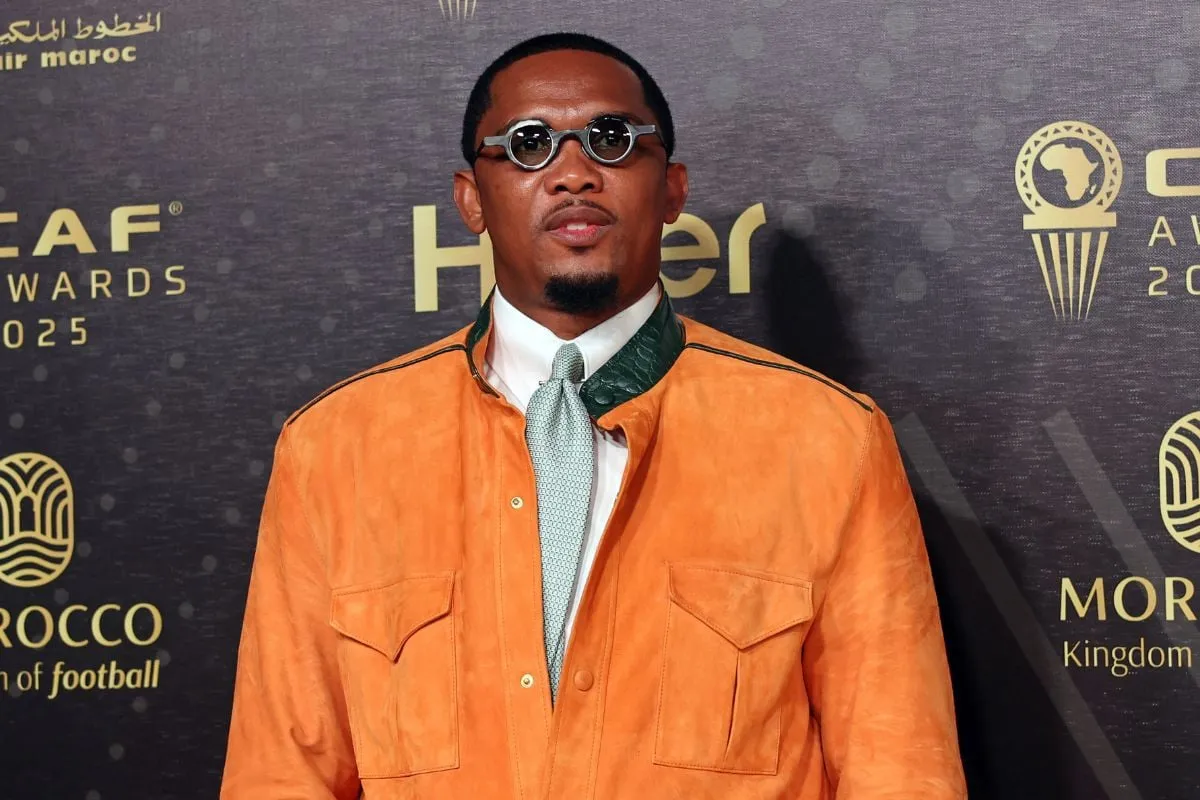
Samuel Eto’o addressed questions surrounding his tenure as president of the Cameroonian Football Federation (FECAFOOT), a period often marred by controversy, particularly over financial matters.
Confronted with accusations of opacity, Eto’o was quick to clarify his role.
“The authorizing officer does not receive the money,” he told Digital B Agency,
Explaining the mechanics of federation finances, the former striker said:
“When I took over as head of FECAFOOT, I was only the authorizing officer for expenditures. The authorizing officer doesn’t handle the funds directly. The federation has an accounting officer, yet people want you to believe that approving the budget means the money is immediately in our hands.”
Eto’o emphasized that all funds followed an institutional process:
“Budgets were prepared by the federation’s teams and submitted to the Ministry of Sports, which then forwarded them to the Prime Minister’s office. A meeting would follow where the ministry, the federation, and the Prime Minister’s office would discuss and approve the budget under official arbitration.”
He further explained that the federal budget is often misunderstood as solely intended for the national team, the Indomitable Lions.
“When we say the budget is six billion, it isn’t just for the players. When the Lions travel, the entire country travels with them—sovereign expenses for the Minister of Sports, the ambassador, security services, the Presidency, the Prime Minister’s office, and the finance department are all included,” Eto’o said.
He added: “The federation president isn’t included in this budget, yet some suggest that money we don’t see is being embezzled.”
To improve transparency, Eto’o said he instituted payments exclusively by bank transfer.
“I mandated bank transfers for all payments to ensure traceability at every level. It’s simple, it shouldn’t even be controversial.”
Addressing perceptions of an authoritarian style, Eto’o did not attempt to refute his image.
“I’m open to criticism, but I won’t waste time listening to people who profit by lying and manipulating you,” he said.
He punctuated his remarks with a statement that drew applause:
“If you call me a dictator because I don’t listen to these people, then I’m a good dictator.”
Provocative and deliberate, the remark encapsulates Eto’o’s approach to leadership—a bid to reclaim the narrative over a mandate that remains both scrutinized and debated.
Popular News


-

AFCON 2025: Fixtures, Results, Scores and Standings
Jan 18, 2026 -

Leadership and long-term vision key to rescuing Zamalek and inspiring Egyptian football – Hany Abou Rida
Nov 5, 2025 -

South African giants Orlando Pirates set to lose influential forward Monnapule Saleng
Mar 19, 2025 -

Full schedule for 2025 Africa Cup of Nations in Morocco confirmed
Feb 12, 2025

-

LIVE UPDATES: D.R Congo 1-0 Jamaica – 2026 FIFA World Cup Playoffs
Mar 31, 2026 -
Cameroon defeat China 2-0 in FIFA Series clash
Mar 31, 2026 -

Africa’s 2026 World Cup Teams: Fixtures and Results for March friendly games
Apr 1, 2026 -
Zimbabwe defender Teenage Hadebe dropped after code of conduct breach
Mar 30, 2026