Real Madrid have turned late comebacks and attacking chaos into a defining feature under Jose Mourinho, yet the Portuguese manager has warned that the approach will eventually fail.
The Spanish side have won nine consecutive matches since their home defeat by Atletico Madrid, with their form improving markedly. Comfortable victories over Racing (3-0), Sevilla (4-1), Valencia (3-0) and RB Leipzig (4-1) were followed by a deserved 2-1 win against Barcelona at Camp Nou.
However, Real Madrid have continued to suffer spells of inactivity that force them to abandon their tactical caution and commit almost every attacking player forward. That pattern has appeared against Roma, AEK Athens, Elche, Espanyol and Celta Vigo, with the team repeatedly managing the disorder it creates in the final stages.
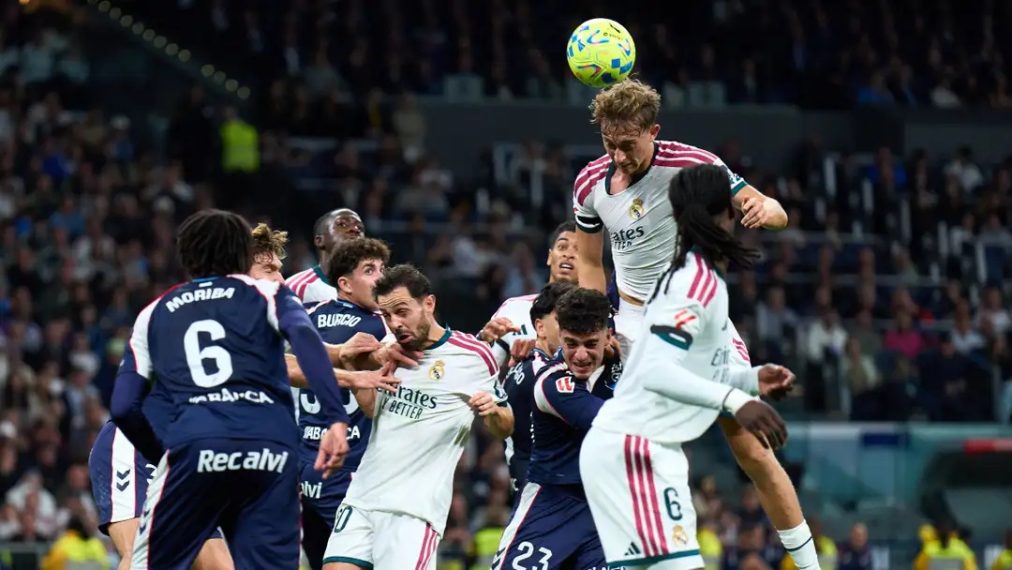
Celta Vigo provided the latest example. Real Madrid endured a poor first half, during which the hosts scored and missed chances to extend their lead. They improved after the break and equalised after more than an hour, increasing the pressure and gradually sacrificing midfielders to add numbers in the final third.
After using all five substitutions, Real Madrid finished with Arda Guler and Jude Bellingham in midfield, Endrick on the right, Vinicius Junior on the left, and Kylian Mbappe and Espi in attack.
Espi scored the winner in the 85th minute, but Celta Vigo continued to press for an equaliser. Mourinho admitted the formation had left his side exposed.
“We had no more substitutions, and there were four recognised attackers on the pitch and two midfielders who do not normally play in that position, because both are attacking players,” he said. “I would have liked to make a sixth substitution to take Mbappe or Guler off and bring on Tchouameni, but that was not possible. All of this involves risks. If we had lost 2-1, we would be talking about a completely different story now.”
Mourinho added: “The day will come when we are unable to turn a game around. That is certain.”
Real Madrid have already paid for such risks in a 1-0 defeat by Real Betis. They ended that match with Bellingham and Bernardo Silva in midfield, while Vinicius Junior, Mbappe, Espi and Diomande formed the attack. Mbappe missed a penalty and Espi had a spectacular goal ruled out for offside in the build-up, although the visitors created enough chances to recover.
In the 2-1 win over Espanyol on the opening matchday, the late attacking reshuffle worked, with Espi scoring the decisive goal. Against Elche, the gamble was greater, as Federico Valverde played at full-back, Ibrahim Diaz moved into midfield alongside Bellingham, and Diomande, Mbappe, Endrick and Espi led the attack in a 3-2 victory.
The same approach has extended into the Champions League. Real Madrid recovered from 3-1 down against Roma after ending with Guler and Bernardo Silva in midfield and Mbappe, Bellingham, Espi and Endrick up front. They also staged a comeback against AEK Athens in Athens with the unusually attacking combination of Eduardo Camavinga, Valverde, Ibrahim Diaz, Endrick, Mbappe and Espi.
The Celta Vigo match was their third successful comeback of the season, following those victories over Roma and AEK Athens. Real Madrid have collected 14 points in La Liga and the Champions League through goals scored after the 78th minute.
According to figures reported by AS, the period from the 76th to the 90th minute has produced 16 of their 46 goals this season, accounting for 35%. They have also scored six times after the 90th minute – the highest total among clubs in Europe’s five major leagues.
-
 Mahrez calls on Algeria to ‘raise their level’ after Togo defeat Nov 24, 2026
-
Joseph Peter signs first professional contract with Rennes Nov 24, 2026
-
Hicham Boudaoui emerges as transfer option for Monaco and Olympiacos Nov 24, 2026
-
Barca keen to sign Morocco’s latest football sensation Yassir Zabiri Nov 24, 2026




-
AFCON 2025: Fixtures, Results, Scores and Standings Jan 18, 2026
-
Match hero Taiwo Awoniyi reflects on team effort after Chelsea triumph May 5, 2026
-
Leadership and long-term vision key to rescuing Zamalek and inspiring Egyptian football – Hany Abou Rida Nov 5, 2025
-
South African giants Orlando Pirates set to lose influential forward Monnapule Saleng Mar 19, 2025




-
AFCON 2027 qualifiers matchday 3 & 4: All fixtures and results Nov 17, 2026
-
U17 World Cup 2026: Full schedule for Morocco and where to watch Nov 19, 2026
-
AFCON 2027 Qualifiers: South Africa bounce back with win over Kenya Nov 17, 2026
-
AFCON 2027 Qualifiers: Benni McCarthy promises attacking Kenya display against South Africa Nov 17, 2026