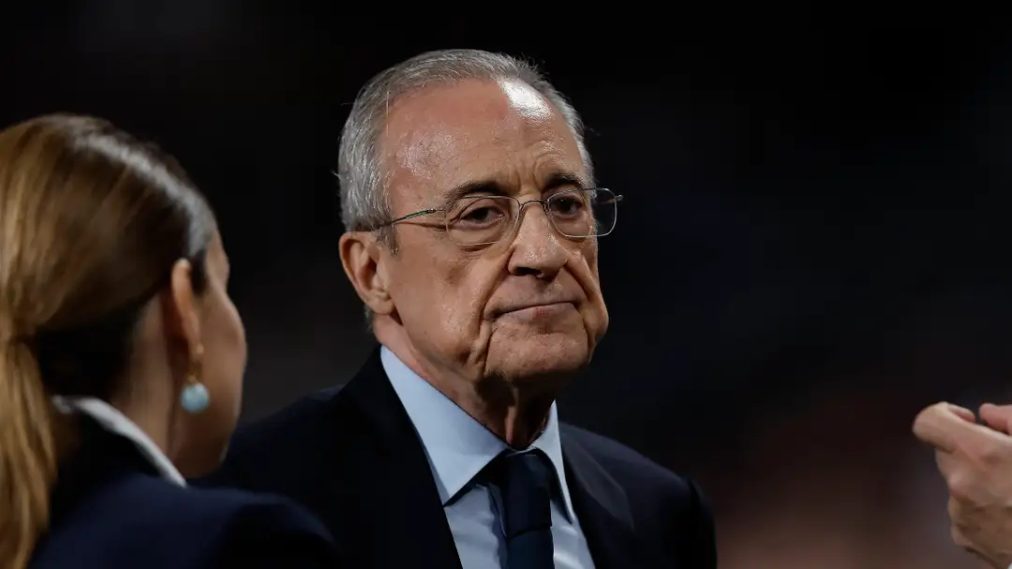
Rafael Nadal has taken his first place on the Real Madrid board, sitting directly beside president Florentino Perez in a move that has prompted speculation about whether the tennis great could eventually lead the club.
Nadal was appointed to the board during Real Madrid’s annual general meeting this week. Club members approved the accounts for the previous season, the budget for the current campaign and membership fees for the next year before an extraordinary meeting was held to confirm the appointment.
Perez did not wait for the final vote before inviting Nadal to join the presidency and take his seat on the board. The decision was warmly received by those inside the meeting.
Introducing Nadal, Perez said: “Rafa is a person who has earned the respect and affection of millions through his character, his conduct on and off the court, and his firm commitment to the values that uphold sport.”
Nadal’s position to the president’s right was viewed by many attendees as more than a matter of protocol. To them, it appeared to signal that the 22-time Grand Slam champion could be being prepared as a possible successor to Perez.
The idea is rooted in Nadal’s exceptional standing in Spain. He is not only one of the country’s greatest sporting figures but has also openly supported Real Madrid since childhood.
His board role will give him the opportunity to learn how one of the world’s biggest clubs is run, including its finances, television rights and commercial expansion.
However, the prospect of Nadal becoming president remains far from certain. Spanish journalist Anton Meana, speaking on Cadena SER’s Carrusel Deportivo, questioned whether Nadal was genuinely prepared for the pressure and decisions associated with the position.
Meana also asked whether Nadal would eventually exercise the full authority currently held by Perez or become a public figurehead while an executive managed the club behind the scenes.
“Being an ambassador is one thing, being a member of the board is another, but being president of Real Madrid is something completely different,” Meana said. “Yesterday looked like an official presentation of the next president, but I do not think it is that simple.”
Journalist Jesus Gallego, also speaking on the programme, said Nadal had plenty of time to gain the necessary experience. He stressed that a move into the presidency would not happen next month or next year.
Gallego suggested Nadal would initially work alongside one or two chief executives and learn how transfers are concluded, how negotiations with agents operate and how the club deals with La Liga, led by Javier Tebas.
The major question, he said, would be Nadal’s ability to make decisive choices. Perez has significant executive authority and has sometimes acted without approval from those below him. His decision to appoint Jose Mourinho as manager was cited as a personal choice on which he would not compromise.
Gallego believes Nadal would not initially be able to operate in that way and might need a decade as president to reach such a level of decisiveness.
For now, his appointment represents only the first stage of a long path from an honorary seat to one of the most demanding positions in Spanish football.
-
 Moroccan striker Yassir Zabiri explains why he handed penalty to Canales in Racing Santander win Nov 23, 2026
-
Coca-Cola returns to African football as CAF sponsor after 30 years Nov 23, 2026
-
Eric Blahic names Morocco squad for France reunion and Venezuela test Nov 23, 2026
-
Riyad Mahrez reunites with former Al-Ahli teammates ahead of AFC Champions League clash Nov 23, 2026



-
AFCON 2025: Fixtures, Results, Scores and Standings Jan 18, 2026
-
Match hero Taiwo Awoniyi reflects on team effort after Chelsea triumph May 5, 2026
-
Leadership and long-term vision key to rescuing Zamalek and inspiring Egyptian football – Hany Abou Rida Nov 5, 2025
-
South African giants Orlando Pirates set to lose influential forward Monnapule Saleng Mar 19, 2025




-
AFCON 2027 qualifiers matchday 3 & 4: All fixtures and results Nov 17, 2026
-
U17 World Cup 2026: Full schedule for Morocco and where to watch Nov 19, 2026
-
AFCON 2027 Qualifiers: South Africa bounce back with win over Kenya Nov 17, 2026
-
AFCON 2027 Qualifiers: Benni McCarthy promises attacking Kenya display against South Africa Nov 17, 2026