Africa
AFCON
AFCON Qualifiers
CAF Champions League
CAF Confederation Cup
CAF Super Cup
CAF Women's Champions League
CHAN
Clubs
Competitions
Latest News
WAFCON
Patrice Motsepe confirms final term as CAF president
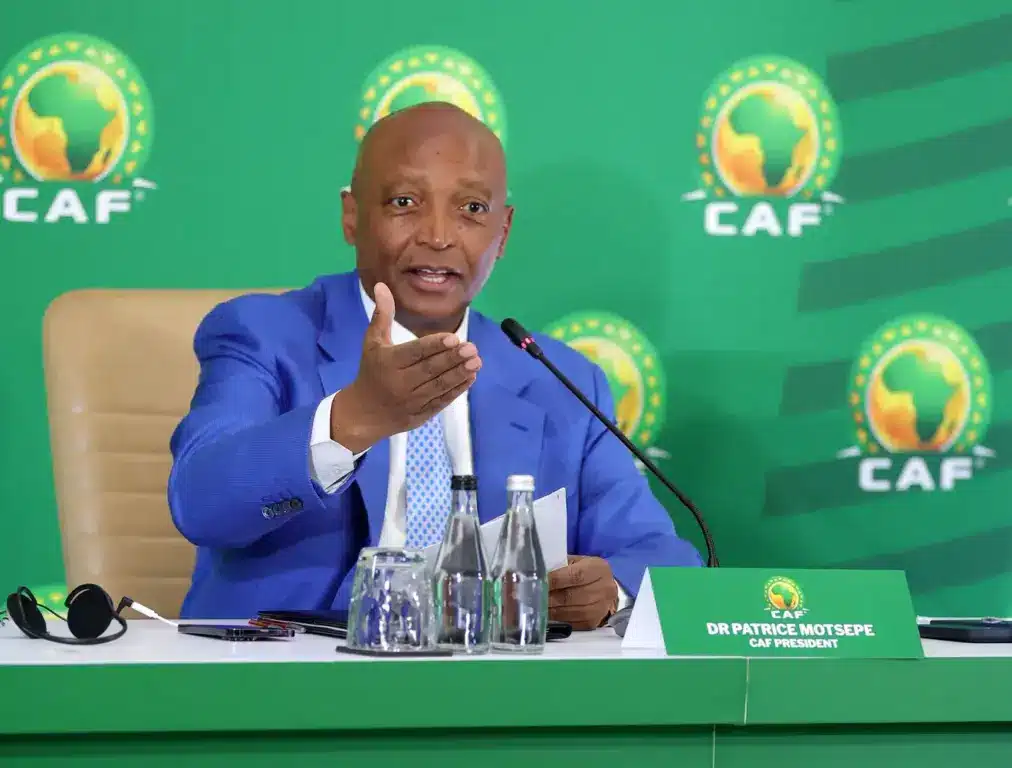
Confederation of African Football (CAF) president Patrice Motsepe has reiterated that his current tenure will be his final term in office, saying his priority is to establish a strong foundation for the future of African football.
The South African businessman made the declaration at a press conference during the CAF Strategy Conference in Cape Verde, where football administrators and other stakeholders discussed the continent’s long-term development and competitiveness.
Motsepe was first elected CAF president on 12 March 2021 after the other candidates withdrew from the race. He was re-elected on 12 March 2025 during CAF’s 14th Extraordinary General Assembly, securing a second term.
His latest comments underline his determination to strengthen the continent’s football structures and ensure that progress made under his leadership can be sustained beyond his presidency.
Since taking office, Motsepe has repeatedly emphasised the need to improve African football through stronger competitions, greater support for member associations and better development opportunities for players and coaches.
He has also called on African football leaders to assess past shortcomings and implement reforms that will help the continent compete more effectively on the global stage.
The focus on long-term development comes as CAF looks ahead to the 2030 FIFA World Cup, with Motsepe stressing the importance of learning from previous tournaments and identifying areas where African teams need to improve.
Africa’s ambitions at the World Cup remain a key consideration for the continent’s football authorities, who are seeking to build on previous achievements and create the conditions for an African nation to win the global showpiece for the first time.
The CAF Strategy Conference in Cape Verde provides a platform for discussions on the policies, partnerships and institutional reforms needed to advance the game across the continent.
Motsepe’s confirmation that he will not seek to remain in office beyond his current term also places renewed emphasis on succession planning and the need for strong institutions capable of maintaining continuity when his leadership ends.
His legacy will ultimately be judged by the progress African football makes during his tenure, including the development of domestic competitions, the strengthening of national associations and the ability of African teams to challenge the world’s leading football nations.
As discussions continue, attention will turn to the decisions and reforms emerging from the conference and whether they can translate into lasting improvements for African football.
-
 Achraf Hakimi makes history with four remarkable records after PSG hat-trick Oct 31, 2026
-
Hussein Ammouta under pressure despite Al Ahly victory over Modern Sport Oct 31, 2026
-
Yassir Zabiri determined to lead Morocco’s attack at next AFCON Oct 30, 2026
-
Morocco star Achraf Hakimi buzzing after netting first career hat-trick Oct 30, 2026


-
AFCON 2025: Fixtures, Results, Scores and Standings Jan 18, 2026
-
Match hero Taiwo Awoniyi reflects on team effort after Chelsea triumph May 5, 2026
-
Leadership and long-term vision key to rescuing Zamalek and inspiring Egyptian football – Hany Abou Rida Nov 5, 2025
-
South African giants Orlando Pirates set to lose influential forward Monnapule Saleng Mar 19, 2025



-
Sevilla FC v Osasuna: probable line-ups for Monday’s La Liga meeting Oct 25, 2026
-
Inter Milan v Fiorentina: probable line-ups for San Siro clash Oct 24, 2026
-
2026/27 CAF Confederation Cup second preliminary round: Fixtures and results Oct 25, 2026
-
2026/27 CAF Champions League second preliminary round: Fixtures and results Oct 25, 2026