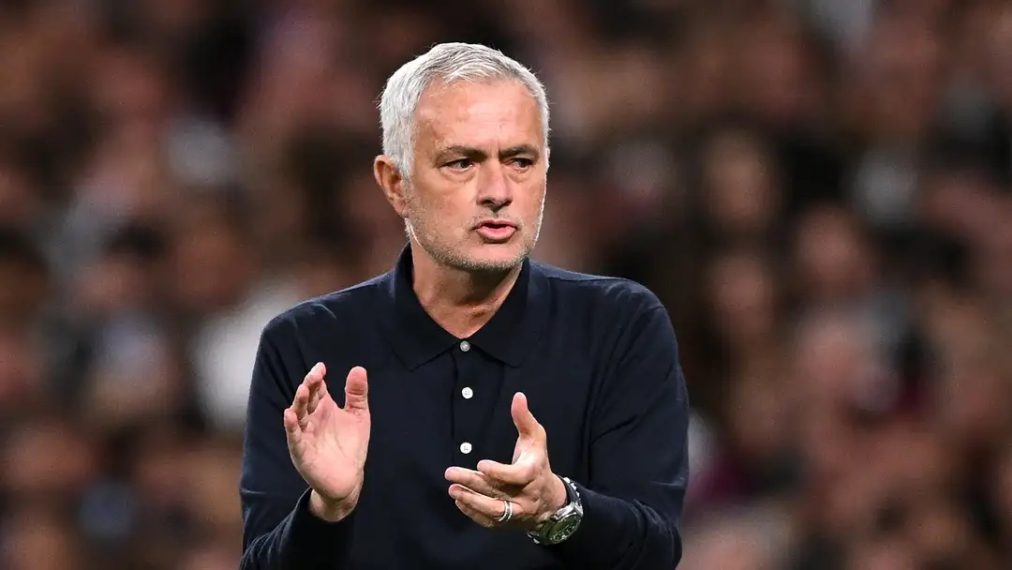
Jose Mourinho’s match-winning decisions have helped Real Madrid claim 10 consecutive victories, with four of those wins coming after the Spanish side had fallen behind.
The Portuguese manager’s substitutions and tactical adjustments have become a defining feature of his second spell in charge, according to Spanish newspaper AS. Mourinho regularly deflects praise for his in-game management, saying: “They are the ones who deserve the credit.” After another comeback, he again insists: “The credit belongs to them.”
Real Madrid overturned deficits against Roma, AEK, Celta Vigo and PSV Eindhoven, with each recovery bearing the clear imprint of Mourinho’s decisions. His interventions have extended beyond routine substitutions, showing an ability to identify what his team needs and act at the decisive moment.
His influence has also been evident in matches that did not involve a comeback. That includes his late decision to replace Eduardo Camavinga during the Clasico and his management of Carlos Espi’s playing time in the matches against Espanyol and Elche.
Those choices underline Mourinho’s close reading of matches and his willingness to make bold decisions even when they create tactical risks.
A calculated gamble against PSV Eindhoven
After a strong second half against PSV Eindhoven, Mourinho admitted there was still work to do.
“There are still things that need improving,” he said. He added: “There will always be things to improve if we produce a first half like that,” highlighting his focus on the team’s shortcomings rather than simply praising its response.
Asked why Real Madrid’s performance had changed, Mourinho pointed to Bernardo Silva and Arda Guler.
“It happened because we played Bernardo and Arda. All these two players know is how to play football. They are not defensive players or players tied to specific positions, but we gave the game a different dynamic,” he said.
Mourinho had taken off Aurelien Tchouameni and used Arda Guler alongside Bernardo Silva in midfield. The change gave Real Madrid greater attacking variety but also left more space for PSV Eindhoven to exploit.
He responded by making a double change in central defence, sending on Dean Huijsen and Ibrahima Konate for Eder Militao and Antonio Rudiger. Mourinho judged the incoming pair to be showing greater confidence and handling one-on-one situations better at present.
The defensive adjustment allowed Real Madrid to press higher and reduce the gaps between their lines. Jude Bellingham’s introduction then completed the transformation.
Comebacks shaped from the touchline
Against Roma, Real Madrid were 3-1 down when Mourinho began reshaping the match in the 59th minute. Endrick replaced Vinicius Junior, while Arda Guler came on for Denzel Dumfries.
The changes also altered the team’s structure. Federico Valverde moved to right-back, Guler joined Tchouameni in midfield, Ousmane Diomande switched to the left flank and Endrick operated on the right.
A second wave of substitutions proved decisive. Bernardo Silva replaced Tchouameni, Carreras came on for Marc Cucurella and Carlos Espi replaced Diomande.
Real Madrid scored three times in seven minutes through Espi, Endrick and Rudiger to complete the turnaround.
A similar pattern followed against AEK. With Real Madrid trailing 2-1 in the 75th minute, Mourinho introduced Endrick, Valverde and Carreras before later sending on Brahim Diaz and Carlos Espi. Those changes shifted the contest in Real Madrid’s favour.
Against Celta Vigo, Valverde, Cucurella and Vinicius replaced Bernardo Silva, Carreras and Trent in the 57th minute. Endrick then came on for Diomande, while Espi replaced Camavinga in the 71st minute.
Mourinho’s substitutions have therefore become more than changes to the starting XI: they have become a major factor in Real Madrid’s results.
-
 2026/27 CAF Confederation Cup: Fixtures, results and group standings Nov 27, 2026
-
Steven Pienaar backs South Africa to build on historic World Cup achievement Nov 27, 2026
-
2026/27 CAF Champions League: Fixtures, results and group standings Nov 27, 2026
-
Tebogo Tlolane blames Leicesterford clearance delay for stalled PSL return Nov 27, 2026




-
AFCON 2025: Fixtures, Results, Scores and Standings Jan 18, 2026
-
Match hero Taiwo Awoniyi reflects on team effort after Chelsea triumph May 5, 2026
-
Leadership and long-term vision key to rescuing Zamalek and inspiring Egyptian football – Hany Abou Rida Nov 5, 2025
-
South African giants Orlando Pirates set to lose influential forward Monnapule Saleng Mar 19, 2025




-
Nice face formidable PSG as leaders chase eighth straight Ligue 1 win Nov 20, 2026
-
Liverpool v Manchester United: kick-off time, TV details and match preview Nov 20, 2026
-
Barcelona v Villarreal: Probable line-ups for Sunday’s La Liga clash Nov 21, 2026
-
African football leaders back Gianni Infantino with standing ovation for FIFA’s upcoming election Nov 21, 2026