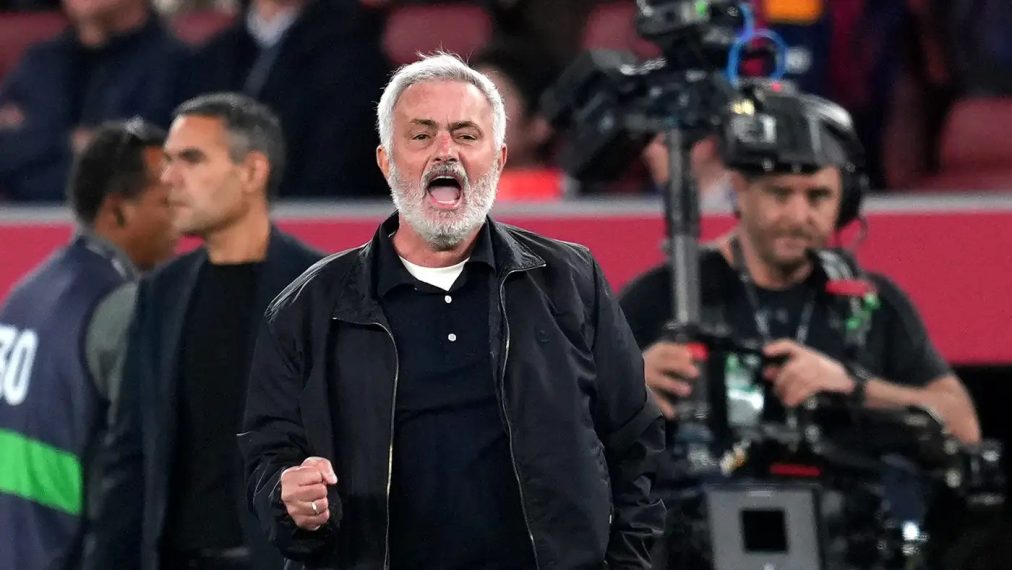
Jose Mourinho has begun preparing a player-management strategy designed to prevent Real Madrid’s squad from suffering the effects of fatigue during the closing stages of the season, drawing inspiration from Paris Saint-Germain’s approach to rest and playing time.
The Portuguese manager wants Real Madrid to reach the decisive period of the campaign in the best possible physical condition. Spanish newspaper Marca has reported details of his plans, which centre on closer monitoring of players’ minutes, carefully scheduled rest periods and workloads tailored to individual needs.
At Valdebebas, the coaching staff recognise that managing physical effort could prove decisive in determining how the season finishes. A crowded fixture list and increasingly demanding competition have led Mourinho to look beyond simply making substitutions or leaving players out of selected matches.
His plan also includes additional days off and individual recovery measures intended to restore both physical and mental energy. The latest examples are Arda Guler and Aurelien Tchouameni, who have played a substantial number of minutes in matches contested at a high tempo and with considerable physical intensity. They were subsequently given extra time to recover.
Similar decisions are expected to be made with other members of the squad, depending on their condition and the team’s requirements. Mourinho does not want one identical programme for every player. Instead, he aims to establish the appropriate workload for each individual and identify the most suitable moment for them to rest.
The manager is working with several departments across the club to monitor appearances and fatigue levels, adjusting physical programmes according to both individual and collective circumstances. In Mourinho’s calculations, every minute played and every period of rest could prove significant later in the season.
The Paris Saint-Germain example
Paris Saint-Germain’s methods have become an important reference point for Real Madrid, as well as Bayern Munich, after Luis Enrique adopted a precise approach to managing his key players’ league minutes.
The figures from Ligue 1 illustrate the different way workloads have been handled at the French club. Vitinha, one of the team’s most important players, has played 2121 minutes, compared with 1483 for Khvicha Kvaratskhelia, 1374 for Achraf Hakimi, 1287 for Joao Neves and 1129 for Fabian Ruiz. Ousmane Dembele has played 1062 minutes.
With the exception of Vitinha, who has featured in 69.3% of the available minutes, none of those players has reached half of the minutes available in Ligue 1. Dembele’s figure is 34.7%, while Fabian Ruiz’s is 36%, highlighting the recovery time Luis Enrique has afforded his leading players.
Paris Saint-Germain benefit from comparatively lower demands in domestic competition than those faced in La Liga, giving the coaching staff greater scope to rotate without the same effect on results.
Mourinho does not have that same advantage at Real Madrid, where the strength of La Liga and the intensity of its matches require greater precision. His aim is therefore to create a version of the Paris Saint-Germain model based on individual workload management, strategic rest and a more balanced distribution of minutes.
The objective is not only to maintain Real Madrid’s results now, but also to ensure their key players are not exhausted before the matches become most important.
-
 Manchester United and Aston Villa meet in a crucial Premier League battle at Old Trafford Nov 7, 2026
-
Cote d’Ivoire call up former Herve Renard pair for crucial U23 qualifiers Nov 7, 2026
-
Cedric Bakambu leaves San Diego FC after just two months Nov 7, 2026
-
Patrice Neveu: Togo boss defends outburst before Algeria qualifiers Nov 7, 2026




-
AFCON 2025: Fixtures, Results, Scores and Standings Jan 18, 2026
-
Match hero Taiwo Awoniyi reflects on team effort after Chelsea triumph May 5, 2026
-
Leadership and long-term vision key to rescuing Zamalek and inspiring Egyptian football – Hany Abou Rida Nov 5, 2025
-
South African giants Orlando Pirates set to lose influential forward Monnapule Saleng Mar 19, 2025




-
Barcelona host Aston Villa in Champions League meeting at Spotify Camp Nou Nov 2, 2026
-
AEK Athens v Real Madrid: Champions League date, kick-off time and viewing details Nov 2, 2026
-
Villarreal host unbeaten PSG in first European meeting Nov 2, 2026
-
Real Sociedad and Lyon name probable line-ups for Europa League meeting Nov 3, 2026