Motsepe: Military-led Sahel trio ‘will not be penalised’ in race to host 2032 Africa Cup of Nations
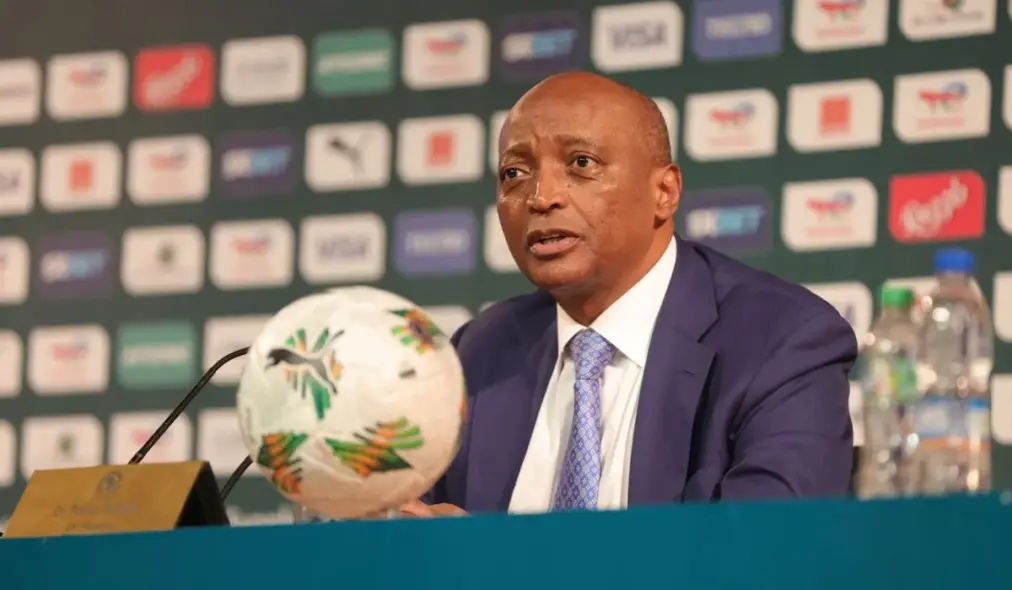
CAF president Patrice Motsepe has insisted Mali, Burkina Faso and Niger will be treated “like all the others” in the contest to host the 2032 Africa Cup of Nations (Afcon), despite deep concern over military rule and security threats in all three countries.
Speaking at a press conference on Wednesday, the Confederation of African Football (CAF) chief said the joint bid from the three members of the Alliance of Sahel States (AES) would not be automatically ruled out because they are governed by juntas.
Sahel alliance first to go public with 2032 bid
Burkina Faso, Mali and Niger have formally declared their interest in co-hosting the 2032 Afcon after CAF opened the bidding process for the 2028, 2032 and 2036 editions.
Their joint proposal makes the AES bloc the first officially confirmed candidate for the 2032 tournament, ahead of potential challengers – with Senegal among the countries believed to be considering a bid.
All three nations have experienced coups in recent years and are under military leadership, prompting questions about their political stability and security capacity to stage a major continental event.
Motsepe, however, pushed back against calls to exclude them on political grounds alone.
« Au Mali, l’armee est au controle. Plusieurs chefs d’Etat africains m’ont deconseille d’y aller, car la junte militaire y est en place, tout comme au Niger. Mais nous devons faire avec les realites en place. »
‘As much chance as the others’
The South African administrator underlined his personal commitment to democratic principles, but stressed that CAF’s primary focus in this process is football and the practical ability to host the competition.
« Bien sur, la democratie, la liberte de parole et les elections sont importantes. Mais je vais visiter ces pays pour m’engager sur ma partie, qui est le football. »
He then gave a clear assurance that the AES bid would not be disadvantaged solely because of the nature of the regimes in place.
« Je ne sais pas a ce stade ou la CAN se disputera. Mais ces trois pays auront autant de chances que les autres. Ils ne subiront aucun prejudice parce qu’une junte militaire est en place. »
Security concerns central to CAF assessment
While rejecting an automatic political veto, Motsepe acknowledged that security would be a decisive factor in CAF’s evaluation of the Sahel proposal.
« Oui, les questions de securite devront etre traitees. »
Any Afcon staged across Mali, Burkina Faso and Niger would be highly symbolic and potentially thrilling from a football perspective, expanding the tournament into a region that has rarely hosted major events.
But the three countries have for years grappled with armed insurgencies, jihadist attacks and persistent instability in several areas. Large swathes of territory have seen recurrent violence, displacement of civilians and challenges to state authority.
For CAF, the ability of the AES governments and their partners to guarantee the safety of players, officials, supporters and media will be critical. That includes securing host cities, protecting stadiums and training bases, safeguarding team movements between venues and ensuring resilience of key infrastructure such as airports, roads and hotels.
Ambitious – but can it be delivered?
CAF’s confirmation that the joint bid is formally admissible marks an important first step for the AES trio. It signals that, in principle, there is no political barrier within CAF’s rules that would prevent military-led states from hosting Africa’s flagship football event.
The harder test now will be proving that the project is feasible in practice – financially, logistically and, above all, in terms of security and stability over the next eight years.
With other African nations expected to come forward before CAF makes its decision, the Sahel alliance will have to show that it can overcome entrenched security challenges and meet international standards for hosting a tournament that attracts global attention.
As the process unfolds, the question for CAF will be whether a bid it deems “receivable” can ultimately be judged reliably “doable” on the ground.
-
 Pape Gueye and Villarreal face Liverpool at Anfield Oct 20, 2026
 -
FIFA suspension is an honour for me – Egypt coach Hossam Hassan Oct 20, 2026
-
Kaizer Chiefs equal unwanted PSL record after slow start to 2026/27 campaign Oct 20, 2026
-
Daryll Benlahlou scores first professional goal for Montpellier Oct 20, 2026




-
AFCON 2025: Fixtures, Results, Scores and Standings Jan 18, 2026
-
Match hero Taiwo Awoniyi reflects on team effort after Chelsea triumph May 5, 2026
-
Leadership and long-term vision key to rescuing Zamalek and inspiring Egyptian football – Hany Abou Rida Nov 5, 2025
-
South African giants Orlando Pirates set to lose influential forward Monnapule Saleng Mar 19, 2025




-
PSG v Barcelona: fiery attacks set up Champions League classic at Parc des Princes Oct 18, 2026
-
Real Betis v Barcelona: kick-off time, TV details and match preview Oct 16, 2026
-
Morocco to face New Zealand as FIFA U-17 Women’s World Cup kicks off in Rabat Oct 16, 2026
-
Porto must beat PSV to revive Champions League hopes Oct 19, 2026