Lionel Messi’s five defining moments as Argentina great prepares for international farewell
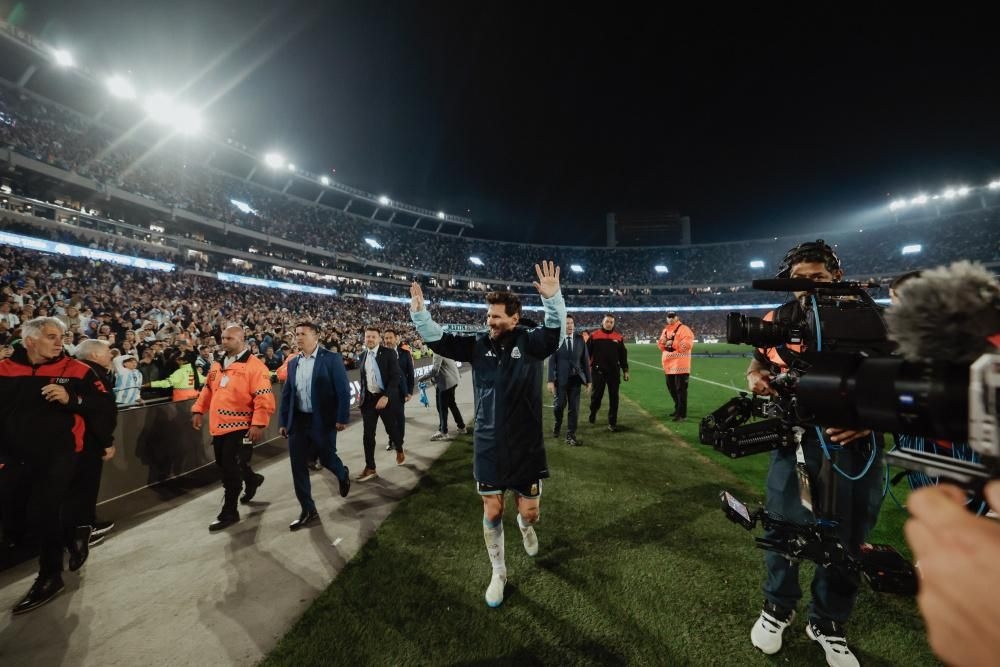
Lionel Messi’s international career is nearing its conclusion after a resounding win over Benin, with the Argentina captain preparing for an official farewell match attended by several members of the squad that won the 2022 World Cup.
Messi announced his retirement from international football a few weeks ago. As he prepares to bring that chapter to an end, his impact on the game remains evident in the trophies, records and individual awards accumulated across more than two decades.
These are five moments that helped shape his extraordinary legacy.
A teenage statement against Real Madrid
Messi was 19 when he scored his first hat-trick for Barcelona in a memorable El Clasico against Real Madrid at Camp Nou.
The performance convinced many observers that Barcelona had discovered a player of rare ability. His acceleration, close control and capacity to glide beyond defenders were already clear, but his calmness in a high-pressure contest was equally striking.
It was the point at which Messi moved beyond the status of promising youngster and announced himself on one of football’s biggest stages.
Guardiola’s tactical revolution
Pep Guardiola’s decision to use Messi as a central false nine became one of the defining tactical developments of the modern game.
Rather than staying close to the opposition centre-backs, Messi moved into deeper positions, presenting defenders with a difficult choice. If they followed him, space appeared behind them. If they held their position, Messi could receive the ball between the lines and attack the defence.
Barcelona’s 6-2 victory over Real Madrid at the Santiago Bernabeu provided the clearest example of the system’s devastating effect. Messi’s role subsequently helped make the false nine one of football’s most widely discussed tactical concepts.
A record-breaking 2012
In 2012, Messi produced one of the most remarkable individual years in football history.
He scored 91 goals in 69 matches for Barcelona and Argentina, surpassing Gerd Muller’s long-standing record for goals in a calendar year.
The achievement was about more than the total. Messi combined the roles of scorer, creator, dribbler and playmaker, controlling matches from the wing, operating centrally or dropping into midfield before arriving unexpectedly in the penalty area.
The World Cup answer
For much of Messi’s international career, one question followed him: could he win the World Cup?
Argentina had reached the final in 2014 but lost to Germany. In Qatar, Messi provided the answer, scoring twice against France in one of the greatest World Cup finals ever played before Argentina won on penalties.
The trophy completed his collection of major international honours and transformed the discussion around his legacy. He was no longer only the leading player of his generation seeking to follow Argentina’s past legends; he had created his own World Cup story.
Reinventing his game
The winger who once overwhelmed defenders with pace and dribbling gradually became a deeper playmaker and creator.
As he aged, Messi relied less on carrying the ball over long distances and more on his reading of space, passing range and ability to dictate the tempo. That development was especially important for Argentina, where he became the team’s creative reference point while younger players supplied the running and energy.
His role changed, but his influence did not. From Barcelona teenager to World Cup-winning Argentina captain, Messi continually found new ways to shape football. That evolution may prove to be his greatest legacy, ensuring the debate over his place in the sport’s history continues after his final international appearance.
-
 Messi scores in Argentina farewell as Benin beaten 3-0 Oct 7, 2026
 -
Benin hold Argentina to half-time draw as Messi farewell takes centre stage Oct 7, 2026
-
Argentina v Benin: Lionel Messi starts in likely farewell at Monumental Oct 7, 2026
-
Morocco women advance to Olympic qualifying third round after Congo-Brazzaville withdrawal Oct 7, 2026



-
AFCON 2025: Fixtures, Results, Scores and Standings Jan 18, 2026
-
Match hero Taiwo Awoniyi reflects on team effort after Chelsea triumph May 5, 2026
-
Leadership and long-term vision key to rescuing Zamalek and inspiring Egyptian football – Hany Abou Rida Nov 5, 2025
-
South African giants Orlando Pirates set to lose influential forward Monnapule Saleng Mar 19, 2025




-
Croatia face Spain with Nations League hopes on the line in Split Oct 5, 2026
-
France v Belgium: Probable line-ups for Nations League clash Oct 3, 2026
-
Morocco coach Mohamed Ouahbi refuses to single out player after Mali draw Oct 4, 2026
-
Noussair Mazraoui leaves Morocco squad early after injury Oct 2, 2026