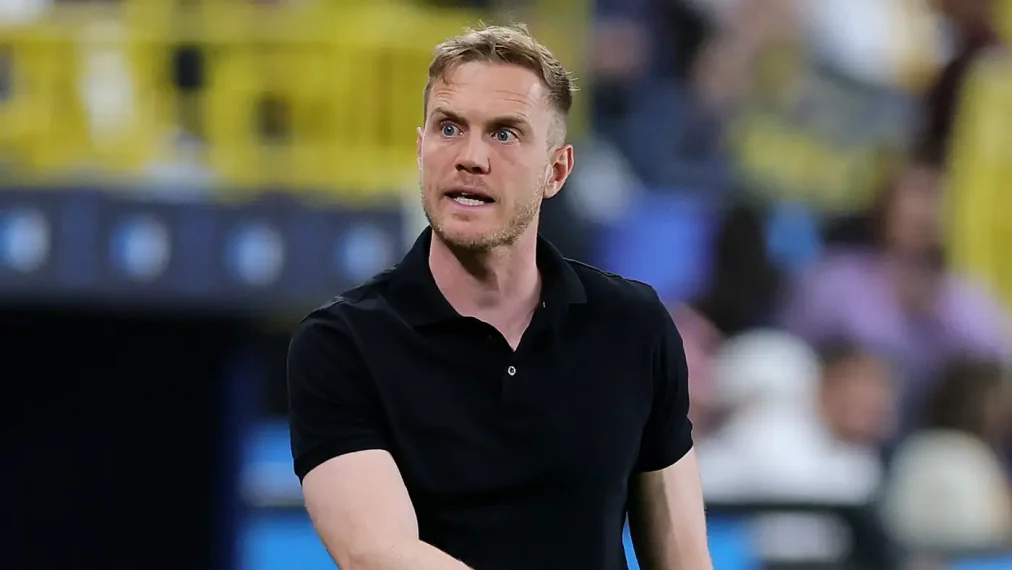
Al-Ittihad were not expected to be among the leading contenders at the start of the new season, but a difficult summer has quickly developed into an opportunity for Jens Vissing to build a new identity at the club.
The Saudi side began the campaign surrounded by uncertainty following the departure of French striker Karim Benzema to Al-Hilal. Administrative changes and financial restrictions also left Al-Ittihad unable to compete with the major spending of clubs such as Al-Hilal, Al-Ahli and Al-Qadsiah.
Those circumstances appeared to threaten the club’s season before it had properly begun. Instead, Al-Ittihad placed their faith in Vissing, a 38-year-old German coach who did not arrive with a major reputation or an extensive managerial record that would have made him the obvious choice for supporters.
Within a matter of weeks, however, Vissing has begun to show that a strong team does not necessarily depend on the biggest names or the largest budget. His latest statement came in a 2-1 victory over Al-Nassr, led by Cristiano Ronaldo, in a high-profile Saudi football classic.
The result was made even more impressive by the manner in which Al-Ittihad achieved it. Rather than attempting to replace departed stars with another individual of similar profile, Vissing has created a collective system built around movement, discipline and teamwork.
That approach was particularly clear against Al-Nassr. Al-Ittihad started with an aggressive high press and scored twice within the opening 22 minutes, putting their opponents under sustained pressure before they had time to settle.
Vissing has managed to produce that level of performance without tools comparable to those available to his rivals in terms of spending power or the quality of their established names. His early success has instead come from bringing the best out of the players already at his disposal and giving them a clear structure in which to operate.
The victory over Al-Nassr was also not an isolated achievement. In May, Vissing led Gamba Osaka to victory over the same opponent in the final of the AFC Champions League 2, providing another example of his ability to prepare teams for important matches against highly regarded opposition.
That has prompted comparisons with what has become known as the “green miracle” created by Al-Ahli under German coach Matthias Jaissle. Al-Ahli managed to win the AFC Champions League twice in succession despite competing with clubs that possessed greater financial resources and, on paper, stronger squads.
There is no suggestion that Vissing can yet be compared directly with Jaissle. He remains at the beginning of his managerial journey, and Al-Ittihad have achieved only an encouraging start rather than a major trophy.
The similarity lies instead in the circumstances. Both coaches have demonstrated how a young manager can build a competitive team despite conditions that are less than ideal. That makes it reasonable to ask whether Vissing could eventually reproduce Al-Ahli’s remarkable story at Al-Ittihad.
It is far too early to discuss titles or miracles, but the club many expected to endure a difficult season is already presenting a very different image. If Vissing receives the necessary support and patience, an appointment that initially appeared to be an emergency solution could become the foundation of a new project at Al-Ittihad.
-
 Kaizer Chiefs goalkeeper Bruce Bvuma faces uncertain future as Renaldo Leaner rises Oct 21, 2026
 -
Paris Brunner: Germany and Monaco forward linked with Ligue 1 move to PSG Oct 21, 2026
-
Benfica linked with Monza striker Gustavo Varela in possible Liga Portugal move Oct 21, 2026
-
Club Brugge linked with Fredrikstad winger Gabriel Wesseh Oct 21, 2026


-
AFCON 2025: Fixtures, Results, Scores and Standings Jan 18, 2026
-
Match hero Taiwo Awoniyi reflects on team effort after Chelsea triumph May 5, 2026
-
Leadership and long-term vision key to rescuing Zamalek and inspiring Egyptian football – Hany Abou Rida Nov 5, 2025
-
South African giants Orlando Pirates set to lose influential forward Monnapule Saleng Mar 19, 2025




-
PSG v Barcelona: fiery attacks set up Champions League classic at Parc des Princes Oct 18, 2026
-
Champions League: PSG beat Barcelona as Liverpool complete comeback against Villarreal Oct 20, 2026
-
Real Betis v Barcelona: kick-off time, TV details and match preview Oct 16, 2026
-
Porto v PSV: predicted line-ups for Champions League league-phase clash Oct 19, 2026