Graham Scott explains how exaggerated reactions can cost players refereeing decisions
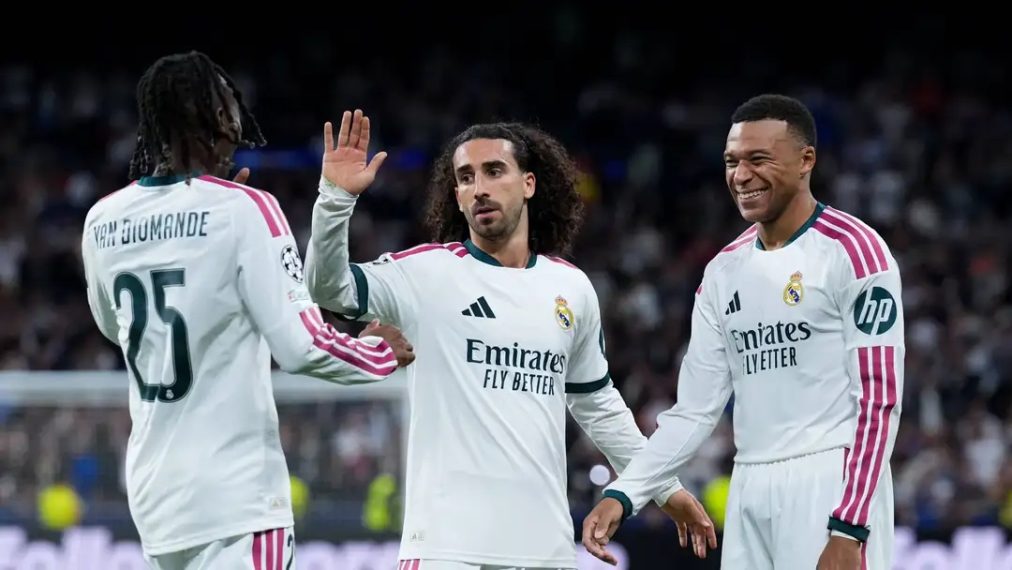
Former Premier League referee Graham Scott says players who overstate incidents risk losing referees’ trust and making future decisions less likely to go in their favour.
Writing in The Athletic, in an article reported by Sport, Scott discussed the behaviour of players on the pitch and how exaggerated reactions can ultimately work against them when officials assess challenges.
He recalled an incident involving Marc Cucurella during Brighton’s match against Brentford in 2021, shortly after the Spanish defender had joined Brighton.
Cucurella was accidentally struck in the face by an opponent’s arm during an aerial challenge. He fell to the ground holding his face, prompting Scott to initially believe he may have suffered a serious injury.
“When Cucurella went down holding his face, I thought he had suffered a very serious injury and that the incident might require a red card,” Scott said.
However, his assessment changed as Cucurella continued to react. “When he started rolling around on the floor repeatedly and kicking his legs, I changed my mind. The replays showed that the yellow card I gave him was more than enough.”
Scott warned that such behaviour can have consequences the next time a player is involved in a disputed incident.
“The problem this behaviour causes for players is that referees will be less inclined to believe them the next time,” he said. “The chances of a 50-50 decision going in their favour will be reduced, which may not be fair, but it is a direct consequence of their actions.”
How referees deal with difficult players
Scott also outlined how referees should approach players who are regarded as difficult to manage. He said officials should not form fixed opinions about individuals, while acknowledging that referees are human and inevitably consider how best to handle potential troublemakers.
“Referees are not supposed to prejudge players, but we are human, and it is inevitable that we think about how we can deal with potential troublemakers,” he wrote.
One of Scott’s recommendations is for referees to greet players as though they were old friends. Officials should say hello and ask how they are, helping to establish a more positive relationship before problems arise during the match.
Scott added that conversations with difficult players were not always possible when their ability to speak English was limited.
His comments focus on the balance referees must maintain between treating players fairly and recognising how repeated exaggeration or confrontation can affect the way future incidents are judged.
-
 Ouaddou likens Pirates players to ‘Ferraris without fuel’ after international break Nov 19, 2026
-
Wandile Duba must show long-term consistency for Bafana Bafana chance, says Fernando Da Cruz Nov 19, 2026
-
Miguel Cardoso says Mamelodi Sundowns support him despite questions over his future Nov 19, 2026
-
Fulham push to extend Calvin Bassey’s contract amid Manchester United interest Nov 19, 2026


-
AFCON 2025: Fixtures, Results, Scores and Standings Jan 18, 2026
-
Match hero Taiwo Awoniyi reflects on team effort after Chelsea triumph May 5, 2026
-
Leadership and long-term vision key to rescuing Zamalek and inspiring Egyptian football – Hany Abou Rida Nov 5, 2025
-
South African giants Orlando Pirates set to lose influential forward Monnapule Saleng Mar 19, 2025




-
AFCON 2027 Qualifiers: Benni McCarthy likens Kenya’s clash with South Africa to ‘David versus Goliath’ Nov 13, 2026
-
Morocco aim to extend lead against Niger in 2027 Africa Cup of Nations qualifier Nov 13, 2026
-
AFCON 2027 Qualifiers: Pitso Mosimane warns South Africa against dangerous Kenya Nov 13, 2026
-
CAN 2027 qualifiers: Cote d’Ivoire edge Gambia as Senegal, Benin and Cameroon win Nov 13, 2026