Freese: Chairman influence remains a major problem in South African football
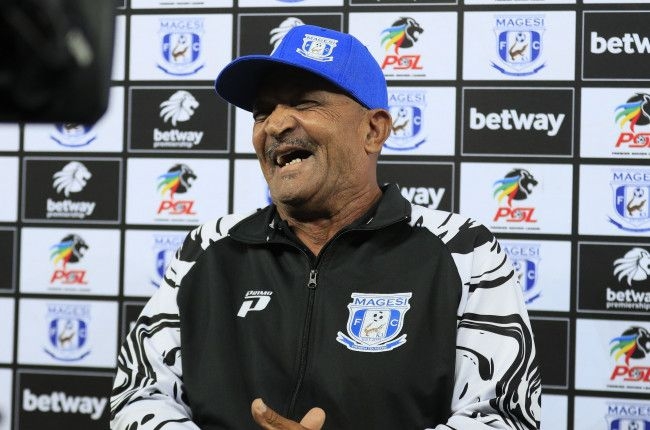
Veteran coach Allan Freese says players with direct access to club chairmen are among the biggest problems facing South African football.
Speaking in Locker Room Secrets, Freese discussed the difficult situations he has encountered during his career in the PSL, including dressing-room politics, player egos and interference from club management.
Freese said coaches must be careful when dealing with a high-profile player whose attitude begins to affect team unity.
“You can’t make him train on his own because sometimes he is very influential,” he said. “At the same time, you don’t want the other players to think you are afraid to tell him.”
His preferred approach was to speak to the player privately rather than allow the situation to escalate.
“So, you leave it, you take him to one side, and you talk to him about it,” Freese explained. “You can’t allow him to be the boss of the team.”
Asked whether he had ever had to intervene in a physical confrontation between players at half-time, Freese suggested such tensions could arise when a player was performing well below expectations.
“It usually happens when one player is having an off day and everybody knows what he is capable of doing,” he said, before adding: “Eish, you’re asking me difficult questions!”
Freese agreed that, in South Africa, some players maintain a direct relationship with a club chairman.
“So much for an easy question,” he joked. “Look, it happened everywhere, and you can’t do anything about it because sometimes the chairman himself allows it.”
He said coaches could discover only later that a player had influence beyond the dressing room.
“As a coach, sometimes you find out too late that, ‘Oh, that one is the chairman’s boy,’” Freese said. “That is one of the biggest problems of South African football.”
He also recalled the frustration of receiving team-selection instructions from people who were not present at training.
“The problem is they are not at training, and then they come on matchday to tell you who to play and who not to play,” he said.
“That’s the most frustrating part. It’s one of those players who have a direct line to the chairman.”
Freese said dressing-room rituals varied between teams, with some players following personal routines that coaches simply chose not to challenge.
“Every team is different, they use different things,” he said. “But some players use their own stuff. As a coach, you can’t do anything about it, you look the other way.”
His most visible half-time outburst came after his side wasted a clear chance.
“It was during a game when I threw my cap on the floor,” Freese said. “I believe it was an opportunity that we missed, where it was so easy to score than to miss. It’s also frustrating when they score an easy goal against you.”
Freese added that no player had openly refused to follow his instructions. Had that happened, he said, he would have made an immediate substitution because it would have undermined the team’s plan.
“A game plan is not what the coach wants, but it’s what the team requires,” he said.
-
 Freese: Chairman influence remains a major problem in South African football Nov 22, 2026
-
Kaizer Chiefs urged to repeat USM Alger tactics against Sundowns Nov 22, 2026
-
Ouaddou questions Pitso Mosimane over beers given to Orlando Pirates players Nov 22, 2026
-
Football betting tips: Raphinha, Brighton and a close contest at Atalanta Nov 22, 2026


-
AFCON 2025: Fixtures, Results, Scores and Standings Jan 18, 2026
-
Match hero Taiwo Awoniyi reflects on team effort after Chelsea triumph May 5, 2026
-
Leadership and long-term vision key to rescuing Zamalek and inspiring Egyptian football – Hany Abou Rida Nov 5, 2025
-
South African giants Orlando Pirates set to lose influential forward Monnapule Saleng Mar 19, 2025




-
AFCON 2027 qualifiers matchday 3 & 4: All fixtures and results Nov 17, 2026
-
Cote d’Ivoire close in on AFCON 2027 qualification against Gambia Nov 16, 2026
-
Cameroon can seal AFCON 2027 place with victory over Namibia Nov 15, 2026
-
AFCON 2027 Qualifiers: South Africa bounce back with win over Kenya Nov 17, 2026